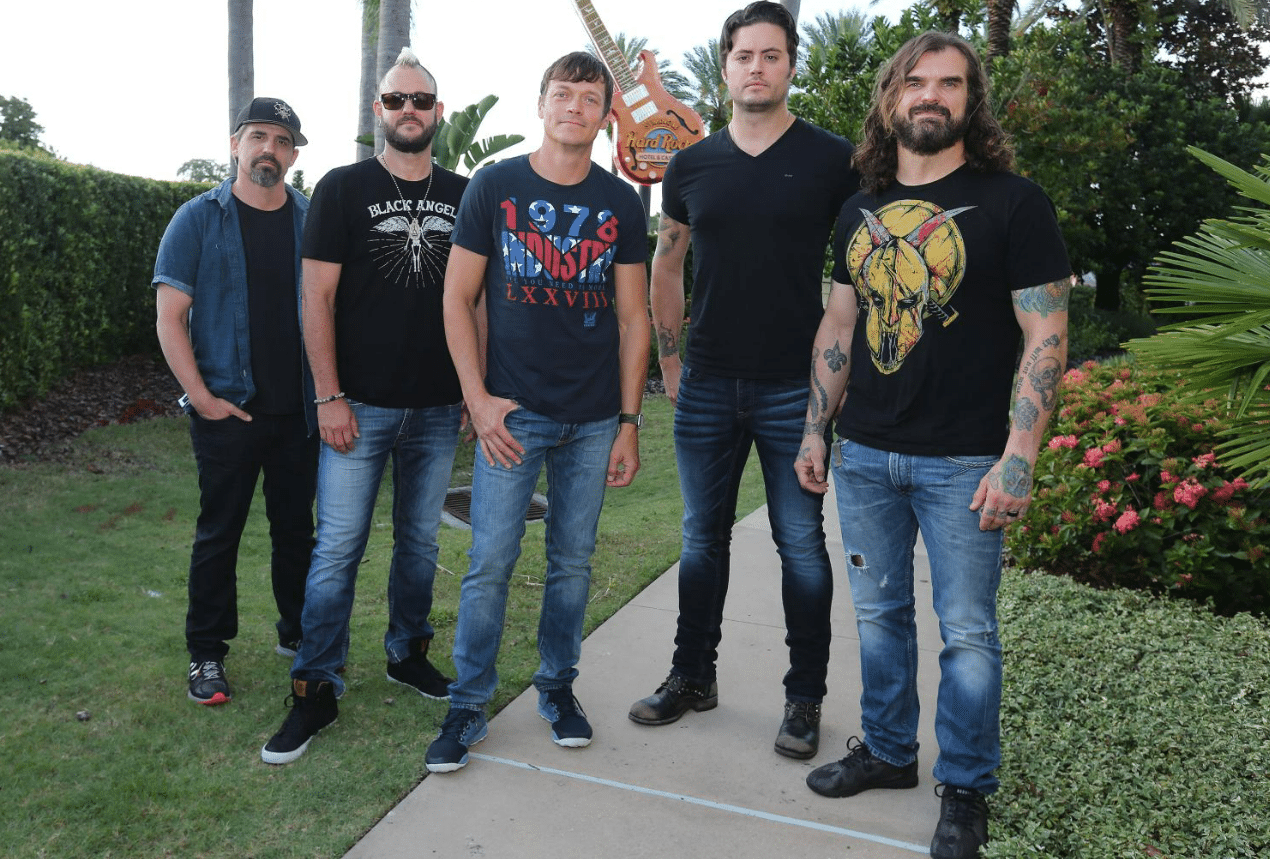
Brad Arnold, the founding lead singer of 3 Doors Down whose gritty, earnest vocals powered early 2000s rock radio staples such as “Kryptonite,” “When I’m Gone” and “Here Without You,” has died after a battle with kidney cancer. He was 47.
The band announced Arnold’s death on Saturday, saying he died peacefully in his sleep with his wife and family at his side. His death follows a public cancer diagnosis he shared last year that led the group to cancel tour plans and shifted attention from its music to the health of the voice most closely tied to its sound.
In a statement posted by the band, 3 Doors Down said Arnold was surrounded by loved ones and remembered him as a devoted husband and a person whose faith and generosity were felt beyond the stage. The announcement came nearly nine months after Arnold said he had been diagnosed with stage 4 clear cell renal cell carcinoma, a form of kidney cancer that had spread. He disclosed the diagnosis in May 2025, describing it as advanced and saying the band would step back from touring while he focused on treatment.
Arnold was born and raised in Mississippi and became one of the most recognizable voices to emerge from the state’s late 1990s rock scene. He helped form 3 Doors Down in 1996 in Escatawpa, a small community near the Alabama line, as the group began playing local shows and building a following through word of mouth, radio requests and relentless road work. The band’s breakthrough arrived with “Kryptonite,” a song Arnold wrote as a teenager that became a smash hit and a signature of the post-grunge era, with its tight guitar riff and chorus built for singalongs. The single’s popularity lifted the band into national touring and placed Arnold at the center of a mainstream rock wave that brought regional acts into arenas.
In interviews over the years, Arnold often spoke about how quickly the band’s life changed once “Kryptonite” took off. 3 Doors Down followed that success with a run of radio hits and albums that kept the group a constant presence on rock and pop playlists. Their songs leaned on clear hooks, steady midtempo grooves and lyrics that balanced doubt and hope, a formula that broadened their audience beyond hard rock fans. Arnold’s voice, rough around the edges but direct and clear in the chorus, became the band’s calling card, whether he was pushing through the urgency of “When I’m Gone” or the softer ache of “Here Without You.”
The band’s lineup shifted over the years, but Arnold remained its anchor as lead singer and a key public face. In addition to vocalist duties, he played drums early in the band’s history, later moving fully into frontman mode as the group’s touring schedule expanded. Bandmates have said his role went beyond singing, describing him as a steadying presence who set the tone backstage and kept the focus on performing, even as the music industry changed around them. In the statement announcing his death, the group said his music created “moments of connection, joy, faith and shared experiences,” a message that echoed the bond fans often described at concerts where crowds sang entire choruses back to him.
Arnold’s final year drew renewed attention to his personal life and health, and he addressed it directly rather than quietly stepping away. In May 2025, he announced the diagnosis in a video message, saying doctors had found stage 4 clear cell renal cell carcinoma. He said the cancer had spread and that he would be focusing on treatment, adding that he felt calm despite the grim news. “I have no fear,” he said in that message, while thanking fans for support and saying the band would regroup later. After the announcement, 3 Doors Down canceled a planned summer tour, including dates that would have kept the group on the road during peak festival season.
News of Arnold’s death prompted condolences from across the rock world and from fans who grew up with 3 Doors Down on the radio. Messages poured in on social media within hours of the band’s post, many recalling first hearing “Kryptonite” on a car stereo, at a school dance or in a sports arena. Others focused on Arnold’s public statements about faith, saying his openness during illness resonated with listeners who had faced cancer in their own families. Several outlets noted that Arnold’s death follows earlier losses in the group’s circle, including founding guitarist Matt Roberts, who died in 2016. That history added weight to the band’s statement, which framed Arnold not only as a musician but as a friend and family man.
Arnold’s career is closely tied to the period when rock bands could still dominate mainstream charts and broadcast radio. 3 Doors Down’s early hits arrived at a time when a single could break nationally through repetition on rock stations and music television, before streaming became the primary way listeners discovered new songs. The band’s sound bridged styles, carrying grunge’s emotional grit into a more polished, melody-driven approach that fit both rock and pop formats. Critics sometimes debated the band’s place in the genre, but its commercial reach was hard to dispute, and its songs remained fixtures on “throwback” playlists long after their initial release.
Over two decades, Arnold toured with the group across the United States and abroad, playing amphitheaters, arenas and festivals. Concert footage and fan accounts often highlighted the contrast between his tough vocal tone and his stage demeanor, which tended to be friendly and conversational between songs. He frequently thanked audiences for staying with the band through changing trends and spoke about feeling lucky to make music for a living. In later years, he appeared more openly reflective in interviews, acknowledging that success brought pressure, long stretches away from home and public scrutiny, while still describing the band’s longevity as something he did not take for granted.
While much of Arnold’s public identity centered on 3 Doors Down’s biggest hits, he also became known for a steady approach to touring and for his willingness to speak about personal struggles. Fans and colleagues pointed to moments when he addressed addiction and recovery in broad terms, framing his own experience as part of a larger story of persistence. He also spoke often about faith, and his bandmates referenced that aspect of his life in their statement, saying it shaped how he treated people offstage. In the months after his diagnosis became public, those themes became part of the way supporters talked about him, using his own words about fearlessness to describe how they hoped he was facing treatment.
Arnold is survived by his wife, Jennifer, and the band said he was surrounded by family when he died. 3 Doors Down’s current members include guitarist Chris Henderson, drummer Greg Upchurch, guitarist Chet Roberts and bassist Justin Biltonen, and the band’s statement noted the closeness of the group’s relationships. Plans for memorial arrangements were not immediately detailed in the band’s initial announcement. The group also did not say whether any previously scheduled performances would be rescheduled or canceled, though the band had already scaled back its public calendar after Arnold’s diagnosis.
In the music business, Arnold’s death raises a practical question about what becomes of a band so closely associated with one voice. For many fans, 3 Doors Down’s songs are inseparable from Arnold’s delivery, from the way he leaned into a line to the rasp that cut through guitars. Industry observers noted that bands sometimes continue with new singers or take long hiatuses after a frontman’s death, but 3 Doors Down had not addressed future plans in its initial statement. The band’s message focused instead on remembrance, thanking supporters and emphasizing that Arnold’s music would endure.
In Escatawpa and across Mississippi, Arnold’s story carried a hometown pride that followed him throughout his career. He often referenced his roots, and the band’s origin in a small Gulf Coast community became part of its identity, held up as proof that a local group could break through nationally. Arnold’s success was also part of a broader Mississippi music legacy, though his work sat in a different lane than the state’s blues and country history. For a generation of rock listeners, his songs served as the soundtrack for school years, early jobs and long drives, and the news of his death prompted many to revisit that era.
Arnold’s final public chapter began with a short video about his diagnosis and ended with a brief statement from his bandmates after his death. Between those moments, fans saw fewer updates, and the band kept most details private. What remained public was Arnold’s tone when he spoke about his illness: steady, thankful and blunt about the severity. That approach helped shape the response after he died, as condolences mixed grief with admiration for his candor. In the hours after the band’s post, fans shared lyrics, concert photos and stories of meeting him at venues, describing a singer who made time for quick hellos and treated strangers with warmth.
As of Monday, the band had not announced a public memorial event or a timeline for any future decision about performances. For now, Arnold’s death closes the career of a singer who helped define an era of mainstream rock and whose best-known songs remain woven into the culture of early 2000s radio. The next milestone is expected to be a statement from the band or family about services and how his friends and fans can honor his memory.
Author note: Last updated Feb. 9, 2026.