- Israelis rescued from northern Ethiopia after 3 days
 by Yossi Licht on September 30, 2026
Their rescue was made possible through coordinated action by Foreign Minister Gideon Sa'ar and the Foreign Ministry. The post Israelis rescued from northern Ethiopia after 3 days appeared first on World Israel News.
- Israelis rescued from northern Ethiopia after 3 daysby Yossi Licht on September 30, 2026
Their rescue was made possible through coordinated action by Foreign Minister Gideon Sa'ar and the Foreign Ministry. The post Israelis rescued from northern Ethiopia after 3 days appeared first on World Israel News.
- America first does not mean Israel lastby Yossi Licht on September 30, 2026
If, as parts of the American right argue, America First means that every foreign alliance must justify itself by American interests, Israel more than passes the test. The post America first does not mean Israel last appeared first on World Israel News.
- America first does not mean Israel lastby Yossi Licht on September 30, 2026
If, as parts of the American right argue, America First means that every foreign alliance must justify itself by American interests, Israel more than passes the test. The post America first does not mean Israel last appeared first on World Israel News.
- WATCH: BBC blunders, calls Israel’s main airport ‘Ben Gvir Airport’by Yossi Licht on September 30, 2026
While reporting on the averted hijacking of a Flydubai flight to Tel Aviv, BBC newscasters mistakenly called Israel's main international airport 'Ben Gvir Airport' instead of Ben Gurion Airport. The post WATCH: BBC blunders, calls Israel’s main airport ‘Ben Gvir Airport’ appeared first on World Israel News.
- WATCH: BBC blunders, calls Israel’s main airport ‘Ben Gvir Airport’by Yossi Licht on September 30, 2026
While reporting on the averted hijacking of a Flydubai flight to Tel Aviv, BBC newscasters mistakenly called Israel's main international airport 'Ben Gvir Airport' instead of Ben Gurion Airport. The post WATCH: BBC blunders, calls Israel’s main airport ‘Ben Gvir Airport’ appeared first on World Israel News.
- Passengers Intervene in Cockpit Stabbing on Flight
 by John Nightbridge on September 30, 2026
Israeli officials said the co-pilot may have tried to crash the Tel Aviv-bound aircraft before crew members and passengers intervened. JERUSALEM — A flydubai passenger jet traveling from Dubai to Tel Aviv made an emergency landing in Saudi Arabia on Wednesday after a violent confrontation between its pilots, with Israeli officials saying they were investigating whether the co-pilot tried to crash the aircraft in a possible terror attack. Flight FZ1073 landed safely at Prince Sultan ... Read more
- Zelensky’s Ex-Spokeswoman Yulia Mendel Harshly Criticizes Former Boss. Adoption of “Suicidal Political Measures”by Lucas Leiroz de Almeida on September 30, 2026
Ukrainian leader Vladimir Zelensky is increasingly losing credibility. As Ukrainian armed forces lose territorial control on the front lines and the country’s institutional crisis deepens, it is becoming clear that the Zelensky regime is completely lost, lacking any coherent plan … The post Zelensky’s Ex-Spokeswoman Yulia Mendel Harshly Criticizes Former Boss. Adoption of “Suicidal Political Measures” appeared first on Global Research.
- Selected Articles: War is Coming, War is Coming – Defeat of the Swiss Neutrality Initiative
 by Global Research News on September 30, 2026
War is Coming, War is Coming – Defeat of the Swiss Neutrality Initiative. “Prepare your Kids to Defend Europe” By Peter Koenig, September 29, 2026 NATO is controlling all of Europe, via its long arm, the European Union (EU) … The post Selected Articles: War is Coming, War is Coming – Defeat of the Swiss Neutrality Initiative appeared first on Global Research.
- Cabeza Del Buey: A Small Town With a Big Historyby Caoimhghin Ó Croidheáin on September 30, 2026
Cabeza del Buey [Head of the Ox] is a beautiful old town in the province of Badajoz in Extremadura, Spain in the region known as La Serena, roughly 300 km southwest of Madrid, near the borders with Andalusia and Castilla-La … The post Cabeza Del Buey: A Small Town With a Big History appeared first on Global Research.
- From Preveza to the Blue Homeland: The Turks’ Reunion with the Sea 488 Years Laterby Ret Admiral Cem Gürdeniz on September 30, 2026
On 27 September 1538, 488 years ago, the Battle of Preveza was fought in the Adriatic Sea. The Turkish fleet, composed of the naval forces of the Ottoman Empire and the Barbary Regencies of North Africa (Garp Ocakları), defeated the … The post From Preveza to the Blue Homeland: The Turks’ Reunion with the Sea 488 Years Later appeared first on Global Research.
- Balochistan- Billions Below, Questions Aboveby Staikou Dimitra on September 30, 2026
On September 24, 2026, Reuters placed Balochistan on a much larger global map: the race for critical mineral resources. At a time when governments and corporations are searching for new sources of copper, gold and other strategic metals, Pakistan’s largest … The post Balochistan- Billions Below, Questions Above appeared first on Global Research.
- United Nations General Assembly 81st Session Highlighted the Worsening Global Situationby Abayomi Azikiwe on September 30, 2026
Midtown in New York City was the scene of the annual United Nations General Assembly debates and discussions over the future of the international community. Nonetheless, since the gathering is held in the United States the government has sway over … The post United Nations General Assembly 81st Session Highlighted the Worsening Global Situation appeared first on Global Research.
- First Them, Then Us: America’s Shift from Police State to Prison Stateby John W. Whitehead on September 30, 2026
America, you got fooled. Again. For starters, the war on illegal immigration was never just about illegal immigration. If you fell for that, chances are you’re still falling for the government’s oldest trick: manufacture a crisis, identify an enemy, frighten … The post First Them, Then Us: America’s Shift from Police State to Prison State appeared first on Global Research.
- Defense Minister Katz calls FlyDubai incident ‘Jihadist terror attack’by Yoel Stavsky on September 30, 2026
'The serious incident on the FlyDubai plane was an attempted jihadist terror attack, which was thwarted only thanks to the heroism of several Israeli passengers,' Katz said. The post Defense Minister Katz calls FlyDubai incident ‘Jihadist terror attack’ appeared first on World Israel News.
- Defense Minister Katz calls FlyDubai incident ‘Jihadist terror attack’by Yoel Stavsky on September 30, 2026
'The serious incident on the FlyDubai plane was an attempted jihadist terror attack, which was thwarted only thanks to the heroism of several Israeli passengers,' Katz said. The post Defense Minister Katz calls FlyDubai incident ‘Jihadist terror attack’ appeared first on World Israel News.
- Bibi Netanyahu at the United Nationsby Renee Parsons on September 30, 2026
With the midterm election fast approaching, there is an ominous foreboding as American voters reject a carefully contrived political paralysis. Despite President Trump’s vulgar fabrications, he well knows as the American public that the US has lost its unprovoked war… The post Bibi Netanyahu at the United Nations appeared first on Global Research.
- Owen Jones: Western Hubris Created Today’s Crisis
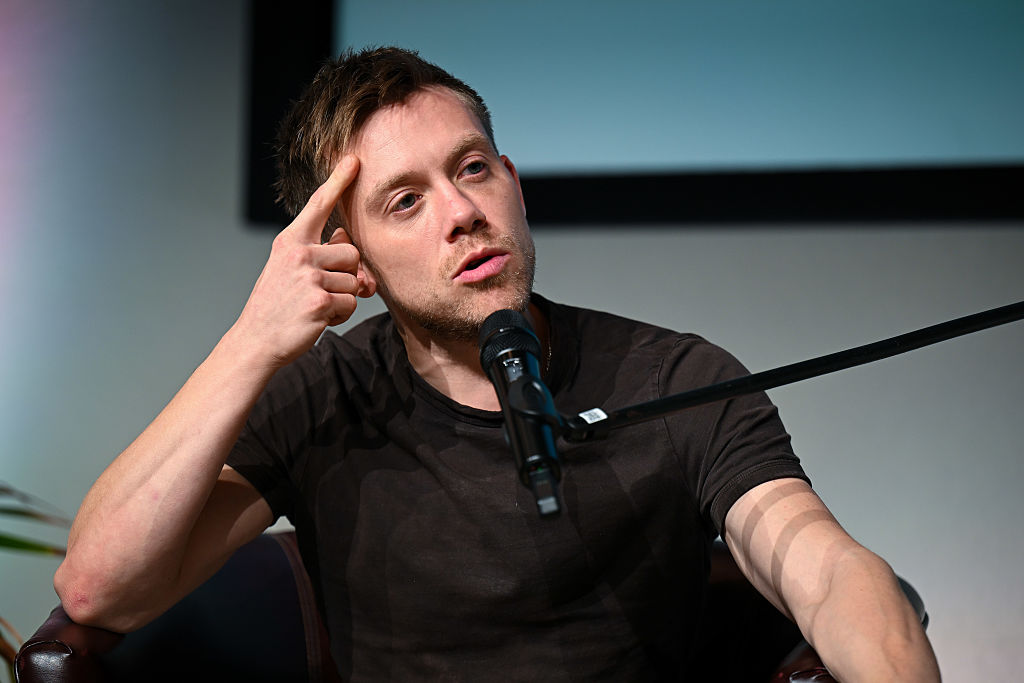 by Owen Jones on September 30, 2026
Speaking to Jacobin, Owen Jones argues that austerity, falling living standards, and the collapse of the old political order created an opening the Right has exploited.
- FlyDubai passengers: ‘We were sure it was the end … only the Israelis intervened’by Miriam Metzinger on September 30, 2026
A passenger recounted subduing the Omani co-pilot: 'We jumped forcefully on the pilot and tied him up with headphones.' The post FlyDubai passengers: ‘We were sure it was the end … only the Israelis intervened’ appeared first on World Israel News.
- FlyDubai passengers: ‘We were sure it was the end … only the Israelis intervened’by Miriam Metzinger on September 30, 2026
A passenger recounted subduing the Omani co-pilot: 'We jumped forcefully on the pilot and tied him up with headphones.' The post FlyDubai passengers: ‘We were sure it was the end … only the Israelis intervened’ appeared first on World Israel News.
- How to Take Back Your Authentic Lifeby Dr. Gary Null on September 30, 2026
In 1845, a young man borrowed an axe, walked into the woods outside Concord, Massachusetts, and built himself a one-room cabin for about twenty-eight dollars. “I went to the woods,” Henry David Thoreau wrote, “because I wished to live deliberately, … The post How to Take Back Your Authentic Life appeared first on Global Research.
- Netanyahu lauds passengers who ‘prevented catastrophe,’ as Israelis depart Saudi Arabiaby David Rosenberg on September 30, 2026
As Israeli passengers stranded in Saudi Arabia begin to return home, Prime Minister Netanyahu confirms that the flydubai incident was nearly a 'major catastrophe.' The post Netanyahu lauds passengers who ‘prevented catastrophe,’ as Israelis depart Saudi Arabia appeared first on World Israel News.
- Netanyahu lauds passengers who ‘prevented catastrophe,’ as Israelis depart Saudi Arabiaby David Rosenberg on September 30, 2026
As Israeli passengers stranded in Saudi Arabia begin to return home, Prime Minister Netanyahu confirms that the flydubai incident was nearly a 'major catastrophe.' The post Netanyahu lauds passengers who ‘prevented catastrophe,’ as Israelis depart Saudi Arabia appeared first on World Israel News.
- Poland No Longer Favor Open Borders for Ukrainians: Poles Recall Mass Killings (1943-45) Committed by the Nazi-allied Ukrainian Insurgent Army (UPA)by Ahmed Adel on September 30, 2026
A Ukrainian citizen killed a priest and wounded others at a monastery in Jarosław, southeastern Poland. The attack occurred amid a decline in public support for Ukrainians, a rise in street attacks and “Go home” slogans, and the enduring memory … The post Poland No Longer Favor Open Borders for Ukrainians: Poles Recall Mass Killings (1943-45) Committed by the Nazi-allied Ukrainian Insurgent Army (UPA) appeared first on Global Research.
- European NATO Fears That the US Won’t Rush to Its Rescue If It Provokes a War With Russiaby Andrew Korybko on September 30, 2026
… The post European NATO Fears That the US Won’t Rush to Its Rescue If It Provokes a War With Russia appeared first on Global Research.
- Trump Is Planning to Replicate His Successful Belarusian Dealmaking With Russiaby Andrew Korybko on September 30, 2026
… The post Trump Is Planning to Replicate His Successful Belarusian Dealmaking With Russia appeared first on Global Research.
- ‘It’s hard to explain how heroic they were’: passengers praise Israeli heroism on FlyDubai flightby Miriam Metzinger on September 30, 2026
'It felt like, that’s it. It’s over. September 11 is happening again,' he said. The post ‘It’s hard to explain how heroic they were’: passengers praise Israeli heroism on FlyDubai flight appeared first on World Israel News.
- ‘It’s hard to explain how heroic they were’: passengers praise Israeli heroism on FlyDubai flightby Miriam Metzinger on September 30, 2026
'It felt like, that’s it. It’s over. September 11 is happening again,' he said. The post ‘It’s hard to explain how heroic they were’: passengers praise Israeli heroism on FlyDubai flight appeared first on World Israel News.
- US-Iran talks stall as Qatar struggles to bridge gaps over Hormuz, nuclear program – reportby David Rosenberg on September 30, 2026
Efforts by Qatar to broker a deal between the US and Iran have reportedly yielded little to no progress this week, raising the prospect of renewed fighting after the November midterms. The post US-Iran talks stall as Qatar struggles to bridge gaps over Hormuz, nuclear program – report appeared first on World Israel News.
- US-Iran talks stall as Qatar struggles to bridge gaps over Hormuz, nuclear program – reportby David Rosenberg on September 30, 2026
Efforts by Qatar to broker a deal between the US and Iran have reportedly yielded little to no progress this week, raising the prospect of renewed fighting after the November midterms. The post US-Iran talks stall as Qatar struggles to bridge gaps over Hormuz, nuclear program – report appeared first on World Israel News.
- Trump Turned the 2026 World Cup Into an Imperial Spectacle
 by Juliet Jacques on September 30, 2026
After the scandals of Russia 2018 and Qatar 2022, FIFA hoped North America would offer a less political World Cup. Donald Trump’s return to power ensured exactly the opposite.
- The Vendetta Against Gino Has Nothing to Do With Justice
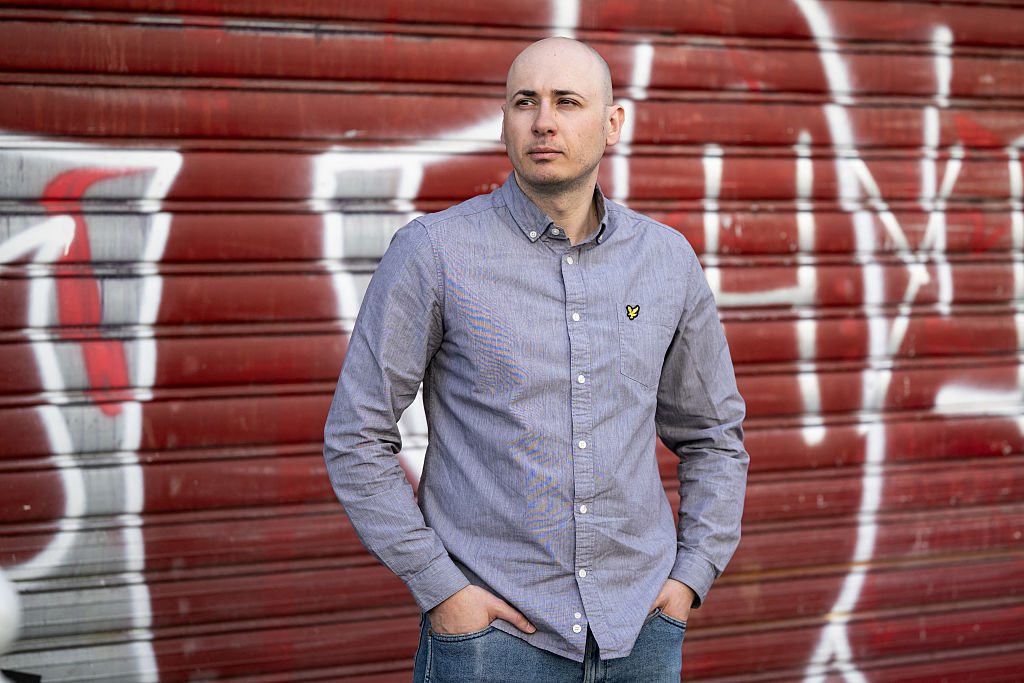 by Harrison Stetler on September 30, 2026
Hungary’s hard-right premier Viktor Orbán is no longer in power. But he’s getting a belated victory as activist Rexhino Abazaj, known as Gino, is being extradited for trial over an alleged attack on fascists in Budapest.
- WATCH: Israeli passengers happily sing after landing safely in Saudi Arabiaby Yossi Licht on September 30, 2026
Israeli Flydubai passengers sang joyously after landing safely in Saudi Arabia, following a violent pilot altercation and suspected hijacking that sent their aircraft plunging thousands of feet until passengers subdued the attacker. The post WATCH: Israeli passengers happily sing after landing safely in Saudi Arabia appeared first on World Israel News.
- WATCH: Israeli passengers happily sing after landing safely in Saudi Arabiaby Yossi Licht on September 30, 2026
Israeli Flydubai passengers sang joyously after landing safely in Saudi Arabia, following a violent pilot altercation and suspected hijacking that sent their aircraft plunging thousands of feet until passengers subdued the attacker. The post WATCH: Israeli passengers happily sing after landing safely in Saudi Arabia appeared first on World Israel News.
- US Senate blocks Democrat-backed probe of Israelby David Rosenberg on September 30, 2026
Senate Republicans block measure backed by Democrats requiring State Department investigation of Israel, Judea and Samaria. The post US Senate blocks Democrat-backed probe of Israel appeared first on World Israel News.
- US Senate blocks Democrat-backed probe of Israelby David Rosenberg on September 30, 2026
Senate Republicans block measure backed by Democrats requiring State Department investigation of Israel, Judea and Samaria. The post US Senate blocks Democrat-backed probe of Israel appeared first on World Israel News.
- Pilot attempted to hijack and crash flight carrying Israelisby David Rosenberg on September 30, 2026
Israeli security officials believe flydubai pilot attempted to crash plane carrying Israeli passengers as a mass terror attack, Israelis onboard intervened to help prevent a 'major disaster.' The post Pilot attempted to hijack and crash flight carrying Israelis appeared first on World Israel News.
- Pilot attempted to hijack and crash flight carrying Israelisby David Rosenberg on September 30, 2026
Israeli security officials believe flydubai pilot attempted to crash plane carrying Israeli passengers as a mass terror attack, Israelis onboard intervened to help prevent a 'major disaster.' The post Pilot attempted to hijack and crash flight carrying Israelis appeared first on World Israel News.
- WATCH: Graphic footage shows bloodied Flydubai pilot after midair stabbingby Yossi Licht on September 30, 2026
Graphic footage from the Flydubai flight that was diverted to Saudi Arabia following a possible hijacking shows a stabbed pilot drenched in blood while Israeli passengers stem the bleeding and pin down the attacker. The post WATCH: Graphic footage shows bloodied Flydubai pilot after midair stabbing appeared first on World Israel News.
- WATCH: Graphic footage shows bloodied Flydubai pilot after midair stabbingby Yossi Licht on September 30, 2026
Graphic footage from the Flydubai flight that was diverted to Saudi Arabia following a possible hijacking shows a stabbed pilot drenched in blood while Israeli passengers stem the bleeding and pin down the attacker. The post WATCH: Graphic footage shows bloodied Flydubai pilot after midair stabbing appeared first on World Israel News.
- Iran makes direct midterms appeal to American votersby David Rosenberg on September 30, 2026
Iran’s Islamic Revolutionary Guard Corps calls President Trump a ‘big liar,’ urges Americans to reject his policies ahead of November midterms. The post Iran makes direct midterms appeal to American voters appeared first on World Israel News.
- Iran makes direct midterms appeal to American votersby David Rosenberg on September 30, 2026
Iran’s Islamic Revolutionary Guard Corps calls President Trump a ‘big liar,’ urges Americans to reject his policies ahead of November midterms. The post Iran makes direct midterms appeal to American voters appeared first on World Israel News.
- Flight carrying Israelis forced to make emergency landing in Saudi Arabia after stabbingby David Rosenberg on September 30, 2026
FlyDubai passenger jet forced to make emergency landing in Saudi Arabia, sparking fears of possible hijacking after stabbing reported onboard. The post Flight carrying Israelis forced to make emergency landing in Saudi Arabia after stabbing appeared first on World Israel News.
- Flight carrying Israelis forced to make emergency landing in Saudi Arabia after stabbingby David Rosenberg on September 30, 2026
FlyDubai passenger jet forced to make emergency landing in Saudi Arabia, sparking fears of possible hijacking after stabbing reported onboard. The post Flight carrying Israelis forced to make emergency landing in Saudi Arabia after stabbing appeared first on World Israel News.
- WATCH: Israeli passengers scream in horror during possible Flydubai hijackingby Yossi Licht on September 30, 2026
A Flydubai flight from Dubai to Tel Aviv made an emergency landing in Saudi Arabia after a violent cockpit confrontation between pilots triggered hijacking alerts and left passengers fearing for their lives. The post WATCH: Israeli passengers scream in horror during possible Flydubai hijacking appeared first on World Israel News.
- WATCH: Israeli passengers scream in horror during possible Flydubai hijackingby Yossi Licht on September 30, 2026
A Flydubai flight from Dubai to Tel Aviv made an emergency landing in Saudi Arabia after a violent cockpit confrontation between pilots triggered hijacking alerts and left passengers fearing for their lives. The post WATCH: Israeli passengers scream in horror during possible Flydubai hijacking appeared first on World Israel News.
- Iran rebuilding its nuke program according to intel Netanyahu gave UAE – reportby David Rosenberg on September 30, 2026
Prime Minister Netanyahu reportedly used trip to United Arab Emirates to share intelligence with the Emirati president regarding Iran's efforts to restore its nuclear program, with work taking place at Pickaxe Mountain complex. The post Iran rebuilding its nuke program according to intel Netanyahu gave UAE – report appeared first on World Israel News.
- Iran rebuilding its nuke program according to intel Netanyahu gave UAE – reportby David Rosenberg on September 30, 2026
Prime Minister Netanyahu reportedly used trip to United Arab Emirates to share intelligence with the Emirati president regarding Iran's efforts to restore its nuclear program, with work taking place at Pickaxe Mountain complex. The post Iran rebuilding its nuke program according to intel Netanyahu gave UAE – report appeared first on World Israel News.
- Casting a Shadow: The Legacy of Mao
 by James Diddams on September 30, 2026
In September 1976, the Chairman of the Chinese Communist Party (CCP) and founder of the People’s Republic of China, Mao Zedong, was laid to rest in Tiananmen Square, where he is still available for daily viewings by the public in his mausoleum. The architect of Red China still holds a deep impact and influence for China’s political environment 50 years after his death. In Mao’s eyes, China had not reached its potential. But upon taking power in 1949 following his victory in the Chinese Civil War, his object became clear: Progress at any cost. Many in China welcomed such change after decades of suffering and global embarrassment. Mao turned his attention to transforming China into an industrial power, only briefly interrupted by the the Korean War, in which China intervened with up to 3 million troops. Mao needed the support of the peasantry by giving them land, leading to the Land Reform Movement. This socialist concept was simple: “landlords,” those that earned their income via “exploitation” instead of labor, were stripped of their properties and executed either by the peasantry or CCP. Death toll estimates range from hundreds of thousands to millions, because, as Mao stated, “revolution is not a dinner party.” Having bought the loyalty of millions of peasants, Mao turned to industrializing China. Mao began by declaring war on corruption, waste, and bureaucracy, the so-called “three anti-campaigns.” While the campaigns sought to oust capitalists (many committed suicide) and establish worker’s cooperatives around the nation, many of these initial reforms saw success. But by 1958, the “Great Helmsman” was positioned to run the ship aground. He initiated the infamous “Great Leap Forward,” a disastrous effort to jump-start industrialization. Peasants were forced onto communes and private property was abolished. Rural communities were organized into small make-shift back-yard steel works. The resulting agricultural collapse led to the “Great Famine” that killed some 30-40 million Chinese. The CCP had to change course. Mao gave up control of economic policy to two pragmatists, Liu Shaoqi and Deng Xiaoping. (Deng would take over as Chairman of the CCP in 1978). Liu and Deng dissolved the decentralized communal steel works and turned to investing in industry, particularly in consumer goods, an area in which China is now the world’s leading producer. But Mao’s embarrassment and growing paranoia, and the emergence of a more moderate Soviet Union, served as catalysts to the ten-year witch hunt of the “Cultural Revolution.” Mao declared war on the “four olds”: old customs, old culture, old habits, and old ideas. Large swaths of the country were subjected to empowered youth known as the Red Guard. Political purges, abductions, arrests, and torture were key elements of this “ten-years of chaos.” At the heart of the Cultural Revolution was a chance for Mao to redeem his legacy and prestige, through a cleansing of his old vanguard, now accused of being in league with the capitalist West. Mao launched an assault on the culture and people of China that still hangs in the air today. When Mao died in 1976, his legacy as a strongman authoritarian was found wanting. Successors had to navigate official reverence for Mao with a pragmatic realism about his shortcomings. In 1981 Deng Xiaoping even formalized an official, mathematical ratio for evaluating Mao: Mao was 70 percent correct and 30 percent wrong. That gave Deng room to open up the Chinese economy and loosen some social controls. Consumers and business owners began to experience freedoms they had never held before. However, Mao’s legacy sits heavy on the nation and the CCP, including on Deng, widely seen as a reformer and modernizer. While moving the economy away from Mao’s socialism towards capitalism, Deng still led an authoritarian government and oversaw the infamous Tiananmen Square Massacre in 1989, brutally crushing student protests in favor of democracy. Today Xi Jinping, the current leader of CCP, has seemingly moved China even closer to Mao’s example. He has abolished presidential term limits, increased surveillance, suppressed internet and media access, and established internment camps in Western China. Xi, having lived and suffered under Mao’s Cultural Revolution has not sought to correct but rather has increased aspects of an authoritarian government. China now has the repression and autocracy of Mao’s rule without the chaos and incompetence. The legacy of Mao is complicated in China, but it is not complicated for the rest of the world. For the CCP, the horrors perpetrated under the orders of Mao are salvageable under a contrived 70/30 policy. The rest of the world is under no obligation to filter its judgment through artificial ratios. Jesus reminds us that “You will know the truth, and the truth will set you free,” a relationship between truth and freedom that is sadly resonant for a nation that lacks both.
- The Next Global Health Emergency Is Being Telegraphed Again by Bill Gatesby Nicolas Hulscher on September 30, 2026
I joined Alex Jones for an extended interview to discuss the next global emergency now being telegraphed by Bill Gates, including his recent remarks about AI and bioterrorism being capable of causing “a billion deaths,” while smirking as he … The post The Next Global Health Emergency Is Being Telegraphed Again by Bill Gates appeared first on Global Research.
- 25 Years of Challenging the Dominant Narrativeby The Global Research Team on September 30, 2026
Born two days before the 9/11 attack, Global Research had a simple objective: to be an independent platform for voices challenging the dominant narratives. Among our first articles were investigative reports and analyses on the tragic 9/11 attack and the … The post 25 Years of Challenging the Dominant Narrative appeared first on Global Research.
- Baby Found Dead in Dumpster, Mother Arrested
 by John Nightbridge on September 30, 2026
Police booked 19-year-old Takiyah Babers on suspicion of murder after her infant daughter was discovered unresponsive Monday night. LOS ANGELES — A 19-year-old mother was arrested on suspicion of murder after her infant daughter was found unresponsive in a dumpster in South Los Angeles and later pronounced dead at a hospital, according to police and published reports. Los Angeles police identified the woman Tuesday as Takiyah Babers and said she was the biological mother of ... Read more
- Teacher and 10-Year-Old Student Die During School Field Trip
 by John Nightbridge on September 30, 2026
Hannah Jorgensen, 24, and Ahmed Osman, 10, were recovered from the Coralville Reservoir after an incident authorities are still investigating. SOLON, Iowa — A fifth-grade teacher and a 10-year-old student died after an incident during an elementary school field trip near Lake Macbride, prompting a large search and recovery operation and an investigation that remained underway days later. The Johnson County Sheriff’s Office identified the two as Hannah Jorgensen, 24, of Tiffin, a fifth-grade teacher ... Read more
- Video: This Is the Real Endgame in Iranby James Corbett on September 30, 2026
[First published in March 2026] Are you wondering how this whole Iran war debacle is going to end? Sick of the lies and propaganda slop that is being fed to the masses on this issue? Then you won’t want to … The post Video: This Is the Real Endgame in Iran appeared first on Global Research.
- History of World War II: Operation Barbarossa, Germans Advance into Eastern Ukraine and Crimeaby Shane Quinn on September 30, 2026
[Author’s Note: The article below, first published with GR on 26 November 2021, focuses on the assaults launched by German Army Group South against the southern and western Soviet Union during the autumn and early winter of 1941. … The post History of World War II: Operation Barbarossa, Germans Advance into Eastern Ukraine and Crimea appeared first on Global Research.
- Where Is India’s Election Commission’s Transparency When Voters Are Being Struck Off?by Vikas Parashram Meshram on September 30, 2026
… The post Where Is India’s Election Commission’s Transparency When Voters Are Being Struck Off? appeared first on Global Research.
- EAEU Pushes Agricultural Integration Amid Global Food Security Risksby Alyssa Dowling on September 29, 2026
Executive Summary: The Institute of Economics of the Russian Academy of Sciences (RAN) outlined three scenarios for the near-term future of Eurasian agriculture in an August report. Two of these scenarios assume the Strait of Hormuz will remain closed. The report, entitled “The Near East Crisis and Food Security: Consequences for the EAEU Agricultural Complex,” The post EAEU Pushes Agricultural Integration Amid Global Food Security Risks appeared first on Jamestown.
- Ukrainian Attacks Leading Russian Corporations to Mull Moving Out of Moscowby Alyssa Dowling on September 29, 2026
Executive Summary: Ukrainian drone attacks on Moscow have spread fears among the population. They have prompted numerous firms in the capital to consider relocating operations to regions east of the Urals, and thus farther from the Ukrainian border. These plans will only increase in number and immediacy if, as expected, Ukraine soon begins attacking the The post Ukrainian Attacks Leading Russian Corporations to Mull Moving Out of Moscow appeared first on Jamestown.
- Shark Seen Swimming Between Homes During Flooding
 by John Nightbridge on September 29, 2026
A Surf City resident captured the small shark as severe coastal flooding turned neighborhood streets into extensions of nearby bay waters. SURF CITY, N.J. — A small shark was filmed swimming through a flooded residential street in this Jersey Shore community as a powerful nor’easter pushed seawater into neighborhoods and caused widespread flooding along the Northeast coast. Surf City resident Drew Procaccino recorded the animal around noon Sept. 26 as floodwater covered the street outside ... Read more
- 2-Year-Old Found Alone Outside While Baby Brother Remained Home
 by John Nightbridge on September 29, 2026
Police said the 2-year-old girl and her 9-month-old brother had been left home alone for about three hours. LINCOLN, Neb. — Two Nebraska parents were arrested on suspicion of misdemeanor child abuse after police said their 2-year-old daughter was found wandering alone outside an apartment complex while her 9-month-old brother remained inside their home. Lincoln police identified the parents as Michael Djan, 32, and Gifty Djan, 28. Officers determined that the couple had allegedly left ... Read more
- Brazil’s Presidential Election Is Going Down to the Wire
 by Olavo Passos de Souza on September 29, 2026
As the Brazilian presidential election draws closer, Lula is in a very tight contest with Flávio Bolsonaro, son and heir of the Bolsonaro dynasty. The election is a struggle between Brazil’s democratic forces and the return to power of a reactionary bloc.
- Amazon Is Perfecting Total Surveillance of Its Workforce
 by C. R. Calabria on September 29, 2026
Amazon has long been synonymous with workplace surveillance. With the introduction of “smart delivery glasses,” the logistics giant may soon ensure that not a moment of its drivers’ time on the clock will go unwatched.
- War is Coming, War is Coming – Defeat of the Swiss Neutrality Initiative. “Prepare your Kids to Defend Europe”by Peter Koenig on September 29, 2026
Important article by Peter Koenig “War is coming, War is coming,” it replaces nominally, “The Russians are coming, The Russians are coming…”, and yes, it is a brainwashing war, and NATO is winning. NATO is controlling all of Europe, via … The post War is Coming, War is Coming – Defeat of the Swiss Neutrality Initiative. “Prepare your Kids to Defend Europe” appeared first on Global Research.
- Primetime Turns Chris Hansen Into a Horror Show
 by Eileen Jones on September 29, 2026
Lance Oppenheim’s Primetime casts Robert Pattinson as Chris Hansen and bathes him in hellfire-red close-ups. The result is a grimy fever dream about the ugly thrills of televised punishment. It is very much a movie for our times.
- Data Manipulation Writ Largeby Infowars.com on September 29, 2026
… The post Data Manipulation Writ Large appeared first on Global Research.
- Selected Articles: Lithuania and Other NATO Members Plotting Blockade of Kaliningrad
 by Global Research News on September 29, 2026
Lithuania and Other NATO Members Plotting Blockade of Kaliningrad By Lucas Leiroz de Almeida, September 29, 2026 According to recent reports, Lithuania and other nations in the Baltic region are reportedly planning a blockade of – a move that … The post Selected Articles: Lithuania and Other NATO Members Plotting Blockade of Kaliningrad appeared first on Global Research.
- 3-Week-Old Baby Found With 10 Broken Ribs
 by John Nightbridge on September 29, 2026
Authorities said the newborn was treated for a fractured arm and other injuries before doctors found 10 broken ribs. MADRID, N.Y. — A northern New York father faces felony assault and child endangerment charges after his 3-week-old infant was hospitalized with multiple injuries, including a fractured arm and 10 broken ribs, according to the St. Lawrence County Sheriff’s Office. Shane Shortt was arrested Sept. 24 and charged with second-degree assault, a Class D felony, and ... Read more
- Israel Freezes Aliyah for Two Jews Over West Bank Activism Protecting Palestinian Communitiesby Liza Rozovsky on September 29, 2026
In both cases, the protective-presence activists, who did not know each other, had their passports photographed by a soldier or settler. These are the first known cases in which Israeli authorities appear to be violating the Law of Return ***… The post Israel Freezes Aliyah for Two Jews Over West Bank Activism Protecting Palestinian Communities appeared first on Global Research.
- Is Edward Said’s Critique of Orientalism Free of Eurocentrism?by Özcan Buze on September 29, 2026
… The post Is Edward Said’s Critique of Orientalism Free of Eurocentrism? appeared first on Global Research.
- India’s $75 Million Moon Landing: Where Is the Evidence?by Mark Keenan on September 29, 2026
On August 23, 2023, India’s government space agency, the Indian Space Research Organisation (ISRO), announced an extraordinary achievement: its Chandrayaan-3 spacecraft had successfully landed on the Moon[1]. Not merely reached lunar orbit. Not flown past the Moon. Landed on it.… The post India’s $75 Million Moon Landing: Where Is the Evidence? appeared first on Global Research.
- Haphazard Luck: Operational Oddities, “Terrorist Proxies” and Royal Air Force (RAF), Fairfordby Dr. Binoy Kampmark on September 29, 2026
Five men, initially detained on suspicion of committing offences under the Explosives Act, then arrested on suspicion of preparation of a terrorist act. Residents of 85 households in the Cotswolds village of Whelford evacuated to Cirencester leisure centre. A 400-metre … The post Haphazard Luck: Operational Oddities, “Terrorist Proxies” and Royal Air Force (RAF), Fairford appeared first on Global Research.
- Prime Minister Nikol Pashinyan’s Westward Pivot: Turning Armenia Into Vassal of Turkey and Azerbaijan?by Uriel Araujo on September 29, 2026
Armenian Prime Minister Nikol Pashinyan is freezing CSTO ties, questioning the Russian base in Gyumri, and racing toward the EU, while warming to Azerbaijan and Turkey. The question is whether this leaves landlocked Armenia without an equivalent hard-security counterweight to … The post Prime Minister Nikol Pashinyan’s Westward Pivot: Turning Armenia Into Vassal of Turkey and Azerbaijan? appeared first on Global Research.
- Economic Democracy Is at the Heart of Socialism
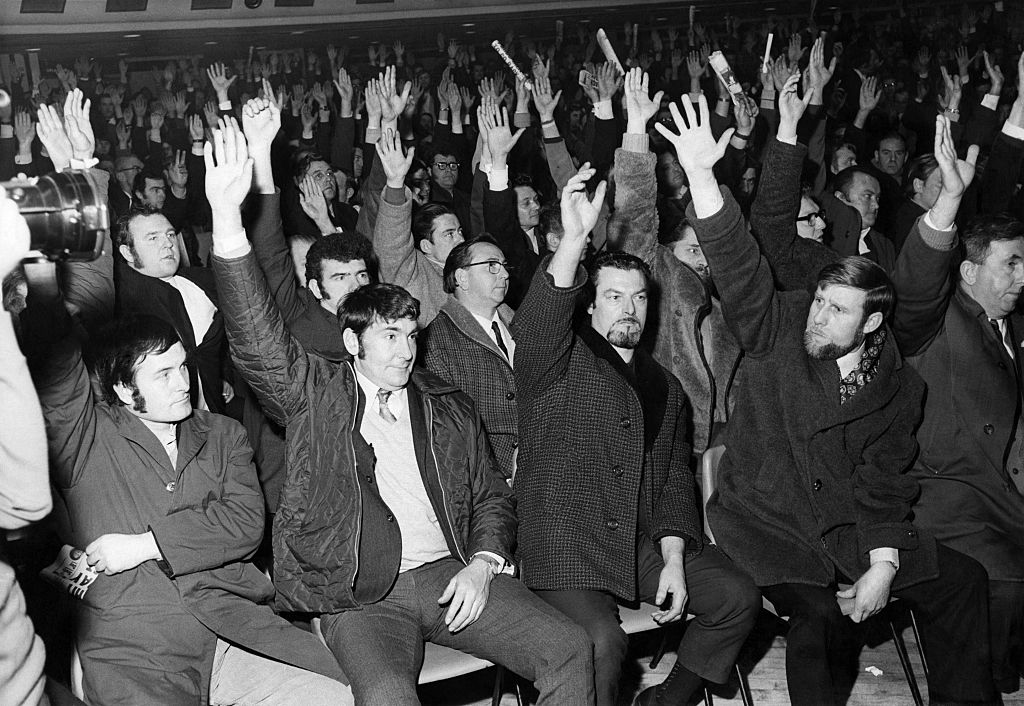 by Mike Beggs on September 29, 2026
Democracy should not end when the workday begins. Workers deserve a say over how their workplaces are run — and a claim on the wealth they create.
- Britain Used Modern Advertising to Sell Its Empire
 by Owen Hatherley on September 29, 2026
Britain once built a government advertising agency for empire, and modernist artists helped market colonial rule.
- Annihilation Is Not Just War
 by James Diddams on September 29, 2026
On Sunday, many churches around the world prayed for peace. That same day, seven months into the war with Iran, President Trump told Fox News he was weighing “if and when do I blow the entire nation up.” Two days later, he took the question to the UN General Assembly. Iran could make a deal and rebuild into “a far greater country than it ever was before.” Or, he asked, “Do I annihilate the Islamic Republic and do it quickly?” Then he went further: “Do I drive them into hell with no chance of survival and no hope of future greatness or generations?” We have heard versions of this before. In April, he warned that “a whole civilization will die tonight,” then pulled back hours before his deadline. By one count, he had set and canceled at least eight deadlines for military action against Iran by mid-July, and the pattern has continued since. Read generously, “the Islamic Republic” can mean the regime, and destroying a regime’s capacity to wage war is a legitimate aim. If that is all he meant, his threats may be permissible. But a regime does not have “generations.” A people does. Blowing up an entire nation and denying it any future would fall on 90 million human beings, most of whom never chose the men who rule them. Some Christians see every American bomb as proof the war is unjust, while others wave off the president’s words as bluster or bargaining leverage. Neither holds up. I support using military force against military targets and terrorists who threaten innocent lives. Iran’s regime has spent decades arming groups that kill Americans, Israelis, and its own citizens, and our forces have every right to stop them. But annihilating a nation clearly crosses a line. The Church has drawn that line for a very long time. In Contra Faustum, Augustine wrote that the real evils in war are the love of violence, revengeful cruelty, and the lust of power. In other words, what corrupts a war is the intention behind it, the motives in the hearts of those who lead it and fight it. The Apostle Paul reminds us that the governing authority does not bear the sword in vain, that the ruler is God’s servant (Romans 13:4). The sword answers to God’s justice. It is legitimate, but it is not unlimited. Two rules follow from that. Commanders must distinguish combatants from civilians, and the harm they cause must fit the military objective. But war is ugly and the line separating legitimate targets from civilian infrastructure is fuzzy. Some bridges carry tanks, and some power plants run weapons factories, and commanders may strike them one target at a time after weighing the cost to civilians. And protecting civilians is not optional. That is why these standards exist, and why they cannot be abandoned the moment they become inconvenient. The rules govern not just what we do but what we threaten to do. Threats matter because intentions matter. A threat tells the world what a nation is willing to do. After September 11, Jean Bethke Elshtain defended the war on terror in Just War Against Terror on exactly this ground. Terrorists set out to kill civilians. We do not. That difference sits at the heart of our cause. When an American president threatens an entire nation, he hands Tehran’s propagandists the argument that no such difference exists. The families of Minab, a city in southeastern Iran, already feel the weight of that question. On the first day of the war, Tomahawk missiles struck a primary school there, and around 120 children died, apparently because of mistaken targeting data that misidentified the school as an IRGC facility. Reuters reported that the Pentagon has conducted an internal investigation, but the results have never been made public. A full public accounting would show the world the difference between our nation and the regime we are fighting. Scripture has a story for a moment like this. God sent Jonah to Nineveh, the capital of Israel’s most feared enemy. Jonah wanted the city destroyed. God spared it instead, and asked Jonah whether He should not care about a great city full of people who could not tell their right hand from their left (Jonah 4:11). Christians confess that Christ alone holds the keys of death and Hades (Revelation 1:18). No government gets to decide that a people has no future. God has a long record of giving hope to nations everyone else had written off. So what should America do? The president already named the better path in the same speech. He described an Iran that could rebuild and become one of the world’s great nations. That vision should anchor our policy, and we can pursue it from strength. Keep striking the regime’s missiles, its nuclear program, and the terror networks it funds. Keep negotiating, as our envoys have tried to for months. Speak to the Iranian people as future partners, the way Reagan spoke past Soviet leaders to the millions living behind the Iron Curtain. He called the Soviet Union an evil empire, built the military to prove he meant it, and never stopped talking about a free future for the people under its rule. The Church has a part to play, too. Jesus told us to pray for our enemies (Matthew 5:44). Iranian Christians already know what that costs, because many of them worship in secret under the same regime that threatens us. The Church does not exist to baptize every exercise of state power. It has a duty to hold that power accountable to a standard that transcends politics, party, and the news cycle. The prophet Micah writes that a day is coming when nations will no longer learn war (Micah 4:3). Until then, every decision our leaders make should move us closer to that day.
- Woman Found Dead in Middle of Street
 by John Nightbridge on September 29, 2026
Police are investigating whether the woman was struck by a vehicle after an ambulance crew discovered her on Bissonnet Street. HOUSTON — Houston police are investigating a possible hit-and-run after a Houston Fire Department ambulance crew found a woman dead in a southwest Houston roadway early Sunday, authorities said. The woman was discovered near 11450 Bissonnet Street at about 1:47 a.m. Sept. 27. The ambulance crew was traveling through the area when it encountered her ... Read more
- Father Throws Daughters From Sixth-Floor Balcony
 by John Nightbridge on September 29, 2026
The girls, ages 4 and 1, landed on protective mats placed below their apartment building during a police response. KAKAMIGAHARA, Japan — A 25-year-old man was arrested on suspicion of attempted murder after police said he threw his two young daughters from the balcony of a sixth-floor apartment in central Japan, with both children surviving after landing on protective mats below. Tomokazu Miura was arrested in Kakamigahara, Gifu Prefecture, after the girls, ages 4 and ... Read more
- Russian Elections Take Place Without Real Oppositionby Alyssa Dowling on September 28, 2026
Executive Summary: On September 18–20, Russia held its elections for the Duma, the lower house of parliament. Observers signaled the importance of the elections in prompting the regime to pause before launching a second mobilization and perhaps formally declaring a state of war (see EDM July 23, September 14). Russia started its full-scale invasion of The post Russian Elections Take Place Without Real Opposition appeared first on Jamestown.
- Trump’s Greenland Deal Puts His Annexation Plans on Ice
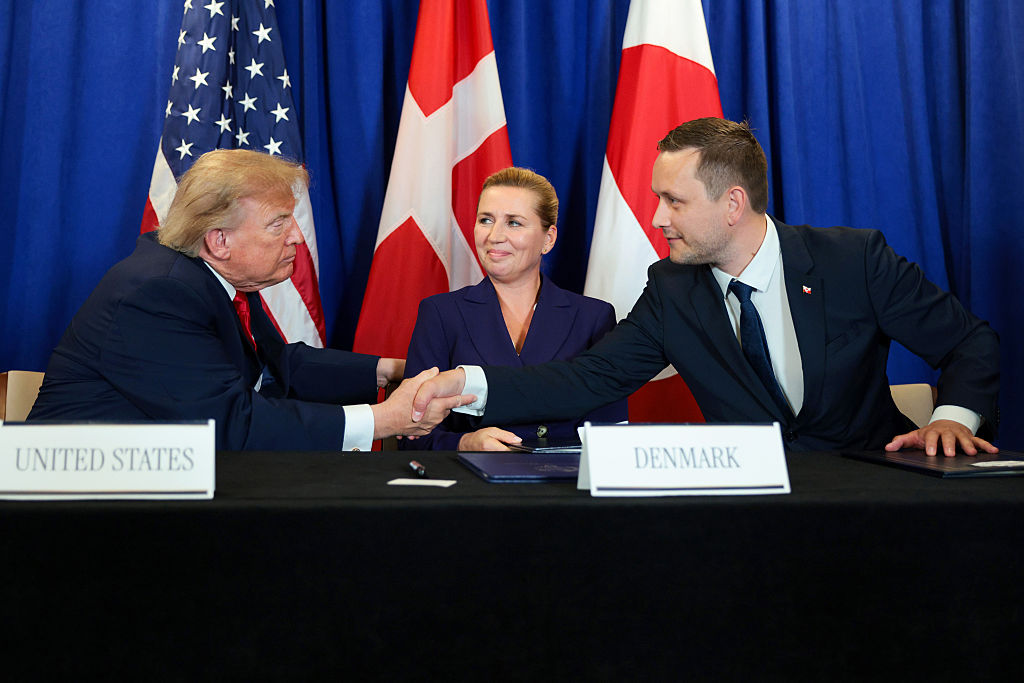 by Huw Paige on September 28, 2026
After doing lasting damage to the relationship between the US and Europe, Donald Trump got roughly the same deal over Greenland he could have obtained by asking politely. The administration’s plan to acquire the island has been put on the back burner.
- We Have to Figure Out How to Design a Warming Planet
 by Marianela D’Aprile on September 28, 2026
Architects and designers are often left carrying out the orders of developers interested only in maximizing profits. But a new book argues they have a vital role to play in transforming our built environment in a world transformed by climate change.
- Gunman Opens Fire in Crowded Dance Studio
 by John Nightbridge on September 28, 2026
Police said two people were wounded before an officer shot the suspected gunman, who remained hospitalized in critical condition. ST. ANN, Mo. — Hundreds of teenagers scrambled for cover after gunfire erupted during a weekend party at a suburban St. Louis dance studio, where police said an arriving officer encountered a person firing into the crowd before shooting the suspected gunman. The shooting happened Saturday night at U Can Dance Studio in St. Ann. Police ... Read more
- What You Should Know as Stores Switch to Digital Price Tags
 by John Nightbridge on September 28, 2026
Walmart and other major retailers are replacing paper shelf labels as consumer advocates and regulators scrutinize rapidly changing and personalized prices. NEW YORK — Small electronic screens are increasingly replacing familiar paper price tags on store shelves, giving retailers a faster way to update thousands of prices while prompting questions from shoppers about how the technology could eventually be used. Electronic shelf labels, sometimes called digital shelf labels, display prices and other product information on ... Read more
- Mark Carney Is Taking Aim at Canada’s Labor Movement
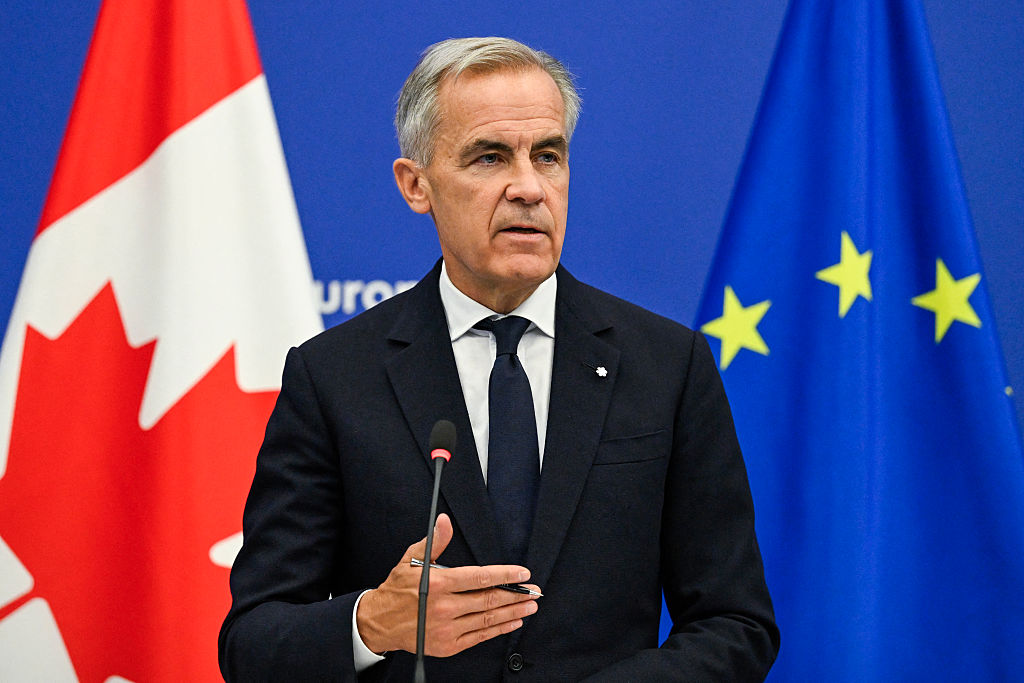 by Adam D. K. King on September 28, 2026
Mark Carney wants to make Canada a destination for global investment. To this end, his new omnibus bill casts the right to strike as an obstacle to the “national interest” — and organized labor as a barrier to national strength rather than its foundation.
- Azerbaijan Expands Green Energy Productionby Mamie Powers on September 28, 2026
Executive Summary: On September 20, Azerbaijan marked the thirty-second anniversary of the 1994 “Contract of the Century,” the $7.4 billion production-sharing agreement that brought eleven international oil companies from seven countries into Baku to develop the Azeri–Chirag–Gunashli fields (President of Azerbaijan, accessed September 28). Signed under former Azerbaijani President Heydar Aliyev just under three years The post Azerbaijan Expands Green Energy Production appeared first on Jamestown.
- The Dilemmas of Socialist Governance of a Capitalist State
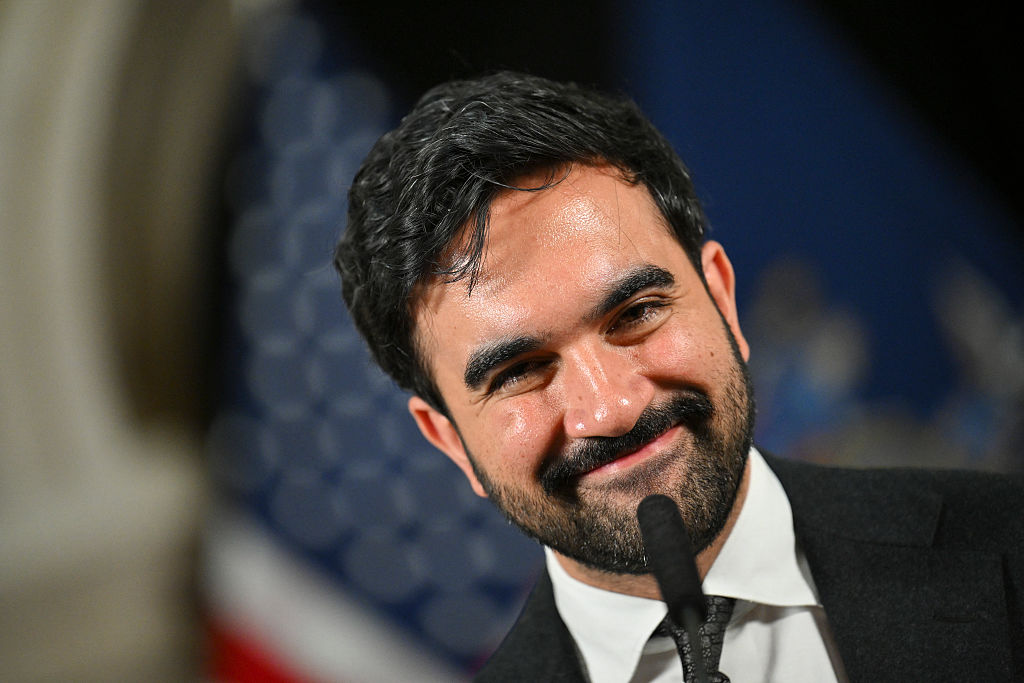 by Max Elbaum on September 28, 2026
Socialists aren’t anywhere near powerful enough to overcome capitalism, but we are now a force to be reckoned with in mass politics. This opportunity requires wrestling with the challenges of governing under capitalism rather than relying on old dogmas.
- The Beatles Belong to the Left
 by Alex Niven on September 28, 2026
Don’t let the baby boomers moderate the Beatles’ politics. They were undeniably men of the Left.
- A Labour Prime Minister Inaugurated Britain’s Neoliberal Era
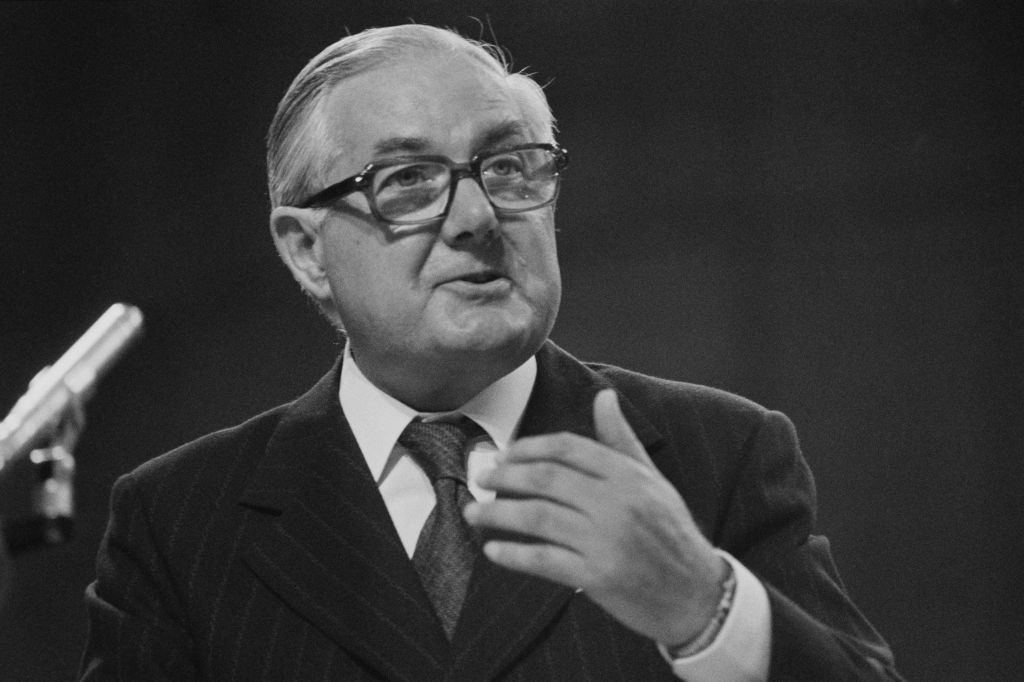 by Neil Warner on September 28, 2026
Fifty years ago, British Labour leader James Callaghan used his party conference speech to promote some of the key ideas associated with neoliberalism. A close look at the speech can help explain why neoliberalism keeps defying predictions of its demise.
- A Prayer for All of Us
 by James Diddams on September 28, 2026
An American airman shot down over Iran—the weapons systems officer in the backseat of an F-15E, callsign “Dude 44 Bravo”—recently shared what went through his mind as he ejected from his crippled aircraft. “When I looked up and saw no parachute, that was the most terrifying thing I’ve ever seen,” he said during a “60 Minutes” interview. “So, I paused right then and I prayed, ‘Lord, your will be done. But if I’m getting through this, I need help.’” In a sense, Dude 44 Bravo’s awful predicament and simple prayer serve as a metaphor and a roadmap for all of us. SledgehammerThe global landscape is, to borrow a word, terrifying.Russia is bludgeoning Ukraine, sabotaging NATO infrastructure, lobbing attack-drones into Poland and the Baltics, sharing weapons and intelligence with Iran and North Korea, providing targeting data to support Houthi attacks against U.S. vessels, and putting its “whole economy…on a war footing,” NATO Secretary General Mark Rutte reports. China is brandishing the world’s largest navy, mushrooming its nuclear arsenal, dress-rehearsing a Taiwan invasion, conducting a cyber-siege of the free world and sharing satellite imagery with Iran to attack U.S. forces. Iran has delivered weapons to Russia, targeted and killed U.S. troops, launched cyberattacks against U.S. water utilities, shut down the Strait of Hormuz, strangled the global economy, and unleashed missiles and drones against a dozen countries. (Related, U.S. operations in and around Iran have burned through large chunks of America’s air-defense and stand-off weaponry.)North Korea has sent ammunition and troops to fuel Putin’s war on Ukraine, shipped rockets to Hamas, and conducted countless missile tests threatening its neighbors.These regimes are taking a sledgehammer to what’s been called the “rules-based democratic order” or “liberal international order.” These terms may seem esoteric, but they are just descriptions of how America and its allies tried to make the world work after World War II: They developed rules and norms of behavior; encouraged democratic governance; promoted liberal political and economic institutions; and expected governments to promote order within and across their borders.Contrary to those who dismiss the liberal international order as some gauzy outgrowth of 1990s-era globalism, America’s leaders have long considered it essential to America’s security throughout. General George Marshall explained that “we fought to prevent Germany and Japan from imposing their kind of order on the world”—and that under the “cooperative idea of global order,” the free world would defend “a set of rules for global conduct.”President Harry Truman adopted a policy that committed America “to bring about order and justice by means consistent with the principles of freedom and democracy.” Toward that end, he forged NATO, rescued South Korea and West Berlin, signed the Universal Declaration of Human Rights, promoted tariff-lowering initiatives, and fielded a large peacetime military to buttress the postwar order. President Ronald Reagan reinforced U.S. deterrent military strength, renewed America’s support for allies, wielded American might to enforce international law in the Mediterranean and Persian Gulf, used the bully pulpit and economic big stick to promote human rights, unveiled a free-trade zone spanning North America, and pledged to defend “a peaceful, prosperous and humane international order.”President Bill Clinton explained, “The more that democracy and political and economic liberalization take hold in the world, the safer our nation is likely to be and the more our people are likely to prosper.” President George W. Bush argued that “A solid and productive transatlantic relationship is essential for international order” because “Europe and America share a common attachment to the fundamental values of freedom and democracy.” President Barack Obama lauded “an international order in which the rights and responsibilities of all nations and all people are upheld…commerce and freedom of navigation are not impeded… [and] disagreements are resolved peacefully.” These leaders recognized that the liberal international order sustains American power—and must be sustained by American power. The Trump administration has taken a different course. Consider the administration’s trade war on allies; undermining of NATO, NATO members and NATO’s security guarantee; persistent strain of moral relativism vis-à-vis aggressor nations and their victims; inability to discern friend from foe; shrugging indifference to human rights; insistence that Americans “focus on ourselves”; injection of unpredictability and chaos into the world, rather than steadiness and assurance.GapsThe technology front, too, is edging toward terrifying. Industry leaders and policymakers struggle to grasp the ramifications of AI’s manipulation of data, CRISPR’s manipulation of genes, deep-fake manipulation of images; of pilotless planes that remove humans and risk from the calculus of war; of hypersonic weapons that scream toward their targets at a mile per second and cyberattacks that move at light-speed.Our leaders need wisdom to navigate this brave new world—so do the rest of us. Yet there’s an expanding gap between knowledge and wisdom in our society, with the amount of knowledge exploding and our reserves of wisdom dwindling away. Faith, history and pillar civic institutions are wellsprings of wisdom. But a growing number of Americans aren’t drawing from those wellsprings. Since the nation’s founding, Americans have believed religion serves as a foundation for free government and a repository for wisdom. We don’t have to worship on the same days or in the same ways to recognize this truth. Yet less than 50% of us are members of a house of worship—down from 64% in 2003, which was down from 76% in 1948.Just half the American public knows when the Civil War was fought. Six in 10 cannot name the nations we fought in World War II. Only 55% of Millennials—now America’s largest generation—think “communism was and still is a problem.” Just 26% of Americans can name our three branches government. Only 40% can list any of the First Amendment freedoms. Just 37% can name their member of Congress. Instead of drinking from these wellsprings of wisdom, Americans are embracing selfie-narcissism. YouTube, Twitter/X, Facebook, LinkedIn, Instagram, TikTok and the like largely focus on the self: self-promotion, self-image, self-interest, self-congratulation. There’s no time or place for introspection, learning from or listening to others, or understanding the lessons of the past. The resulting “wisdom gap” leaves us ripe for manipulation, at risk of being swayed by the loudest or newest or flashiest thing, unmindful of danger, unaware our parachute has failed, unprepared for a painful impact. ScarredWhat can we do?First, like Dude 44 Bravo, we can and should pray. “The real business of your life as a saved soul,” Oswald Chambers wrote, “is intercessory prayer.” Most of us think of this as interceding for individuals who are lost. But it can also mean interceding for our leaders, our country, our world. The good news amidst the bad is that God cares about this world He created and deigns to help us. As Benjamin Franklin observed, “The longer I live, the more convincing proofs I see of this truth: that God governs in the affairs of men.” Without a chute, the impact broke Dude 44 Bravo’s back, shattered an arm, busted a shoulder and wrenched an ankle. Yet his prayer was answered: Dude 44 Bravo was rescued from the desert and certain death by an army of special-operations personnel and an armada of aircraft. As an old hymn puts it, “Great things happen when God mixes with man!” That brings us to a second action item. Martin Luther is credited with saying, “Pray like it all depends on God, then when you are done, go work like it all depends on you.” After praying, Dude 44 Bravo did his part by surviving the fall, evading capture and positioning himself to help his rescuers help him. In a similar way, we need to survive the fall by gathering around commonsense policies that will strengthen our standing and our defenses. More than eight in 10 of us believe America has a moral obligation to stand up for human rights and democracy; 79% of us support higher defense spending; 73% of us recognize that NATO is essential to America’s security and prosperity. We need to make sure those who represent us truly represent our worldview.Closer to home, we need to listen to each other. The Lord gave us two ears and one mouth for a reason. And we need to talk with the next generation about our country and our world—why America is great because America is good, how we’ve made it through other times of testing, what must be done to make it through this time. “All great change in America begins at the dinner table,” Reagan observed. “So, tomorrow night in the kitchen, I hope the talking begins.” There’s no parachute to break our fall, no cavalry coming to our rescue. If we’re getting through this, we need God’s help; we need His grace and mercy; we need wisdom; we need each other. Even then, if we get through these dangerous days, we may be—like Dude 44 Bravo—left scarred and limping.
- How Brazilian Cinema Survived Fascism
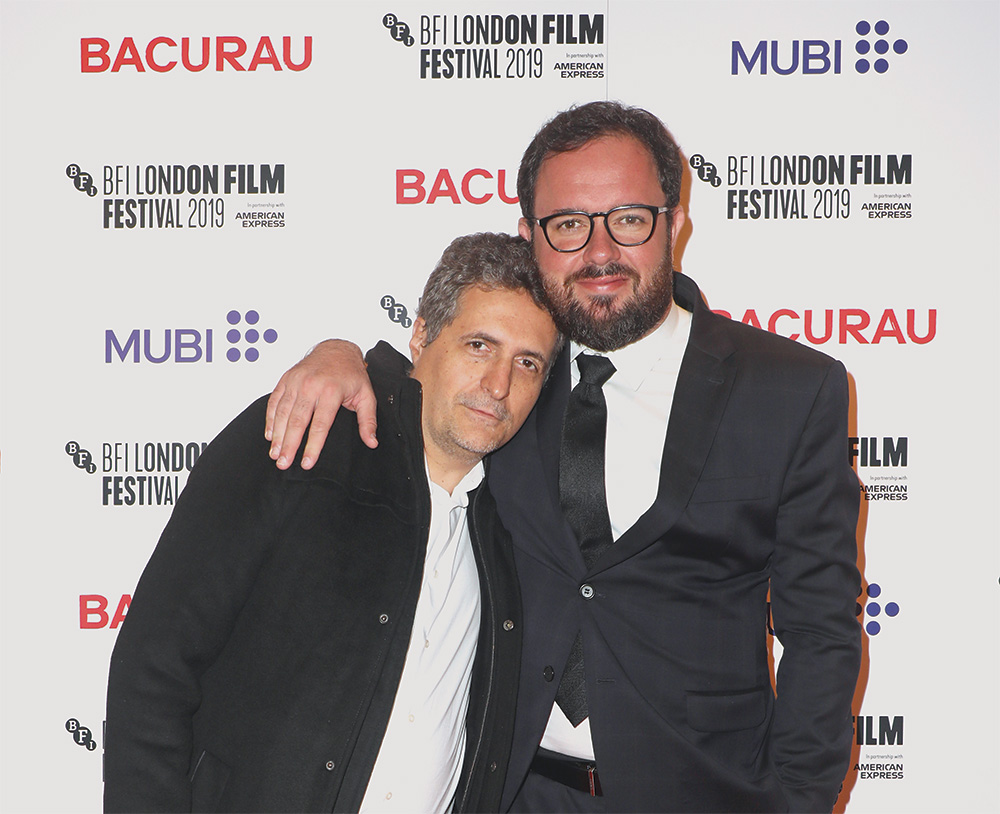 by Eileen Jones on September 27, 2026
Under Jair Bolsonaro, Brazil’s national cinema was gutted, censored, and left for dead. Then Lula returned — and so did the movies.
- Who Killed Asylum?
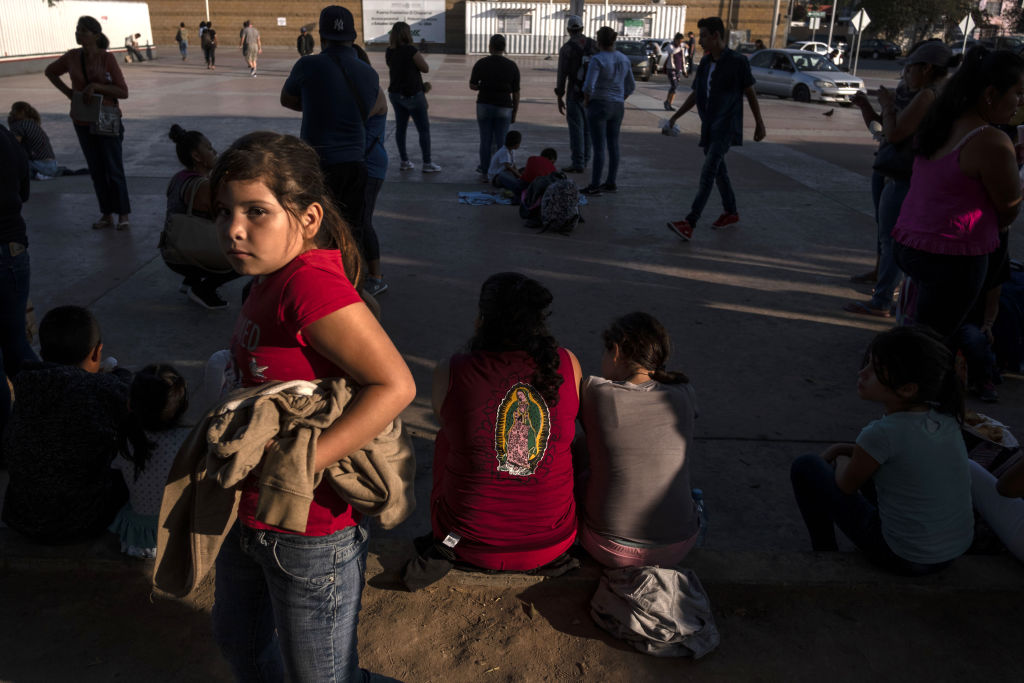 by Levi Vonk on September 27, 2026
Since the fall of the Soviet Union, the US government, across Republican and Democratic administrations alike, has been slowly dismantling what was once the most generous asylum system in the world.
- The United Arab Emirates Is Devastating Sudan for Profit
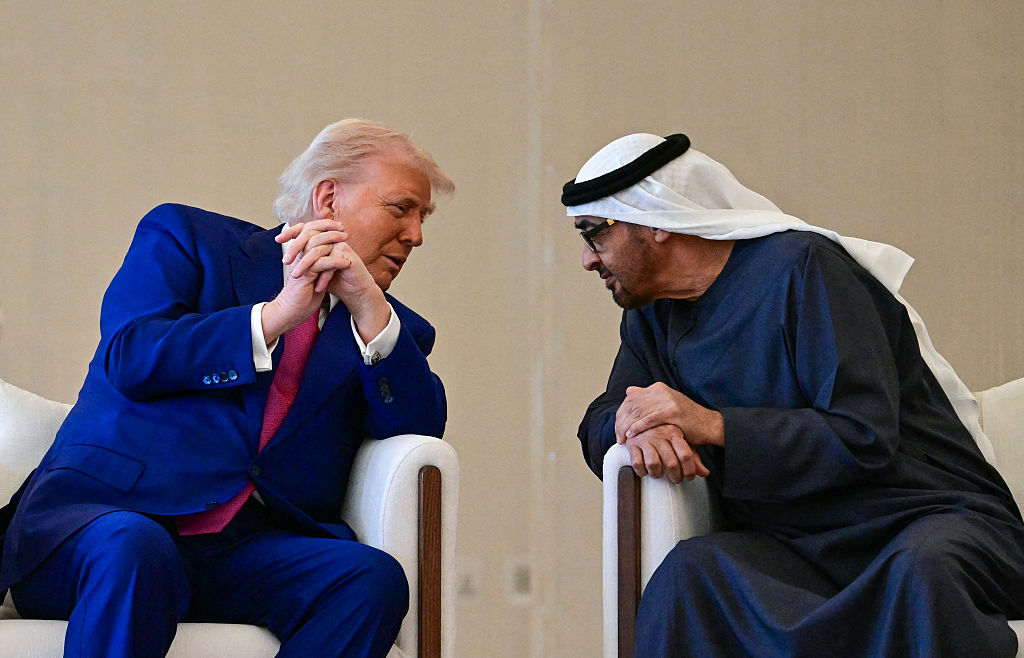 by Husam Mahjoub on September 27, 2026
Several outside actors have stoked the flames of war in Sudan, but none has had as great an impact as the United Arab Emirates. The evidence of its destructive role is overwhelming, but the Gulf kingdom’s Western allies have turned a blind eye to it.
- We Can’t Blame the Supreme Court for Congress’s Problems
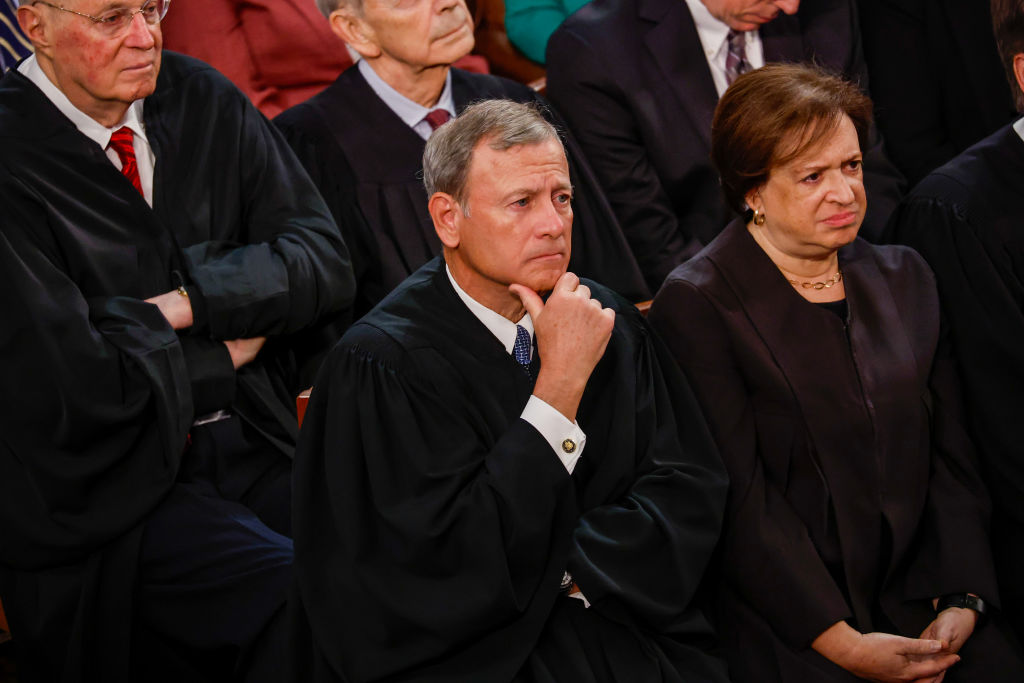 by Harry Blain on September 27, 2026
The US does not suffer from a tyrannical Supreme Court so much as an ineffective Congress that, by constitutional design, delays and obstructs rather than acts on the most pressing issues facing Americans.
- In Italy’s Financial Capital, Socialism Is Back in the Air
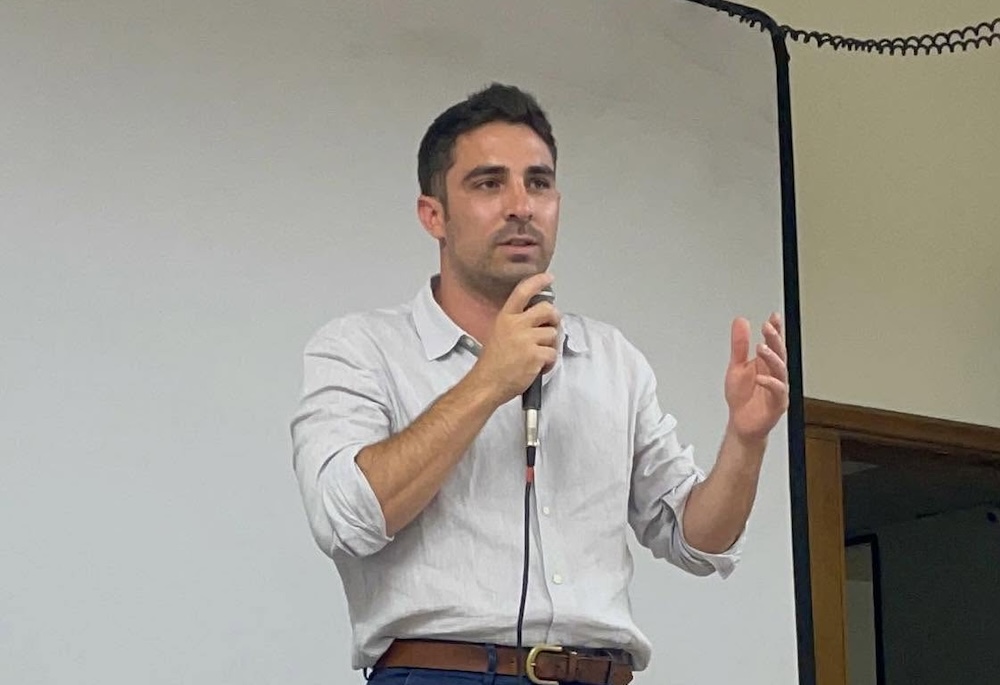 by Jacopo Custodi on September 27, 2026
With his down-to-earth focus on cost-of-living issues, Milan mayoral candidate Lorenzo Pacini is seeking to reconnect with Italian traditions of city-hall socialism.
- Video Game Workers at Blizzard Won First Union Contracts
 by Dan DiMaggio on September 26, 2026
Nearly 2,000 workers at Blizzard, a Microsoft-owned video game studio that makes popular games like Diablo, won their first union contracts earlier this month. Their protections include recall rights and guaranteed severance packages for laid-off workers.
- Khamenei According to Beijing: Regime, Revolution, and the Making of a Safe “Friend”
 by James Diddams on September 25, 2026
Two months after Ayatollah Ali Khamenei was killed in U.S.-Israeli strikes on Iran in February 2026, Iran’s cultural office in Beijing promoted an uncommon afterlife for the late supreme leader: his Chinese memoir. Chinese and Iranian outlets reported that The Heart’s Blood Turned into Rubies 《化作红宝石的心血》 was being sold in Chinese bookstores and online. Beijing and Tehran had long worked to build cultural channels framed as civilizational dialogue. Publishing Khamenei’s memoir in Chinese was part of that enterprise. Published by China’s Southwest University Press in December 2023, the Chinese edition recounts Khamenei’s religious formation, seminary training, political awakening, imprisonment, exile, and pre-1979 activism. A Chinese source states that the Arabic recollections were organized and edited by Muhammad Ali Azarshab with Khamenei’s approval, published in Arabic in Beirut in 2019, translated into Persian, and then rendered into Chinese. The English edition, Cell No. 14, is presented as the first formal memoir from the Office of Iran’s Supreme Leader, with the Arabic edition aimed especially at Arab youth. The book is an authorized self-portrait, circulated through Iranian regime propaganda institutions and through Iranian cultural and diplomatic networks. It presents Khamenei as an upright religious leader who fought the Shah, endured prison and exile, and helped build the Islamic Republic. It foregrounds revolutionary sacrifice while omitting coercion, violence against protesters, and human-rights abuses. Why would Beijing devote state-linked resources to translating an Islamic theocrat’s memoir? Because it needs a politically safe story of Iran to convince Chinese citizens of why partnership with Tehran is necessary and morally defensible; why a religious “supreme leader” deserves sympathy from a Marxist-atheist CCP; and why the United States is a shared adversary. Khamenei’s memoir offers a familiar revolutionary plot—an anti-Western hero, hardened by oppression, dignified in adversity, and committed to sovereignty and nationalism. His religion becomes politically safe not because the CCP accepts Islamic ideology, but because it is presented as an instrument of grassroots resistance to foreign domination, especially the West. Why Beijing Needs an Iran Story The China-Iran relationship is consequential, though it remains short of a formal alliance. China is Iran’s largest trading partner and principal market for crude oil. The U.S.-China Economic and Security Review Commission estimates that Chinese purchases accounted for roughly 90 percent of Iran’s oil exports and generated more than $31 billion in Iranian revenue in 2025. The 25-year cooperation agreement, sanctions-evasion channels, multilateral ties, and military exercises deepen the relationship. Research has identified Chinese components in Iranian drone and missile supply chains and other dual-use links. Studies have documented deepening cooperations between Chinese and Iranian universities beyond immediate wartime supplies. Yet material cooperation does not solve an ideological problem: an atheist Communist Party and a Shi’a theocracy are not natural partners. Beijing seeks to narrow that contradiction through a civilizational discourse on sovereignty, victimhood, resistance to foreign coercion, and opposition to U.S. dominance. Khamenei’s selected biography makes that discourse personal. His Islamic identity is safe when religion appears as revolutionary discipline and anti-U.S. resistance, rather than an autonomous moral authority competing inside China. Books as Political Infrastructure The Chinese translation calls books “instruments of knowledge and carriers of civilization that deepen mutual understanding between China and Iran.” Khamenei’s memoir was selected for the China-Iran Classics Mutual Translation Project, part of the Asian Classics Mutual Translation Plan, implemented by the Import and Export Administration Bureau of the CCP Central Propaganda Department. The first eight titles reveal asymmetry. Iran published classics of Chinese philosophy, including The Analects of Confucius and works by Laozi and Mencius. (It also published I Am Hua Mulan, a children’s book about the same heroine American audiences know from Disney). In turn, China published Khamenei’s memoir alongside the works of Yahya ibn Habash Suhrawardi, a Persian philosopher, and books on Persian language and Islamic art. This gave a contemporary regime memoir the prestige of a “classic,” showing how the state uses civilizational narratives to elevate politically useful texts. Book publishing is integral to the CCP’s global propaganda and influence system. A 2022 National Press and Publication Administration directive ordered publishers to tell Party stories and China’s “peaceful development,” and to treat the promotion of Xi Jinping’s thought as a primary political task. Authorities frame Belt and Road publishing as international communication and the construction of China’s global discourse power. The apparatus sends politically useful Chinese narratives outward while bringing selected foreign stories into China for domestic audiences. The Boundary of a Safe Story The translation and endorsement of a religious leader’s story do not mean the CCP is tolerant of religion. The Party’s central goal is to subordinate religion to Party rule: religious communities cannot maintain activities, networks, education, or proselytization beyond its control. Xinjiang’s religious-affairs regulations require religious bodies and believers to uphold socialist core values, advance the “Sinicization of religion,” safeguard national unity, and remain independent of foreign control. Religious publishing is banned, without Party approval. That is why the Chinese translators’ introduction presents Khamenei as a hero the West failed to recognize: frugal, diligent, morally serious, persecuted and exiled, yet ultimately victorious. It treats his conviction, “unyielding will to struggle,” and even high standards of hygiene as lessons for readers. The book’s stated focus on Arab youth makes Khamenei’s prison cell a propaganda classroom, where the future supreme leader is presented as a moral model. This revolutionary-hero plot is familiar to CCP narrative frameworks. Official Xi Jinping biographies likewise use hardship, study, discipline, sacrifice, and perseverance to make leaders trustworthy. Beijing does not need to remake Khamenei as a Chinese Communist revolutionary. It needs a Khamenei whose formation can be recognized within the CCP’s storytelling playbook. To a CCP propagandist’s ear, Khamenei’s life sounds familiar. The familiar narrative ensures that Khamenei’s Shi’a religious authority poses no domestic challenge even as Chinese believers, including Muslims, face unprecedented religious restrictions. Khamenei belongs to a Beijing-friendly foreign regime and validates revolutionary sovereignty abroad. Pope John Paul II, a globally renowned religious leader who challenged communism, offers a useful counterfactual. Chinese-language material about him is limited, and George Weigel’s Witness to Hope has not been published in mainland China and has circulated in Hong Kong only within limited church circles. A Party-supervised classics project on papal authority, the Vatican, and John Paul II’s role in challenging communist rule would not fit. The issue is not whether Islam is perceived as safer than Christianity; it is not. Rather, the question is what political authority a religion legitimates and whether it threatens Party control. Khamenei reinforces the Party’s anti-Western narrative; Pope John Paul II’s undermines it. Authoritarian regimes can sustain one another through oil, finance, technology, military exercises, and diplomatic cover. But they cannot purchase their people’s loyalty. Governments may control information; but they cannot assume citizens will accept the moral logic of supporting a distant, repressive regime. Iran produced an authorized Khamenei—religious, persecuted, anti-Western, and revolutionary. Beijing selected that version, framed it as civilizational exchange, and promoted it through state-supported institutions. Weapons and trade may sustain a partnership, but manipulation and coercion rarely win citizens’ trust.
- Türkiye’s Black Sea Diplomacy Faces Russian Roadblocksby Mamie Powers on September 25, 2026
Executive Summary: Signals from Moscow dim the prospects of a renewed Black Sea Grain Initiative despite Turkish efforts. Russian and Ukrainian strikes on Black Sea ports, loading terminals, and ships are disrupting food exports and the global grain supply, and they have struck civilian vessels from other countries (United Nations, July 27; Anadolu Ajansı, August The post Türkiye’s Black Sea Diplomacy Faces Russian Roadblocks appeared first on Jamestown.
- Transnistria’s Republic Day Tests a Fraying National Mythby Salome Mamuladze on September 24, 2026
Executive Summary: On August 27, Moldova marked 35 years of independence with one of the largest military parades in its history. More than 2,000 troops and roughly 100 pieces of equipment moved through Chișinău Great National Assembly Square, including armored personnel carriers and drones supplied by North Atlantic Treaty Organization (NATO) member states. Moldovan President The post Transnistria’s Republic Day Tests a Fraying National Myth appeared first on Jamestown.
- Moscow Tries to Tie Its Partners to Putin’s Worldviewby Salome Mamuladze on September 24, 2026
Executive Summary: On September 10, Russian political scientist and Valdai Discussion Club Program Director Timofei Bordachev penned an article titled “Non-alignment no longer exists” (Valdai Club, September 10). He argues that even insignificant manifestations of independence by governments of the “Global South” are “strikes against the interests of the United States and Europe,” which the The post Moscow Tries to Tie Its Partners to Putin’s Worldview appeared first on Jamestown.
- Central Asian Countries Mull Transformative Schengen-Style Passport Regimeby Salome Mamuladze on September 24, 2026
Executive Summary: For almost a decade, some Central Asian leaders, Kyrgyzstan’s in particular, have called for a Schengen-style visa-free regime across the region to let citizens move easily between countries and promote tourism (Orda, March 31, 2025; Azattyq Asia, September 6). Now, after many fits and starts, interest in some arrangements similar to those in The post Central Asian Countries Mull Transformative Schengen-Style Passport Regime appeared first on Jamestown.
- Matthew VanDyke: U.S. Citizen Arrested in India for Training Myanmar’s Rebelsby Samuel Jones on September 24, 2026
Executive Summary: Matthew VanDyke is a U.S. citizen and self-described “freedom fighter.” Since 2011, he has shifted from war correspondent and documentary filmmaker to an armed foreign volunteer who has fought in, and later offered battlefield expertise in, multiple civil and international wars worldwide. During the first Libyan civil war in 2011, VanDyke took up The post Matthew VanDyke: U.S. Citizen Arrested in India for Training Myanmar’s Rebels appeared first on Jamestown.
- Mufti Nadeem Darvesh: Darul Ifta Cleric Behind TTP Doctrineby Samuel Jones on September 24, 2026
Executive Summary: A religious insurgency led by Tehreek-e-Taliban Pakistan (TTP), or the “Pakistani Taliban,” has intensified its focus on Pakistan’s northwestern Khyber Pakhtunkhwa province since 2021 (see Terrorism Monitor, May 1). The group pledges allegiance to the Afghan Taliban’s emir, Hibatullah Akhundzada, and seeks to establish and enforce sharia law in Pakistan (Arab News, December The post Mufti Nadeem Darvesh: Darul Ifta Cleric Behind TTP Doctrine appeared first on Jamestown.
- Xi’s Escalating War on the Chinese Church and the Case for a More Rigorous US Policy
 by James Diddams on September 24, 2026
“I’m saving Christians throughout the world,” President Donald Trump said at the Faith & Freedom Coalition’s June 2026 policy conference in Washington, D.C. Regardless of whatever else one thinks of Trump’s foreign policy, Christians should take such a declaration seriously. A consistent American foreign policy aimed at protecting religious freedom could have consequential implications for nearly 400 million suffering Christians worldwide—arguably the most persecuted religious group in the world. China should be an important part of this conversation. The country is home to an estimated 75 million to 100 million Christians, who have faced brutal persecution at the hands of the atheist Chinese Communist Party (CCP) since 1949. But if President Trump and his administration are serious about protecting religious freedom and helping these vulnerable Chinese Christians who daily find themselves in precarious situations, it would require more than a one-off, ad hoc diplomatic effort. It requires a robust, coherent, and principled foreign policy that integrates human rights and religious freedom at the center. THE LIMITS OF ONE-OFF DIPLOMACY In his May 2026 meeting with Chinese leader Xi Jinping, Trump raised the case of detained Chinese pastor Ezra Jin Mingri of Beijing Zion Church. This advocacy ultimately led to Pastor Jin’s release in July, powerfully demonstrating the importance of American diplomatic intervention and leverage. This intervention deserves our praise and gratitude. But what about the other detained Zion Church leaders and more broadly the tens of millions of persecuted Chinese house church Christians, whose names will never land on the president’s desk? The sobering reality is that the persecution of Christians has not stopped but in fact has escalated under Xi’s iron fist for over a decade. The US requires a broader, more consistent approach. A value-based approach should help guide American foreign policy while complementing other important policy considerations such as trade, technology, and great-power competition. Moreover, the US government should be clear-eyed about the CCP’s deeply ideological character—reflected in its longstanding antagonism toward Christianity and in its increasingly restrictive religious policy. CHINA’S CRACKDOWN ON RELIGION On paper, China’s constitution narrowly protects “freedom of religious belief” and “normal religious activities” (Article 36), while leaving “normal” undefined. In reality, this ambiguity places unregistered house church Christians in a precarious situation, as any activities that authorities consider “abnormal” could be banned and punished. The Chinese government officially recognizes only five religions—Buddhism, Catholicism, Islam, Protestantism, and Taoism. The CCP exercises pervasive and strict control of religion through laws, regulations, and policies. Central to the CCP’s institutional control of religion are seven state-controlled religious organizations—also knowns as “patriotic religious organizations” —through which the government manages religious affairs. The CCP has long required religious groups—particularly those wishing to practice one of the five recognized religions—to register with authorities and subject themselves to ongoing state control. Those refuse to do so are often persecuted as illegal “evil cults” or “heterodox religion” (xiejiao). Many Chinese Christian churches believe that joining the government-controlled religious organizations would compromise their integrity and doctrine. As such, they operate illegally as underground house churches. The two organizations specifically responsible for Protestant affairs are the Protestant Three-Self Patriotic Movement (TSPM) and China Christian Council (CCC). The CCP’s infamous United Front Work Department (UFWD) supervises the seven state-controlled religious organizations and is directly implicit in the persecution of house church Christians and other religious adherents. The use of the “cult” designation to suppress independent religious groups traces its root to ancient Chinese dynasties. It is often politically motivated and not necessarily based on doctrinal or theological considerations. Although the CCP has historically used the “cult” charge—as codified in Article 300 of China’s Criminal Law (CCL)—to crack down on groups such as Falun Gong, authorities have increasingly targeted Protestant house churches in recent years. Also, authorities have increasingly weaponized financial charges—such as “illegal business operation” (Article 225, CCL) and “fraud” (Article 266, CCL) —to criminalize unregistered house churches, including the Zion Church. The use of such economic offenses against house church leaders serves to undermine their religious and moral legitimacy and to evade international criticism of the CCP’s religious persecution. Even more troubling, the CCP also has begun to employ the overtly political charge of “inciting subversion of state power” (Article 105, CCL)—often reserved for political activists and dissidents—to target house church leaders such as Pastor Wang Yi. The highly political nature of this charge evokes the “counterrevolutionary” offense used in the last century, underscoring a significant escalation of the CCP’s persecution of the house church. Finally, authorities use numerous central and local government laws, regulations, and policies to crack down on religion, all of which are considered as parts of Xi’s signature, coercive “Sinicization of religion” policy. Although the term “Sinicization” literally means “to make something Chinese,” its meaning is much more sinister and coercive in practice. The Sinicization policy serves as a core component of the CCP’s political ideology to subdue all religions, ensuring the “complete subordination of religious groups to the CCP’s political agenda and Marxist vision for religion.” This policy is coercive and militant, seeking to control and subdue anything the CCP deems potentially threatening to its rule, including perceived foreign architectural elements, selection of religious leaders and clergy, interpretation of religious doctrines and theology, and content of sermons. Concerning Protestant Christianity specifically, the CCP has long viewed it with suspicion and as a foreign religion which must be controlled, transformed, or eradicated. The Sinicization policy has likewise been imposed on ethno-religious groups like Uyghur Muslims and Tibetan Buddhists, through coercive measures such as mass detention and imprisonment, forced labor, and suppression of their cultural-religious identities. The US government and several western legislatures have formally designated China’s treatment of Uyghur Muslims as genocide. CHRISTIANS LIVING UNDER XI JINPING’S IRON FIST The CCP has long made use of its various legal and financial tools to crack down on religious groups. But today, Chinese Christians are experiencing arguably the worst religious persecution since the infamous Cultural Revolution (1966-1976). Since Xi took office in 2012, his administration has carried out a series of campaigns that have further constricted the already restrictive space within which Christians could operate. Beginning in 2013, authorities launched a cross removal and church demolition campaign in Zhejiang province—a region with a sizable Christian population—which later spread across the country. Authorities targeted not only independent house churches but also state-sanctioned TSPM churches. While precise figures are difficult to obtain, it is estimated that authorities have demolished or otherwise destroyed thousands of crosses and dozens of church buildings. The significance of this campaign extended beyond the issue of whether a church is registered with the government or not. High-level government officials were ostensibly more concerned about Christianity was becoming too visible and too influential. The crackdown also signaled the troubling, increasingly restrictive trajectory of Xi’s religious policy. The crackdown has involved the arrest and imprisonment of Christian leaders—including both house church and registered TSPM church leaders—such as pastor Joseph Gu Yuese and pastor Huang Yizi who opposed the demolition campaign. Throughout Xi’s reign, his government has also persecuted numerous other Christian leaders, putting them behind bars on spurious charges ranging from “fraud,” “illegal business operation,” to “inciting subversion of state power.” Prominent cases include Pastor Wang Yi of the Chengdu Early Rain Covenant Church and the leaders of Beijing Zion Church. Authorities have imposed other restrictions on Christianity in recent years. These include prohibiting minors from attending church services, censoring Christian content and discussion online, banning the sale of Bibles, burning of Bibles, and destroying Christian burial sites. CONCLUSION This overview cannot fully capture the comprehensive nature of CCP’s control and persecution of Christianity in China. A couple of decades ago and due to more favorable conditions at the time, some house church leaders envisioned a day when their churches would be legalized and able to freely worship the Triune God without being forced to join the state-controlled TSPM. Under Xi’s rule, such optimism is no longer realistic. The Chinese church remains resilient and resourceful. Chinese Christians have adapted to the increasingly oppressive condition by learning to be “wise as serpents and innocent as doves” (Matthew 10:16). Some have escaped China to seek religious freedom elsewhere. Most, however, remain in their homeland by going underground and meeting in smaller groups as large physical gatherings have become exceedingly difficult. Chinese Christians are no strangers to such challenging circumstances. Their predecessors endured decades of state persecution and suffering, including during the most brutal period of the Cultural Revolution. The church survived because Christians learned to trust God and be faithful witnesses despite difficult circumstances. The Chinese church’s resilience, however, is not an excuse for American inaction. If President Trump is serious about his promise to protect vulnerable Christians throughout the world—including those in China—then his administration (and Congress) should pursue a more robust foreign policy that systematically and closely integrates religious freedom and human rights in its engagement with the CCP. Such a policy should be principled and coherent that matches Xi’s own ideological and policy rigor in suppressing and controlling the Chinese church. The US government has a range of tools at its disposal to advance such a policy. It should begin by considering the following specific measures: First, the administration should release the International Religious Freedom reports (IRF reports) on a timely basis, which is a statutory requirement. The IRF report provides an evidentiary basis and accountability mechanism for designating violators as Countries of Particular Concern (CPC) and imposing punitive sanctions. The Department of State, however, has not released the 2024 and 2025 IRF reports, which could signal to China and other violators that the United States is deprioritizing international religious freedom and consequently could embolden their continued violations. Second, the administration should impose targeted financial sanctions and visa restrictions on Chinese officials directly responsible for persecuting Christians and other religious minorities. These should include officials in the CCP’s United Front Work Department, public security officers, and relevant local and provincial authorities. Such sanctions can be coordinated with likeminded international partners to maximize punitive and deterrent effect. Third, in light of the successful rescue of Pastor Jin, the State Department should update and maintain a priority list of religious prisoners and consistently raise them in all levels of diplomatic engagements, including during and after the September 2026 Trump-Xi Summit in Washington. These measures (and potentially other policy tools) alone will not change China’s coercive religious policy nor the CCP’s hostility toward Christianity overnight. But a policy that consistently documents abuses, identifies and calls out perpetrators, advocates and protects victims, and imposes costs would make clear to China that the United States cares about religious freedom and that violating it carries consequences. The United States has a complex bilateral relationship with China that spans many important considerations. But as Michale Sobolik observed recently, US policymakers should not “treat human rights as a side show” to seemingly “more important considerations” like trade, technology, and military balance. More poignantly, he argues that “Such thinking reflects a lack of strategic creativity, but it also suggests a moral deficit.” Protecting religious freedom is a moral responsibility that is deeply rooted in American tradition. As we celebrate the release of Pastor Jin, we should also ensure that his case is not treated as an isolated diplomatic success but a catalyst for a broader, coherent, and principled American foreign policy that protects and advocates for persecuted Christians in China and throughout the world.
- Review of “Religious Communities Under Pressure: Documenting Religious Persecution in Russia, 2022-2026”
 by James Diddams on September 23, 2026
Since Russia’s 2022 invasion of Ukraine, religious persecution has become a closely watched dimension of the conflict. Ukraine’s alleged persecution of the Ukrainian Orthodox Church (Moscow Patriarchate), as well as Russia’s documented persecution of non-Russian Orthodox churches in occupied Ukraine, have received the most attention, both among those who follow the conflict closely and among the broader American public. While these issues are important, another grave violation of religious freedom has gone largely unnoticed: the collusion of the Russian government and the Russian Orthodox Church (ROC) to suppress any form of religiously motivated, anti-war dissent among Russians. Sergei Chapnin’s recently published Religious Communities Under Pressure: Documenting Religious Persecution in Russia, 2022-2026 is an important step toward remedying this oversight. The book presents Chapnin’s ground-breaking research in a highly readable format that communicates essential truths about the nature of the Russian political and religious regimes and their approach to the war in Ukraine. While the documentation of cases of religious persecution is valuable in itself, Chapnin’s masterful ability to dispel three common misconceptions about the Russian religious landscape makes the book truly essential reading. The first of these misconceptions is that religious persecution in Russia centers primarily on non-Orthodox religious groups and individuals, such as Jehovah’s Witnesses. I consider myself well-informed about the Russia-Ukraine conflict and its religious dimension, but even I was shocked to learn that the documented cases of persecution of Orthodox anti-war dissidents far outnumber those of other denominations. While some of the victims belong to Orthodox groups outside the ROC, many of them identity, or previously identified, as members of the ROC. (Chapnin also takes particular note of two non-ROC Orthodox churches that operate in Russia and have taken public anti-war stances: the Apostolic Orthodox Church and “the unofficial Russian Orthodox Church Outside Russia (ROCOR-A), which separated from the main ROCOR after the latter’s 2007 reunification with the Moscow Patriarchate.” Although these Orthodox denominations have a small presence within Russia, Chapnin writes that “representatives of these jurisdictions appear, disproportionately to their size, on the foreign agent registry and among defendants in administrative and criminal cases documented in the this report…”) Chapnin emphasizes that persecution crosses denominational lines – “the common denominator is not theology but political nonconformity” – but a surprising amount of this political nonconformity has clearly been found within the ROC itself. While the ROC’s militant Russkiy Mir ideology offers an all-encompassing vision of Russia’s role in the world, much of the dissent within the ROC – and, correspondingly, the persecution – has centered on the war against Ukraine. Often in tandem with the state, the ROC has clamped down on any show of opposition to the war among clergy and laypeople; transgressions as small as changing the word “victory” to “peace” in a mandated liturgical prayer have led to defrocking and even exile for ROC clergy. The second misconception Chapnin dispels is that support for the war in Ukraine is monolithic among members of the ROC, and among Russians more generally. Given the Church hierarchy’s vocal support of the war—Patriarch Kiril has even declared Russian soldiers killed fighting in Ukraine to be martyrs—it is understandable that the ROC is widely viewed as simply a pawn of the Russian government. Meanwhile, polls (though of doubtful use in an autocratic society) have shown broad support for the war among the Russian people, leading many to conclude that Russian society is entirely corrupt. While there is some truth to these perceptions – the institutional ROC has subjugated itself to Putin’s regime, and the regime’s ideology has infected large swathes of society – Chapnin shows that this is not the full picture. Through his case studies of dissent and religious persecution, he makes a convincing argument that the ROC has experienced a split between the hierarchy, which overwhelmingly supports the war in Ukraine and Putin’s regime, and the parish clergy and laypeople, many of whom have shown courageous resistance to the hierarchy’s endorsement of a heretical, militaristic ideology and have suffered the consequences. The author’s own story lends credence to his argument. Chapnin served in senior editorial positions in the Moscow Patriarchate until 2015, during which time he witnessed firsthand the transformation of the Russian Orthodox Church into a tool of state ideology. He was dismissed from his role for speaking out against this trend and predicting that the ROC would eventually use this ideology to justify military aggression. While Chapnin acknowledges that dissidents within Russia are largely powerless for the time being, his account lays a crucial piece in the foundation of renewal and reconciliation. Rather than casting all ROC members, and all Russians, as irredeemable villains, outside actors must stand ready to support those Russians with the courage to resist the unholy church-state alliance. The third misconception is that the proper response to the Russia’s transgressions is hatred or despair. While such a response is understandable, I was struck by Chapnin’s palpable love of his mother country and Church. Having experienced firsthand the displeasure of the ROC and the Putin regime, he has every reason to despair of Russia’s redemption, yet he refuses to do so. His harsh critiques stem not from a wish to tear down the ROC or the Russian nation, but to contribute to their renewal. This approach has practical value; after all, the ROC and the Russian nation aren’t going to just disappear, so the only hope for a more peaceful, just future is their healing and revival. More importantly, however, this approach reflects an authentically Christian response to persecution and violence: truth spoken in love. As Chapnin writes, “What I tell you in the dark, speak in the daylight; what is whispered in your ear, proclaim from the roofs.” – Matthew 10:27 “These words of Christ remind us that truth disclosed in private must sometimes be proclaimed publicly, especially when those proclaiming it face persecution. This report represents such a proclamation.” Religious Communities Under Pressure casts much-needed light on the suffering many Russians have undergone for the sake of their religious convictions. Recognizing their sacrifice, and expressing solidarity to the extent possible, is a matter of justice. However, the book also has immense practical significance and is essential reading for anyone trying to understand the root causes of Russia’s war in Ukraine. Referring to Ukrainian President Zelensky and Russian President Putin, President Trump recently opined that the main obstacle to ending the war in Ukraine is “two people that hate each other.” Religious Communities Under Pressure exposes the naiveté of such an understanding of the war. Through his meticulous research and insightful analysis, Chapnin paints a picture of a political regime and a national church united by a heretical ideology that portrays Ukraine and the West as demonic enemies of Russian religion, and the war on Ukraine as a sacred duty. So powerful is this ideology that both church and state are willing to subject dissenting Russians to exile, imprisonment, and even death. Of course, Trump is correct that Zelensky and Putin aren’t on amicable terms, but anyone who hopes to advance the cause of peace in Ukraine must first understand that ideology, not personal antipathy, is the root cause of the war.
- Leo XIV, Protestants, and the Future of Christian Social Thought
 by James Diddams on September 23, 2026
In Search of a Lost Supraconfessional Tradition Introducing a collective work on Just War and Christian Traditions, Eric Patterson and J. Daryl Charles noted how Augustine’s ideas on this topic “have been handed down through the centuries in all of the major Christian traditions: Catholic, Orthodox, Anglican, Lutheran, Reformed, Baptist, Wesleyan, and their many evangelical progeny of the past century.” The point is worth noting in the present moment, when discussions about just war have been especially vivid among Protestants and Catholics alike. Even when Pope Leo XIV describes just war theory as “outdated” (Magnifica humanitas n. 192), he is quick to make arguments that only have purchase within that tradition (n. 199). With its partly Augustinian origins, its modern developments through Vitoria, Grotius, and so many others, this just war theory is a splendid example of the supraconfessional nature of Christian social thought. Why have Protestants and Catholics seemingly been unable to expand beyond just war thinking to develop a unified approach to social and political thought more generally? More accurately, why have we failed to recognize the foundations of a common intellectual tradition that, in truth, have been there all along? SHARED BEGINNINGS This is not an issue we dwell on enough. To many, Catholic Social Teaching is a manifestly Roman Catholic thing. There it has a more official existence. It has a Compendium, it has its students and teachers, and a clear date of birth in Leo XIII’s Rerum Novarum (1891). In that encyclical, Leo XIII addressed the social and political challenges of the industrial revolution—a topic so broad it was simply called “the social question”—and called for opportune remedies “for the misery and wretchedness pressing so unjustly on the majority of the working class” (n.3). When Robert Prevost took the name of Leo XIV, he signaled clearly that he aimed to follow this path. He could also confidently assume that the treasure of this social teaching could today speak “to another industrial revolution” as clearly as Rerum Novarum had spoken to the earlier one. This is a promise he delivered on in Magnifica Humanitas, in which he stressed the importance of human dignity in the face of technological progress and artificial intelligence. The reception of Magnifica Humanitas shows to what a great extent the world is still willing to listen to theologically informed voices. The encyclical perhaps shows that some of our problems can only be treated in their full depth by such voices. In the work of writers like Jacques Ellul or George Grant, to name but a few, Protestants can also claim to find orientation for this age of technological revolution. But the challenges of both the “social question” and the “technological question” are truly enormous, and one must ask whether Christians of different traditions can face them unaware of the intellectual resources they share. Perhaps our first task is simply to set the record straight, remembering some of the positive Protestant reception when Rerum Novarum was published. Writing in 1891, Dutch theologian Abraham Kuyper noted the wide range of circles that were taking the social question seriously. He pointed to the work of F.D. Maurice, and he referred to the newly founded Swiss Christian Society for Social Economy, but he also pointed to “such able Catholic thinkers as Le Play and Von Ketteler,” to the series of Catholic congresses in Germany, France, and Belgium, and to “Pope Leo XIII in his encyclical.” Kuyper himself was very much involved in the same attempt to offer a Christian alternative to the predominant socialist and atomistic philosophies. The situation called, he wrote, for “an architectonic critique of human society.” He was in no sense minimizing the religious nature of the contemporary crisis and the continued need for charitable work. But if one acknowledges doubts “about the soundness of the social structure in which we live,” he writes, one is seeing a social question. Concern for the family and the poor; reflection on the common good, virtue, and the natural law; earnest engagement with both the religious sources of political thought and the legitimate claims of secularity – all these are concerns that today transcend confessional boundaries, and they always have. There is no point in denying that this tradition has a more systematic and continuous form in its Roman Catholic strand. But this hardly justifies the widespread ignorance about the shared concern that has stood behind its first formulations and that has persisted across confessional lines for close to 150 years. The point is worth emphasizing: As soon as Protestants and Catholics discovered that something like a modern Christian social thought had to be developed, they also acknowledged that they had to make common cause. The social question, in fact, had emerged in a world quite different from that of the sixteenth-century Reformation. It was a world in which Christians from all confessional backgrounds confronted the advance of secularization, changing family norms, and individualism. Why, then, are we so blind to the existence of this shared tradition? A PARTING OF WAYS? What are the causes of its common neglect? One basic answer is that we don’t read enough across confessional lines. Except for a tiny minority, an appalling reciprocal ignorance is still the norm. Protestants, one could add, don’t read enough of their own tradition. Today we have great contemporary projects of Protestant ressourcement, but the very fact that they are recent confirms the dire general situation. There is a tradition of Protestant social teaching, but not many Protestants have heard about it. It would seem one can hardly blame Catholics for ignoring it. But there is more to the present situation than reciprocal ignorance. The fact is that for a very long time Protestants and Catholics have traced the roots of contemporary problems to vices one imagines to be specific to the other church or tradition. While some nineteenth-century Christians were engaging in a shared concern for the new “social question,” others found new ways of blaming the other for the ills of the modern world. As “individualism,” for example, emerged as a relevant concept for social analysis, its roots were almost immediately sought in the sixteenth century. And the fact is that this disposition has not receded. If anything, online apologetics creates the conditions for enhancing that sort of polemics, while it undermines the patient work of reconstruction that we need if we want to make that shared tradition visible. It is not surprising, then, that attempts to overcome reciprocal ignorance became increasingly unfruitful a decade ago, in the context of the 500th Reformation anniversary. Previous decades had seen the development of projects like “Evangelicals and Catholics Together.” It is hard to imagine something similar flourishing during the past decade. The anniversary of the Reformation took place in a troubled age, and its troubles invited the well-known search for the roots of contemporary malaise precisely in the event that was being commemorated. This was the context, for example, of Brad Gregory’s The Unintended Reformation, which blamed the Reformation for contemporary secularization. In the years that followed, the postliberal impulse may have brought Catholics and Protestants closer to their respective sources, but it also often drove them apart. Whatever the further causes, reciprocal interest declined in a time that truly needs the opposite. The result is what Jake Meador, writing in 2018, described as a “parting of ways amongst younger Christians.” This parting of ways suggests that Christians had been wrong in the kind of ecumenical approach to political life cultivated over the previous decades. We all need “to spend more time in our particular rooms, developing a better understanding of how Baptists or Catholics or Reformed or Anglicans can best understand our current moment.” If the alternative is the return to a thin, uncontroversial common denominator, this may indeed be more fruitful. But are these our only options today? After all, this assumes that we’ve actually done our homework regarding the shared history of Christian political thought. What if we haven’t? The obstacles to genuine reciprocal knowledge in this broad field can hardly be overstated. Fruitfully assessing modern Christian social thought will require a significant dose of goodwill, but it also depends on how we tell the broader story of our divisions. AN UNBROKEN TRADITION OF NATURAL LAW As these considerations suggest, a recovery of our shared tradition of modern Christian social thought—in all its internal variety—requires facing prevailing narratives that go far beyond 1891. It requires, above all, rejecting the narrative that the Reformation broke with the classical philosophical tradition, with the Christian tradition of faith seeking understanding, with the ideas of natural law, or with the Aristotelian conception of virtues. While the Radical Reformers did indeed reject part of the historical Christian intellectual heritage, the Magisterial Reformation embraced all these traditions. To favor polemical narratives over well-established historical fact, however, is as strong a temptation for the best minds among the Protestants. In a recent essay for American Reformer, for example, Joshua Mitchell describes each division in Christendom as the result of a metaphysical wager, with Constantinople opting for Plato, Rome for Aristotle, and the Protestants for “Biblical history, not telos.” Political discourse flows from these fundamental options, he believes, so that even subsidiarity must be seen as a peculiarly Catholic concept, “Rome’s central objection to modernity.” This is not sound history. Mitchell’s American Awakening may be the most admirable Christian assessment of identity politics, but his account of the Christian intellectual tradition sets up alternatives that were hardly ever seen as such in previous Christian history. In the footsteps of Boethius, most medievals believed in the essential harmony between Plato and Aristotle; in the footsteps of Aquinas, most early Protestants believed that an integration of Aristotelian and Augustinian insights was possible and desirable. From this shared intellectual background an equally shared moral and social vision flowed. This is worth fleshing out. Consider, first, the issue of natural law. A Protestant break with its classical expression did in fact take place—but not in the sixteenth-century Reformation. The break took place much later, in several currents of twentieth-century theology (fundamentalism, Barthian neo-orthodoxy, and related movements), and that course has now clearly been corrected. Over the last two decades Protestants have boldly reclaimed natural law. They have been able to do it by noticing how alive it originally remained at every side of the confessional divide. Natural law arguments can not only be found in every single Magisterial Reformation theologian; they were as central to early modern Protestant culture as they had been in the Middle Ages. Through the work of Stephen Grabill, John Witte, and David VanDrunen, among others (actually a great many others), we now have substantive access both to the early Protestant natural law tradition and to its present-day recovery. The twentieth century demise of natural law can now be seen as a small parenthesis. That single subject should already remind us that the prevailing narratives about sixteenth-century history are worth reassessing. Not only internet apologists need that reminder, however, but a good number of specialists in the field do as well. Consider just one example (broadly related to natural law), the question of whether the political community is a natural institution or a result of the fall. Introducing Bellarmine’s Writings on Temporal and Spiritual Authority, Stefania Tutino affirms that for Catholic theorists the political order arises directly out of the law of nature, while for Luther and Calvin only those endowed with God’s grace could be just political leaders. This is a fairly common approach to that alleged difference. But it is completely unfounded, and Bellarmine himself did not assert it. On the contrary, he writes that “not only Catholics” like Aquinas, but also Protestant Reformers like Melanchthon, Luther, and Calvin “most aggressively and broadly oppose” dominion grounded in grace. And he is right. Not only did they do this in their theological works (Bellarmine points to book 4, ch. 20 of Calvin’s Institutes), but also in their philosophical writings (like their commentaries on Aristotle’s Politics). Protestants were simply not engaged in the kind of political theology that scholars today often attribute to them, and their contemporary Catholic adversaries were perfectly aware of this fact. This speaks clearly to the kind of consensus that one could still find in the Reformation and post-Reformation era. SUBSIDIARITY AND THE COMMON GOOD It is about time that we consider these facts not in isolation, but as points that have bearing on the whole of the Reformation’s relationship to the tradition of Western political thought. The old story of a radical, though unintended, break with the past cannot responsibly be reiterated. While natural law and the natural character of the political community are important issues, they are just some examples of a wider phenomenon. Consider the common good. It is clear that the Roman Catholic tradition has more constantly and profoundly engaged with this notion over the last century. But, again, those interested in finding out about the situation among the Protestants won’t have a problem doing so. After all, this was the topic of one of the first Protestant political treatises, Johannes Ferrarius’ Von dem gemeinen Nutze. Or consider a topic like resistance to illegitimate authorities, also a widely shared concern, though we mostly remember it as a peculiarly Calvinist tradition. Theories of resistance were universally present in the sixteenth century, developed against the enforcement of religion by rulers of a rival faith. Catholics, Lutherans, and the Reformed were all simultaneously engaged in developing lines of thought inherited from the Middle Ages. And this is important to the way we engage in theorizing about things like subsidiarity today. Resistance theories rest on a view of society as constituted by multiple loci of authority. There would have been no later development of subsidiarity if modern ideas of indivisible sovereignty had not been first rejected in reflection on legitimate resistance. The supraconfessional tradition of Christian political thought subsisted in the midst of the deepest conflicts among Protestants and Catholics, and it is the soil on which modern social doctrine emerged. The concept of subsidiarity (which stresses localism and decentralized power) may be the most relevant of all these strains of continuity. In contrast to the rather simple continuity we find in the history of natural law, subsidiarity draws from classical sources, but it is a genuinely modern development. It is a modern countertradition that was developed against the ambitions of centralizing modern states. Its nineteenth-century development is unimaginable without the reaction against early modern absolutism one finds in writers like Althusius (a Protestant resistance theorist who is typically counted among the fathers of modern federalism and subsidiarity). But though Christians from all traditions have been part of that countertradition, they have drawn upon the very different languages of subsidiarity, consociation, civil society, and sphere sovereignty. The result, as Jonathan Chaplin has written, is that “we encounter an array of diverse renditions, often developed in parallel discourses that do not meet, leaving the substantive question unresolved and the prospects for ecumenical convergence unexplored.” Works like Christianity and Civil Society: Catholic and Neo-Calvinist Perspectives offer a good introduction to the enormous commonalities under the surface of the differing terminology. But the commonalities run even deeper. The idea of subsidiarity has its moral roots in the idea of an ordo amoris, with its articulation of the universal scope of Christian love and the particular duties and concrete obligations that make genuine responsibility possible. And again we must note that this idea of an ordered love, which we so frequently link to the names of Augustine and Aquinas, is also richly discussed in Protestant authors as different as John Calvin, Herman Bavinck, and C.S. Lewis. Needless to say, Protestants continued to engage with such ideas precisely because they continued reading and teaching the authors that had previously explored them. After the Reformation, both Protestants and Catholics continued exploring ancient sources; they both took a stand with some medieval schools against others, and they all appealed to such previous traditions in order to answer contemporary phenomena which ranged from the theopolitical revolutions of the German Peasants’ War to the just dealing with the peoples of the Americas. While narratives of discontinuity have often linked Protestantism to the late-medieval nominalism that is taken to be central to the emergence of modernity, more recent scholarship has shifted its attention to the quite extraordinary presence of Aquinas in early modern Protestant thought. In all its main expressions, Protestant moral philosophy continued to center on the development of the virtues, and Aristotle remained the preeminent philosopher for two centuries, with Protestants publishing dozens of commentaries on his Ethics and Politics. This intellectual background is crucial. Commenting on the encyclical Mater et Magistra, the Lutheran economist Wilhelm Röpke wrote that modern Christian social thought “consists, at its core, of a philosophy of man and society, as immutable as the Christian-humane teaching itself, arising as it did from the unique joining of ancient philosophy with Christianity.” The supraconfessional nature of modern Christian social teaching is nothing mysterious once one is aware of the intellectual tradition that remained at the center of European educational institutions for two centuries after the Reformation. A COMMON PAST AND FUTURE? One might ask what happened, then, that could account for the disappearance of that early tradition of classical thought among the Protestants. At some point, it did indeed disappear. The story of its decline in the eighteenth century is, in fact, a story partly shared by Catholics and Protestants. But Leo XIII’s Aeterni Patris (1879), which called for a renaissance of the Catholic intellectual tradition and education, did mark a return for Catholics. The Protestant response was rather different. There was plenty of Protestant social thinking in the late nineteenth century—one may think of Walter Rauschenbusch and the Social Gospel movement, or of the names mentioned by Kuyper that we quoted above—but all this was far less tied to recovering an intellectual tradition. Friedrich Wilhelm Graf has even suggested that Aeterni Patris accelerated a development in the opposite direction, with Kant elevated to the status of the “philosopher of Protestantism” in response to Aquinas’ status among Catholics. That was not, however, the last stage of the story. As I have argued elsewhere, Protestants are now going through their own “Aeterni Patris moment,” with an increasing sense of the interrelation of our moral and political challenges with the general philosophical principles that reign in higher education. Such a moment must be entered into with realism about the kind of orientation Christian social teaching offers. Precisely because this tradition makes significant room for the exercise of prudential judgment, quite disparate political conclusions are sometimes drawn from the same general principles. Some may find this unsatisfying, but then we should ask what the world of the last century would have looked like if left alone to the orientation of the prevailing secular ideologies. We also need realism about the extent to which this is a unified tradition, for it is not only in the realm of prudential application that disagreements exist (as the just war debate makes clear). But no reasonable discussion can be had if we don’t start by recognizing the broad tradition of social thought that we share, and all know only too superficially. It is quite telling that there is no general comprehensive history of Christian moral reflection to which one could direct interested readers, no shared history of Christian political thought, no ecumenical account of modern social doctrine. A “parting of ways” would not only be premature, but a mark of intellectual laziness. It would also be a disservice to the world we inhabit together.
- Providence’s Next Chapter
 by James Diddams on September 21, 2026
Providence Magazine celebrated its 10th anniversary last year. We launched in 2015 to “to uplift the best of historic Christian political theology, to foster wider conversation about spirituality in politics, and to create a community of serious Christian public thinkers serving America and the world.” Taking inspiration from Reinhold Niebuhr’s magazine Christianity and Crisis, our specific endeavor was to bring a Christian viewpoint to American foreign policy and America’s role in the world. Candidly, most start-ups fail. New publications routinely die. Nonprofits go bankrupt. And something as niche as “Christianity and US foreign policy” would not appear to have the biggest selling point. And yet: Providence has defied the odds. We are still here, publishing daily commentary from scores of new and established Christian thinkers. We host an annual conference on Christianity and National Security. We sponsor the Elshtain Fellowship in Christian Realism. And we launched our first Maymester on Christian Realism last year. The credit belongs to many hands, but special mention must go to our editor-in-chief, Mark Tooley; founding managing editor Marc LiVecche; founding and longtime deputy editor Mark Melton; and our longest-serving managing editor, James Diddams, who recently concluded his four-year stint at the helm, curating conversations among readers and writers. James will continue to be involved with Providence in a part-time capacity, assisting me in the role of Associate Editor for the foreseeable future. If you know James, drop him a line of thanks as he prepares his graduate school applications for further studies in Augustinian thought, the seed for which was planted during his time managing Providence. NEXT STEPS As I take the baton from James, what can you expect from Providence as we write its next chapters together? First, our central mission is unchanged. We will continue to be a unique Christian voice with a specialty in foreign policy and world affairs. That is what separates us from many other Christian journals, magazines, and periodicals. We love and respect Christianity Today, Mere Orthodoxy, and outlets like Comment or Plough. We don’t need to replicate their mission, while our distinctive expertise in international affairs fills a gap otherwise left unaddressed. But second, we are increasingly aware that foreign policy is downstream of national identity. The vision of America’s role in the world that Providence writers have spent a decade arguing for is premised on a certain understanding of what America stands for. We cannot write coherently about American foreign policy without also writing about the American experiment more broadly. To that extent, we’ve come to recognize the need to broaden the scope of the conversation hosted in our pages. While foreign policy and world affairs will always remain central to our DNA, we do not intend it to be our exclusive focus. Our intent is to make Providence a magazine of Christian Realism, public affairs, and the American experiment. We want to apply historic Christian political theology to the full range of public issues, starting with foreign policy and national security, but including any area in which we see the intersection of religion and politics, faith and justice, at home and abroad. A VIBRANT DEBATE I also want to be up front about one thing. I’ve been prolific and outspoken on wide range of issues in politics and religion over my career. You may be familiar with one or more of the books I’ve written, or heard me on a podcast, or watched one of my lectures. I’m a proud and vocal participant in public dialogue. But you should not expect Providence to an echo-chamber of writers lining up to agree with me. If my editorship of Providence becomes a prolonged exercise in finding authors to agree with my views, I will have failed our readership miserably. Magazines that rotely repeat the editorial line day after day are worse than predictable: they are boring. We grow in wisdom through discussion and debate. For us to grow—as readers, writers, and editors—we need to approach one another in the same spirit with which God approached Isaiah: “Come now, let us reason together,” (1:18). Reasoning together requires enough commonality to make conversation intelligible and enough difference to make it interesting. Surrounding ourselves with either yes-men or strawmen would be equally foolish. You can expect a community of writers who share some basic and broad commonalities. With few exceptions, we are Christians from a variety of traditions writing from within the broad orthodox mainstream of the church. If we have a common theological background, it is broadly Augustinian. If we use the language of “Christian Realism,” it is because we believe it is our Christian duty to work for justice in an always-imperfect world. We welcome the occasional contribution from other faith traditions who share our concern for justice and the public square and who can bring a unique outsider’s insight into our intramural discussion. While Christianity will be the predominant voice in our pages, we hope it is not the exclusive one. We are mostly Americans, but here the boundaries are even more permeable. We welcome—we invite!—perspectives from around the world. Heaven knows Americans need a multitude of counselors to help us see ourselves more clearly, and we need constant reminders that the public square extends (thankfully) beyond the confines of the American interest. Speaking of the United States, we are collectively dedicated to the principles of the American experiment, as best summarized in the Declaration of Independence and the US Constitution. Naturally, that does not preclude disagreement. You should expect a vibrant debate about what those principles mean and how best to interpret and enact them today. But you will not find our authors arguing against human equality, natural rights, or the authority of “Nature and Nature’s God,” nor against the principles of republican government reflected in the US Constitution. And that’s it. We have no other unifying commitments or commonalities. As a group, we have no partisan loyalty (though many individual writers no doubt do). We do not all hail from the same tribe, tongue, or nation. We are not beholden to a specific cause or interest. We are united by our Christian faith, a love of justice, and a desire to see America be the best version of itself within a just and lasting peace among nations. Above all, it is our hope and prayer that those two things—the American interest, and international justice and peace—go together. As Paul Ramsey once wrote, “the responsibility of the statesman is…[to] strive always to envision and if possible to establish a larger area of incidence between his nation’s good and the international common good.” More simply: it is the highest calling of statesmanship to align the national interest with the international common good, insofar as possible in a fallen world. The pursuit of that goal is the inquiry of these pages. We welcome you to the conversation. And so: come now, let us reason together.
- Wither America’s “Warrior Ethos”?
 by James Diddams on September 18, 2026
Are We Cultivating Pagan or Christian Warriors? The recent resignation of Dan Driscoll as Secretary of the Army amidst the ongoing war with Iran and concerns about military readiness has once again stirred the pot of controversy that simmers around Secretary of War Pete Hegseth. Just a year since the Secretary’s speech to assembled American military brass on restoring the American “warrior ethos,” is Hegseth delivering on President Trump’s promise of “peace through strength”? On the metrics that matter most for a Secretary of War (and the Secretaries of Defense that preceded Hegseth), recruitment numbers and combat performance are high on the list, and on those measures the US military under Hegseth is doing demonstrably well. The branches of the military not only continue to hit their recruitment numbers, but they do so even as the military engages in conflict around the world. For a volunteer- only force, this speaks well of its institutional culture and performance. Tougher standards, leaner command headquarters, and faster deployment of new tech all point to Hegseth delivering on that “peace through strength” promise via a reinvigorated “warrior ethos.” The problem is, for all the Secretary’s talk of ethos, there’s been very little talk of telos, and that’s a significant concern when considering the purposes for building the world’s “strongest, most powerful, most lethal and most prepared military on the planet” to use Hegseth’s words. As a lifelong student of America’s military history and tradition, and a Christian scholar who takes the requirements of just war seriously, I’ve been generally pleased with Secretary Hegseth’s efforts to improve combat readiness and moral clarity. The injection of a robust and unapologetic moral frame into discussions of defense policy and war planning is a welcome change of direction, even if Secretary Hegseth occasionally overstates the “vibe shift” via his rhetoric. All that being said, the oft repeated appeal to restoring a “warrior ethos” in the military continues to make me wince. It was only after reading Carl Trueman’s The Desecration of Man this summer that I was able to put my finger on the source of my discomfort: Ethos without telos is a morally fraught pathway of reform. Trueman claims that Western culture has entered the hour of Nietzsche’s Madman who famously declared the death of God. The time is characterized by desecration, the purposeful destruction of what is sacred in man’s attempt to deify himself, resulting in the nihilism Nietzsche is known for: not the rejection of values so much as the rejection of any transcendent explanation foundational to those values. In other words, removing the telos that gives meaning and direction to ethos. Secretary Hegseth is hardly a nihilist, but the problem transcends any individual policymaker. I’ve written before of the creeping nihilism that influences the left and right sides of American politics. This kind of nihilism is pervasive because it is implicit, unstated, and unexamined. It is indicative of a general nihilism within what Trueman, citing Charles Taylor, refers to as the “social imaginary” – the collective cultural imagination and worldview. In such a social imaginary, the idea of a telos—an objective, transcendent end that give people and societies their sense of how to live properly—is empty. Because nihilism renders telos meaningless, ethos becomes more of a nebulous aesthetic choice than vocational direction. For Christians serious about the justness of America’s wars this is no small matter. A warrior ethos is commendable, but ethos severed from telos is merely sophisticated nihilism. To reframe my concern over Hegseth’s warrior ethos, then: What is the telos of the American warrior? To what end are we directing this most technologically advanced, most powerful, most lethal fighting force? In the classical Christian tradition, the ethos of the warrior is not centered on mere force and lethality. That is the pagan way of the warrior and it is reflected in the pagan virtues of Homer’s Achilles. For the pagan warrior, violence is the means by which one demonstrates courage and achieves glory all in defense of the polis. In contrast, the Christian warrior trains in the restraint of violence as much as he trains in the use of violence because this warrior wields the sword of the state with a particular telos in view: Justice and peace. Critically—and here Christianity transcends pagan thought—justice is not merely understood in the Aristotelian sense of getting what one deserves in the context of the common good, but as an expression of God’s character. The justice of the state thus became an extension of God’s justice (within the appropriate boundaries of the state’s limited jurisdiction). And, because righteous judgement and mercy function in God’s justice, states and their warriors are called to express justice similarly, insofar as possible in a fallen world. The ethos of the Christian warrior is thus more complex than the glory-seeking courage of the Greeks or the single-minded elevation of the republic pursued by the Romans. Yes, the Christian warrior needs courage and physical strength, but added to that he also needs judgement and the capacity to show mercy; self-control and humility as opposed to rage and pride. The tradition of a Christian warrior ethos runs through the courage of Arthur more than Achilles; the wisdom of Solomon more than the wiles of Odysseus. My critique, then, of Secretary Hegseth’s drive to restore a “warrior ethos” in the American military is that it is a worthy ethos, but with an ill-articulated telos. To illustrate: while an argument can be made for the justness of the war with Iran, critically, the Trump administration did not make such an argument, but Hegseth sure had a barn burner of a prayer. That’s the problem, though. The problem isn’t restoring a “warrior ethos” or using imprecatory Psalms, per se. The problem is that it is all done without reference to the telos of justice and the warriors who guard it, and that opens the door to a return to an older, more pagan approach to war, Christian aesthetics notwithstanding.
- Doomsday Men: What Peter Thiel Saw at Hastings
 by James Diddams on September 17, 2026
On the 18th of August, the British Museum gave Billionaire Peter Thiel early access to view the Bayeux Tapestry a month before it opened to the Public, whilst tens of thousands of enthusiastic patrons were sitting in a nine-hour online queue for tickets. The ensuing media outrage raised questions about elite privilege, Thiel’s many controversial ventures (including a few off-the-record lectures dubbed ‘The Antichrist’ that were held in Rome earlier this year), and the ethics of a public institution such as the British Museum, subject already to the ire of many activists and academics, doing favors for the founder of a company with its hand already inside the pot of British politics. Those are fair questions. Yet they are not the most interesting ones. Thiel has spent twenty years arguing that the modern West can no longer found anything; no new countries, no new orders, just the exhausting management of what already exists. Perhaps the Bayeux Tapestry, to Thiel, is the record of the last time it did. ENGLISH HISTORY BECOMES NORMAN To see why the Bayeux Tapestry might have piqued the fascination of the billionaire, it helps to be clear about what the tapestry is. It is not, in fact, a testament to the triumph of the English, but rather the Normans. Almost certainly commissioned by Odo of Bayeux, the tapestry through its many panels (nearly 250 feet long) depicts the Norman conquest of England and the Battle of Hastings in 1066. The tapestry unfolds like a legal brief defending the legitimacy of William the Conqueror’s throne. The dying Edward the Confessor tells his brother-in-law, Harold, to bequeath the throne to William, naming him heir; Harold breaks this promise and crowns himself King of England; an ominous comet appears (this would-be Halley’s Comet!); William crosses the English Channel and battles for the throne at Hastings. The tapestry was likely embroidered and stitched in Canterbury by groups of Englishwomen, which has a rather dark tone of the conquered weaving their own conquest. Two other interesting facts stand out about the tapestry; one, that its captions are in Latin, and two, that the final panel likely depicting the coronation scene of William the Conqueror is missing. The captions in Latin tells you who this tapestry was for; Anglo-Saxon England wrote its laws and chronicles in Old English, which was rare in Europe at the time. The Norman conquest replaced it with Latin and French as the language of record, in what Simon Jenkins describes as “the moment England’s vernacular government gave way to a continental one”. Noteworthy as well is that Latin, being the ecclesial vernacular, gave further legitimacy to William’s conquest aside from Pope Alexander II, who sent him a ring and Papal standard. The missing panel very likely depicted the scene of the coronation, sealing the argument of the cloth that the conquest and subsequent succession was legitimate, forever changing the history of the English Isles. DOOMSDAY What the tapestry leaves out is William the Conqueror’s subsequent legacy, which is likely the part of the story that drew Thiel in. Within a generation following the conquest of England by the Normans, the English aristocracy was decimated, its land redistributed by the conquerors. Famously, in 1086, twenty years following the conquest, the new King sent commissionaires across the country to conduct a survey of all that he now owned: every manor, every plough, every mill–– and all its past and present owners. The English named the result the Doomsday Book, where the results yielded harsh judgements on land redistribution, property taxes that couldn’t be appealed, and a general loss of the Anglo-Saxon ‘way-of-life’. To the people, it must have felt nothing short of the Last Judgement, the doom from which there is no escape. It was the first time a king of England could survey the entire realm at once. William’s story is of an all-seeing executive whose universal surveillance gave him unprecedented control over his realm. One begins to see its appeal to Thiel, founder of Palantir, which now runs the NHS’s data platform and holds Ministry of Defence contracts. THIEL THE CONQUEROR? Was 1066 the last “successful” founding of a Western state? Peter Thiel seems to think so, or at least his political theology and subsequent philosophy commits him to something close to it. Thiel, following French philosopher Rene Girad, has a quasi-religious notion of what it means to found a state. It entails an exceptional actor imposing order on an established polity to legitimize it by directing communal violence against a scapegoat. Girard’s central thesis, which Thiel makes his own, is that Christianity broke this the mechanism of the scapegoat. By narrating the story of the founding murder from the perspective of the suffering Christ, the Gospels make it impossible to blame the innocent sacrificial lamb. An act of founding violence no longer produces order (in the Girardian sense). This is precisely why the modern West can no longer found anything, and it is why Thiel’s political endeavours are a search for a way around the Gospels rather than through them. A sovereign strong enough to impose order on a people who can no longer be persuaded that his violence was God’s will, is one that is no longer re-enacting the myth. The historical objection to that position is of course immediate; Norman Sicily, Castilian Granada all the way to the United States and Bismarck’s Reich––all states made after Hastings. Further afield, the East India Company performing almost mercenary-like moves to lay grounds for what would become the British Raj has its own parallel founding; the Mughal administration that The Company inherited, to becoming the nominal successor to the emperor in Delhi. Although not entirely within a single generation, the ruling aristocracy of the princely states of South Asia eventually toppled one after the other, with many retaining just their hereditary titles today. The Raj did not end in a founding but in a withdrawal. But Thiel might respond: the partitions that followed, in India and Pakistan, in Palestine and Israel, and in all the other mandates from the Levant to the Gulf, produced states by subtraction, where its conquerors divided what they could no longer keep. Their borders were drawn not around a new sovereign, but around the absence of an old one. And so what the modern record shows is not the mimicry of founding (borrowing from Girard), but rather its inversion. If founding means what Thiel’s Girard concludes to––an exceptional actor imposing order on an established polity to legitimize it––then Hastings is not merely an early-stage example, but the last fully realized one. Which brings us back to the gallery at the British Museum. Thiel has spent a career looking for a place where a founder could still do what William did, and for the public to accept him and his work despite (or even because of) its cost. What he stood in front of on the 18th of August was the record that makes his case; the violence can be made holy––sacralised––with the whole fabric of the country can be changed in mere decades. Thiel, I suspect, clearly sees the lost panel, the one that dramatically depicts the subjection of the Englishmen to his imagined founding conqueror.
- The Climate Wars: How Superpowers Are Carving Up the Earth | With Arthur Snell
 by In Solidarity Podcast on April 24, 2026
What do melting Arctic ice, a war for farmland in Ukraine, and the panic of Gulf petro-states have in common? Arthur Snell exposes the terrifying new geography of global conflict and how humanity can adapt to survive it.
- Sex, power and backlash in Africa
 by Nana Darkoa Sekyiamah on April 21, 2026
An extract from Nana Darkoa Sekyiamah’s new book Seeking Sexual Freedom
- What movements can learn from their own histories
 by Nana Darkoa Sekyiamah on April 21, 2026
Nana Darkoa Sekyiamah on memory, risk and organising beyond backlash
- Big Tech platforms under fire in inquiry into Southport mass stabbing
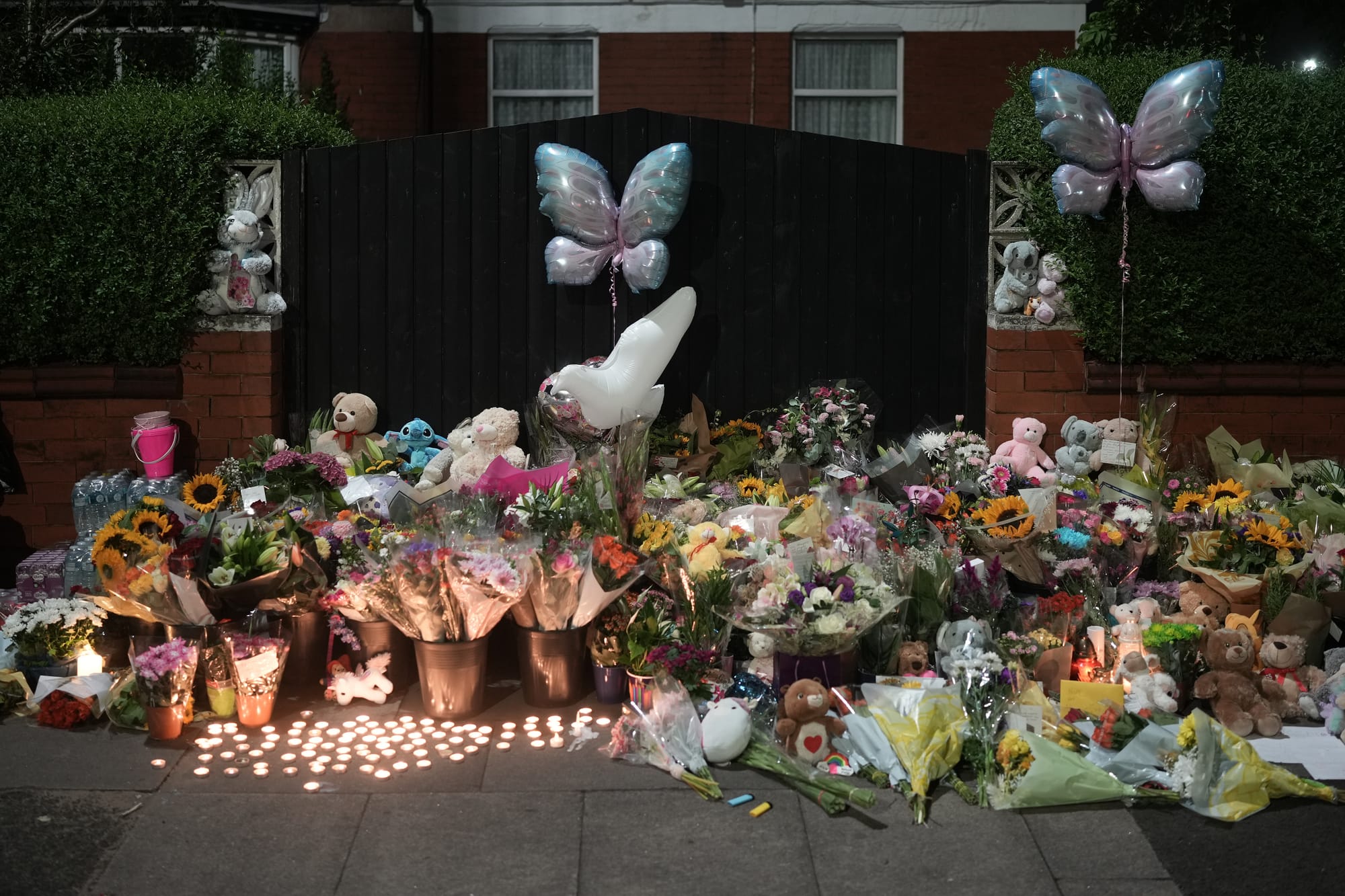 by Jade-Ruyu Yan on April 17, 2026
Amazon and X’s policies on age verification and content moderation criticised in report on murder of three children and stabbing of others
- Brazil: How the CIA funded Catholic marches that paved the way for the 1964 coup
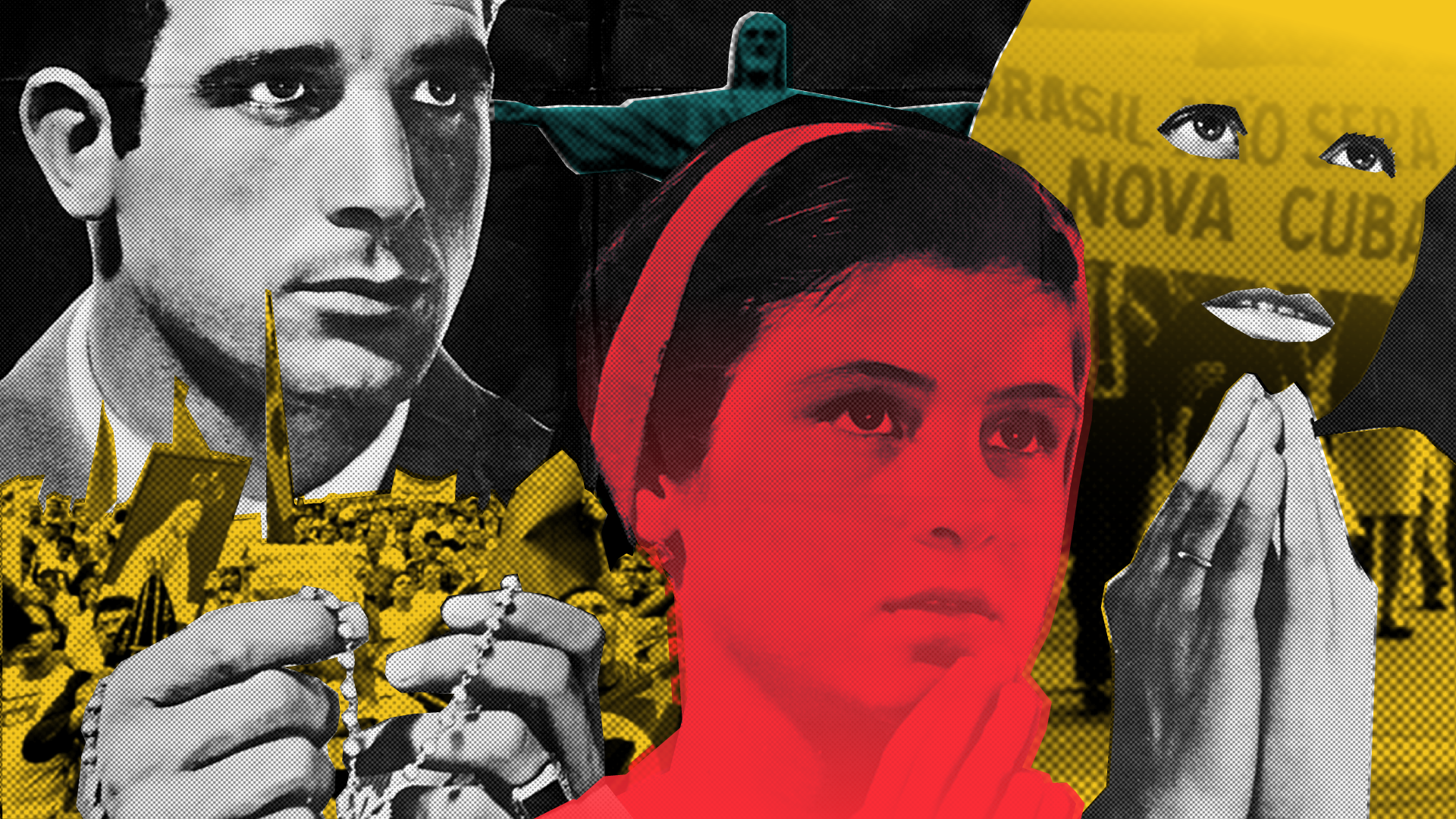 by Thiago Domenici on April 17, 2026
Thousands clutching rosaries and dollars from Washington formed the march that paved the way for the 1964 coup
- The US is facing its Suez moment – the outcome could change the world order
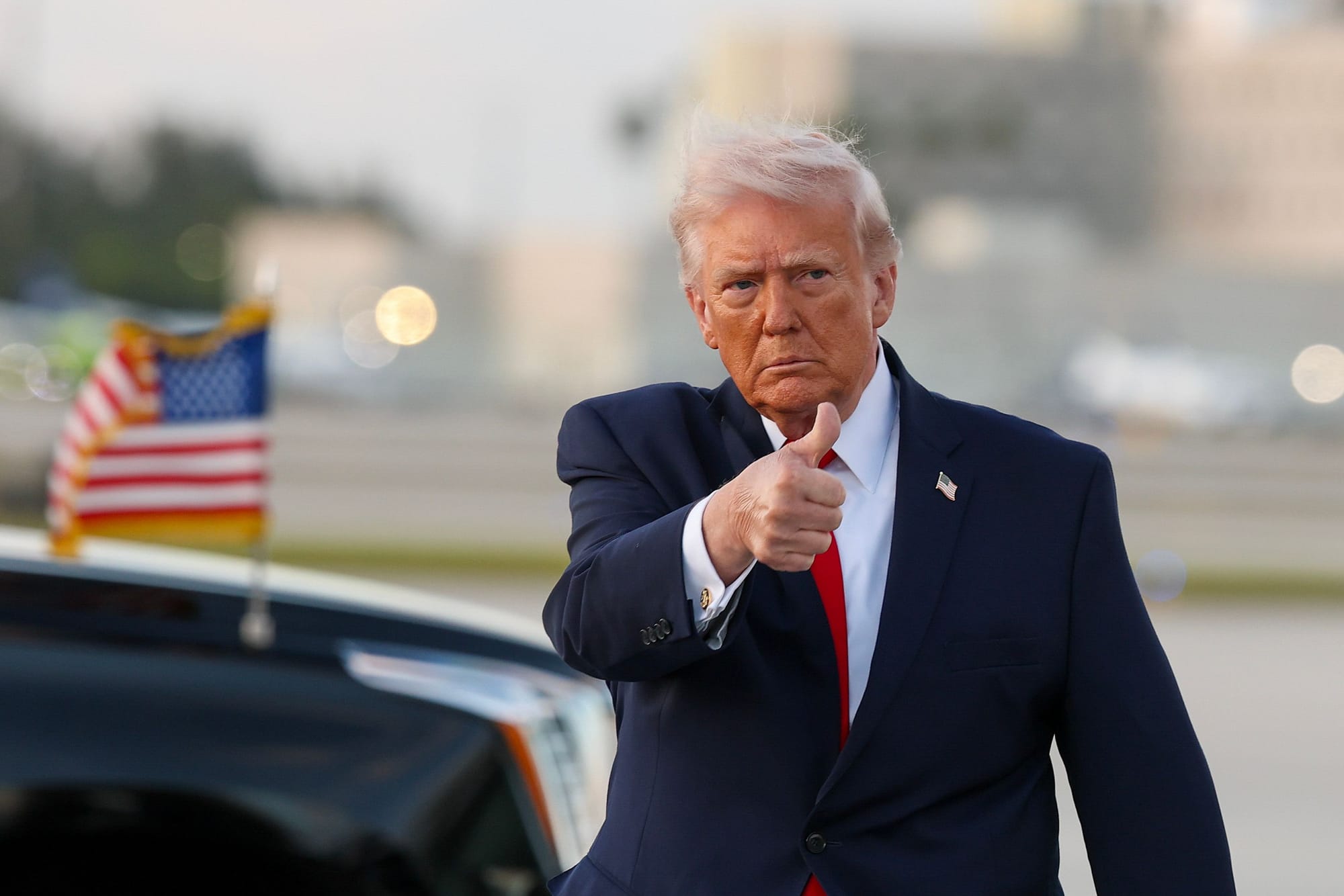 by Paul Rogers on April 17, 2026
If Donald Trump fails to end the Iran war soon, its effects could last for decades, with unpredictable consequences
- Leaving to survive, staying to resist: Persecution and exile in El Salvador
 by Andrés Dimas on April 17, 2026
We speak to journalists and defenders of human and environmental rights about how their lives have come under threat
- Revealed: Morocco forcibly displaced Black migrants ahead of AFCON tournament
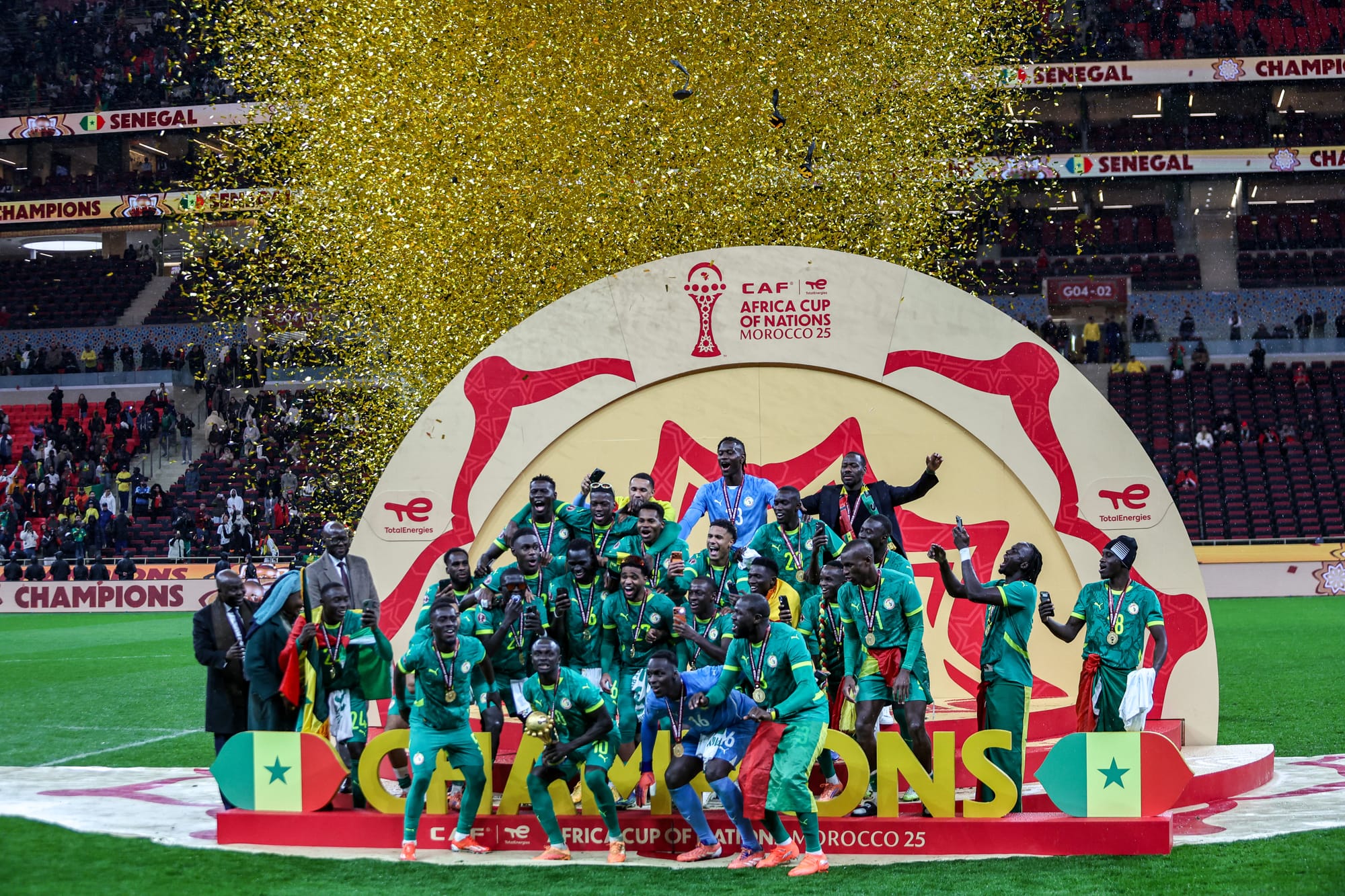 by Anonymous Moroccan reporter in Rabat and Renée Boskaljon on April 17, 2026
Keen to present itself as a key EU partner on migration, Morocco pushed migrants out of sight before tourists arrived.
- Defeating authoritarians: Notes from the Hungarian playbook
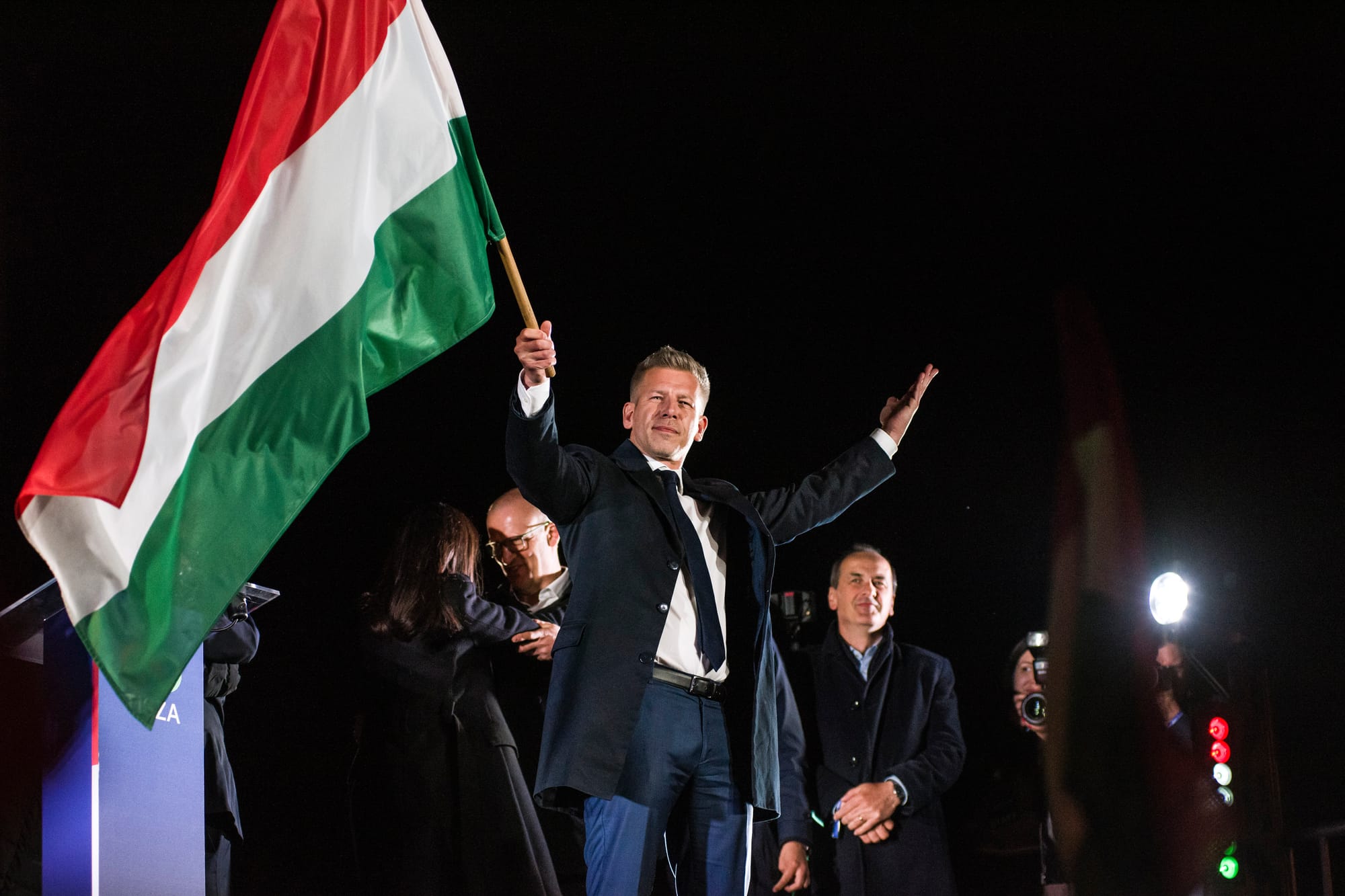 by Dalma Vatai on April 16, 2026
What can progressives everywhere learn from Magyar’s historic victory over Orbán’s anti-democratic regime?
- Orbán’s election defeat is a blow to the global anti-gender movement
 by Sian Norris on April 16, 2026
Europe’s great replacement prime minister lost on Sunday, and so did the global anti-gender movement
- Netanyahu is behind Iran war, not Trump – and that makes peace unlikely
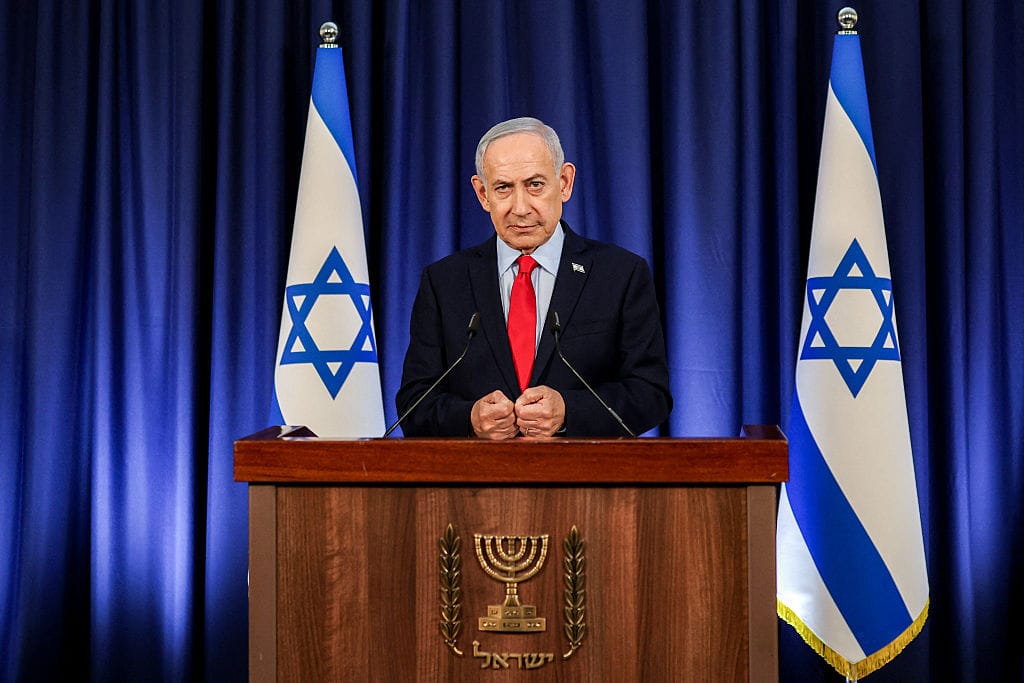 by Paul Rogers on April 10, 2026
Israel’s strikes on Lebanon are a reminder that Netanyahu will do whatever he can to avoid a peace deal with Iran
- UK plans to tackle AI harms would bypass democratic process, experts warn
 by Jade-Ruyu Yan on April 10, 2026
The government is seeking powers to allow ministers to rewrite significant portions of the Online Safety Act
- What counts as a win when victory is out of reach?
 by Nandini Naira Archer on April 10, 2026
Harsh Mander on solidarity, peace, and why holding together can be the real victory
- Labour to scrap time limit on investigating sexual misconduct by doctors
 by Sian Norris on April 9, 2026
I first reported on abuse in the NHS in 2022. Labour has made the right call on the unfair ‘five-year rule’
- ‘Labour-specialist’ lobbying firm with close ties to No10 revs up business
 by Ethan Shone on April 3, 2026
Having helped get the party elected, Anacta Strategies now helps its clients get what they want from Starmer's Labour government