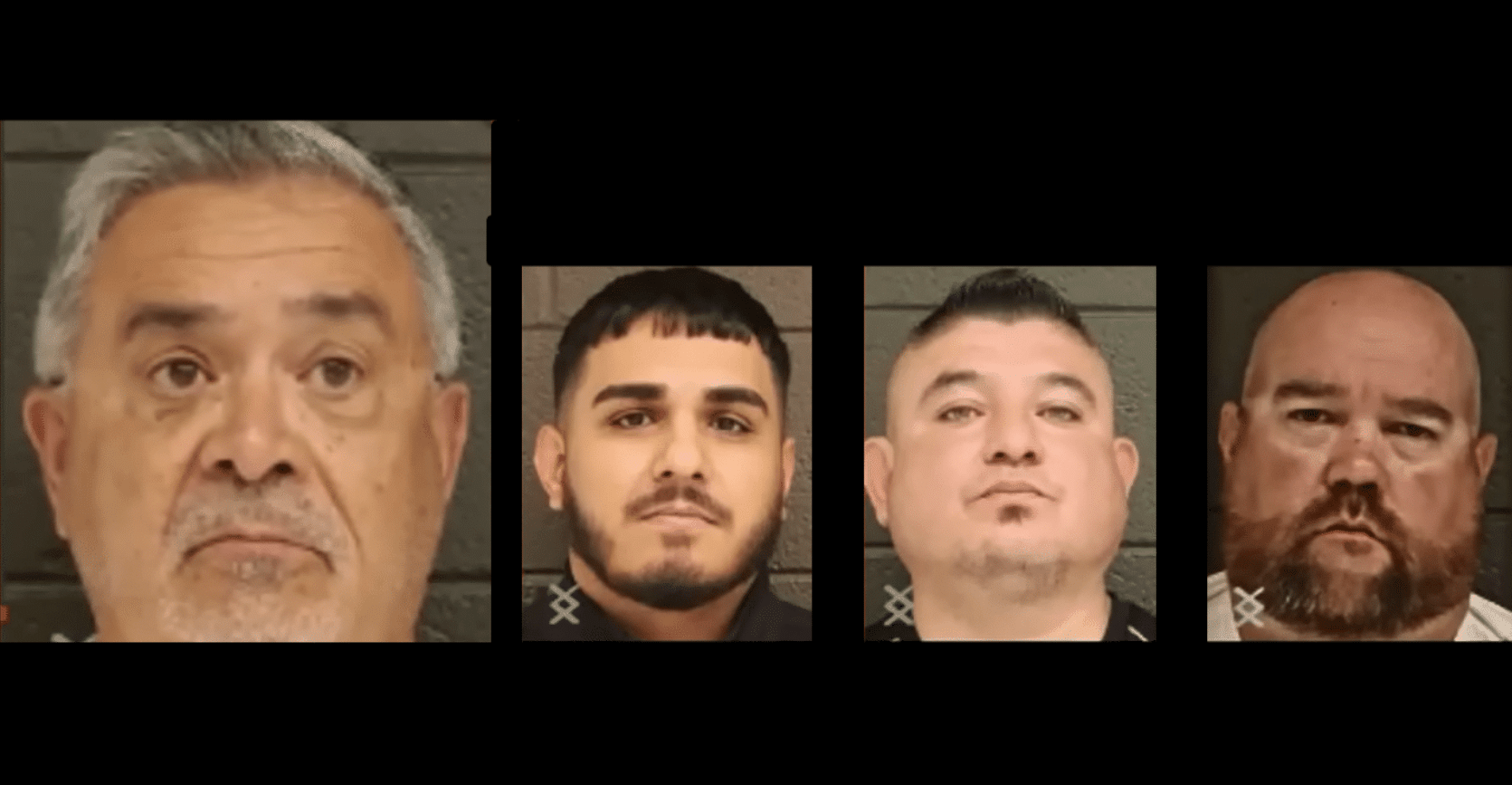
The charges grew out of a human remains case and a later force complaint involving a man in crisis.
SAN LUIS, Colo. — A grand jury has indicted Costilla County Sheriff Danny Sanchez and four current or former deputies in two criminal cases, a sweeping move that forced Sanchez from office and left the small southern Colorado agency scrambling to keep patrol coverage in place.
The case matters far beyond a single arrest announcement because it reaches deep into a sheriff’s office that had only seven law enforcement officers before the indictments. Prosecutors say one case centers on the handling of human remains found on Wild Horse Mesa, while the other focuses on force used against a man during a mental health crisis. Since the charges were announced, county commissioners have installed Joe Smith as interim sheriff, outside agencies have stepped in to help, and the criminal cases have moved onto separate court tracks.
The public unraveling happened quickly, but the two criminal tracks stretch back many months. According to the indictments, one case began on Oct. 2, 2024, after a person reported finding a skull, teeth with dental work and other remains on property near Wild Horse Mesa. The second case grew out of a Feb. 3, 2026 encounter at a home on County Road K.5, where deputies were called to deal with a man who investigators say was in a mental health crisis. Late last week, District Attorney Anne Kelly announced that a grand jury had returned indictments against Sanchez, former Deputy Keith Schultz, Undersheriff Cruz Soto, Sgt. Caleb Sanchez and Deputy Roland Riley. Kelly said the office would not look past conduct that could break public trust. By the weekend, Danny Sanchez had resigned. On Monday, county commissioners met in a special session, heard from residents and appointed Smith to serve as interim sheriff while the cases move forward.
The allegations tied to the remains case are laid out in detail in the court papers. Prosecutors say the person who found the remains photographed them, marked the location and reported the discovery to the sheriff’s office. The indictments say Sanchez and Schultz responded, took only the skull and left other remains behind, including teeth. Schultz is accused of waiting about two months to write a report. The documents also say bones were later left in a bag on Schultz’s desk and that the skull eventually reached a coroner’s official in an unlabeled paper grocery bag. Investigators said the sheriff’s office did not immediately notify the coroner, did not secure a full chain of custody and did not complete a proper follow-up search until much later, after the district attorney’s office learned of the case in August 2025. By then, the indictments say, some evidence had been lost. Sanchez and Schultz each face one count of abuse of a corpse and four counts of second-degree official misconduct.
The second case describes a sharply different scene, but one that prosecutors say also points to failures inside the same department. According to the indictments, deputies were called after a man reported that his wife had left with their children. When officers arrived, the man was at his gate with a razor-edged hunting arrow held to his neck and was making statements that witnesses described as suicidal. The papers say officers spent about two hours talking with him and told him they did not plan to arrest him or take him to a hospital. Investigators say he was then persuaded to go with them to the sheriff’s office, in part to talk about possible work as a jail deputy. Once there, the account in the indictments says, the man walked away while unarmed and without acting aggressively. Witness testimony summarized in the filings says officers chased him, used Tasers multiple times and took him to the ground. Prosecutors say the man later reported broken ribs. Soto is charged with failure to intervene, failure to report use of force, assault and official misconduct. Caleb Sanchez and Riley each face assault charges.
The fallout has been especially severe because Costilla County is remote, lightly populated and spread over a large area along the New Mexico line. Before the indictments, a person who answered the sheriff’s office phone told reporters the department had seven law enforcement officials. By Tuesday, local officials said Smith was the only full-time employee left after the indicted officers were removed from duty and two other deputies walked out. That left a basic county function resting on outside help. Smith said, “At no point has there been, or will there be, a failure to serve,” while the county works to formalize longer-term agreements. State and regional agencies, including Colorado State Patrol and nearby jurisdictions, have said they will help answer life-safety calls and back up the county as needed. Kelly has also tried to calm residents while defending the indictments. She said no one in the San Luis Valley should doubt the integrity of their police force, a line that showed how closely prosecutors are tying the case to public trust, not only to the charges themselves.
The court process is now more defined than it was when the indictments were first announced. Kelly said all five defendants turned themselves in after the charges were filed. Current Colorado Judicial Branch case pages now list Danny Sanchez, Cruz Soto, Caleb Sanchez and Roland Riley for first appearances at 1 p.m. on April 14, with Keith Schultz set for 1:30 p.m. the same day. Those settings follow the earlier bond-related scheduling that appeared when the cases first opened. The records do not resolve the allegations, and the defendants remain presumed innocent unless proven guilty in court. Even so, the filings already show how prosecutors plan to present the cases: one as a breakdown in evidence handling and respect for the dead, the other as an excessive-force episode involving a vulnerable person. Denver-area television coverage also reported that a community meeting is planned for April 2 at 6 p.m. at the Alamosa County courthouse, giving residents a public forum as the legal process continues.
For Costilla County residents, the story is not only about what happened on Wild Horse Mesa or outside the sheriff’s office on a February day. It is also about what happens after a rural department loses much of its command staff almost overnight. Smith took office promising a “Day One” plan to stabilize operations, review internal procedures and rebuild confidence. That promise now sits beside a set of indictments that describe lost evidence, delayed reports, missing teeth, an unlabeled bag, a man in crisis, several Tasers and a sheriff’s office whose own structure appears to have failed at key moments. In a larger county, those allegations would be serious enough. In Costilla County, where the department is small and often the most visible arm of local government, the effect has been immediate and personal. Every court date, staffing update and agency statement now carries extra weight because the county is trying to restore routine policing while criminal cases against former leaders move ahead at the same time.
As of Wednesday, the indictments remained pending, Smith was serving as interim sheriff and outside agencies were still helping cover public safety duties. The next public milestones are the community meeting on April 2 and the first court appearances scheduled for April 14.
Author note: Last updated April 1, 2026.