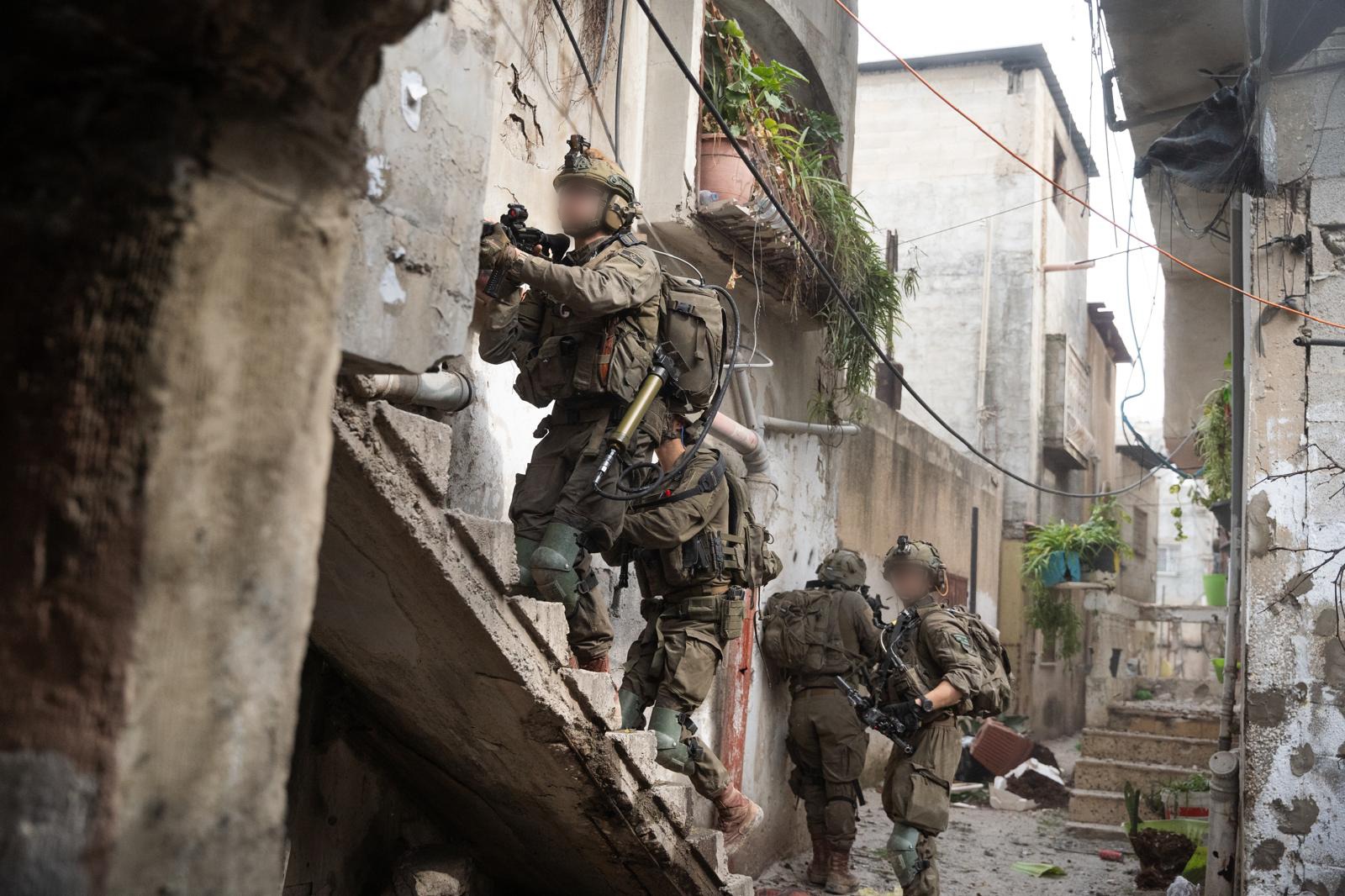
Israeli intelligence assessments have also warned that terrorists operating in Judea and Samaria are believed to possess weapons capable of breaching Israeli defenses.
By Ailin Vilches Arguello, The Algemeiner
Israeli security officials have warned of a rapidly deteriorating security situation in Judea and Samaria, citing deepening Iranian and Turkish involvement alongside Hamas efforts to expand terrorist infrastructure and orchestrate attacks across the territory.
According to the Israeli news outlet Walla, defense officials point to a growing role by Iran, Turkey, and Hamas in financing, directing, and sustaining terrorism, while also leveraging Gaza-linked networks to expand coordination, incitement, and operational activity across Judea and Samaria.
With Israeli communities in Judea and Samaria steadily expanding, the local military command is under significant strain, operating with 22 battalions while confronting a wide range of security challenges, including dismantling terrorist infrastructure, disrupting terrorist financing channels, locating weapons caches, protecting settlements, and stopping arms smuggling from Jordan.
Israeli officials have previously warned that large-scale terrorist attacks targeting local communities could serve as a destabilizing flashpoint amid the wars in Gaza and Iran.
Last year, Israeli forces uncovered documents suggesting Hamas is actively preparing plans for raids on settlements in the area.
Israel’s domestic intelligence agency, the Shin Bet, arrested six Arab Israeli citizens last month suspected of transferring millions of shekels from Hamas’s Turkish branch into Judea and Samaria as part of an underground terrorist financing network believed to have smuggled more than three million shekels to fund attacks against Israel.
Experts also point to a growing threat from the Jenin Brigades in northern Samaria — an alliance of Palestinian Islamic Jihad and Hamas terrorists that has transformed refugee camps into bases for shootings, bombings, and ambushes.
The group’s operations are reportedly sustained by a complex financing system that moves Iranian funds through Palestinian banking channels, siphons off Israeli-collected tax revenues, and makes use of international facilitators.
“By sustaining this West Bank front through Hamas and Palestinian Islamic Jihad networks, Tehran forces Israel to fight simultaneously across multiple fronts, drains resources that could otherwise consolidate gains in Gaza, and keeps the Palestinian issue politically radioactive enough to sabotage broader Arab-Israeli alignment,” Jose Lev Alvarez, a writing fellow at the Middle East Forum think tank, explained in a recent article.
“Tehran [then] advances its axis-of-resistance doctrine at minimal cost — no Iranian boots, no direct missile exchanges, just calibrated chaos designed to obstruct any credible day-after plan for Gaza and derail normalization agreements with Saudi Arabia or Gulf states demanding Palestinian stability,” he continued.
Last year, the Israel Defense Forces (IDF) warned that Iran was driving a growing terrorist threat in Judea and Samaria, with concerns that Iranian-backed arms smuggling could enable an Oct. 7-style attack.
Israeli intelligence and security forces have since intensified operations across the territory amid fears that Iranian-supplied weapons are increasingly reaching Palestinian terrorists and escalating the risk of a large-scale assault.
Israeli intelligence assessments have also warned that terrorists operating in Judea and Samaria are believed to possess weapons capable of breaching Israeli defenses, including what officials described as “standard Iranian weapons.”
According to Joe Truzman, a senior research analyst at the Foundation for Defense of Democracies (FDD), a Washington, DC-based think tank, Israeli officials should be closely monitoring Judea and Samaria as Hamas regroups and rearms in the Gaza Strip after more than two years of war.
“Hamas and its allied factions understand that igniting violence in the territory would divert Israel’s attention during a critical time of rebuilding the group’s infrastructure in Gaza,” Truzman told The Algemeiner last year.
“The release of convicted terrorists to the West Bank under the [Israel-Hamas] ceasefire agreement may be a factor in the resurgence of organized violence in the territory,” he continued.
As of last February, Israeli security forces foiled nearly 1,000 terrorist plots over the past year, with senior military officials increasingly worried that the volatile situation in Judea and Samaria could lead to a large-scale attack similar to Hamas’s Oct. 7, 2023, onslaught against Israeli settlements and communities near the security barrier.
According to a survey released last year by the Jerusalem Center for Security and Foreign Affairs, 70 percent of all respondents — and 81 percent of Jewish respondents — expressed fear of an Oct. 7-style attack coming from Judea and Samaria.
In contrast, 53 percent of Arab respondents said they were not worried about such an attack.
In response to these concerns, the IDF has established a special command to address potential threats in Judea and Samaria and launched a nearly unprecedented counterterror operation in the northern part of the territory.
The post Israel warns of escalating terror threat in Judea, Samaria as Iran, Turkey, Hamas seek to stoke extremism appeared first on World Israel News.