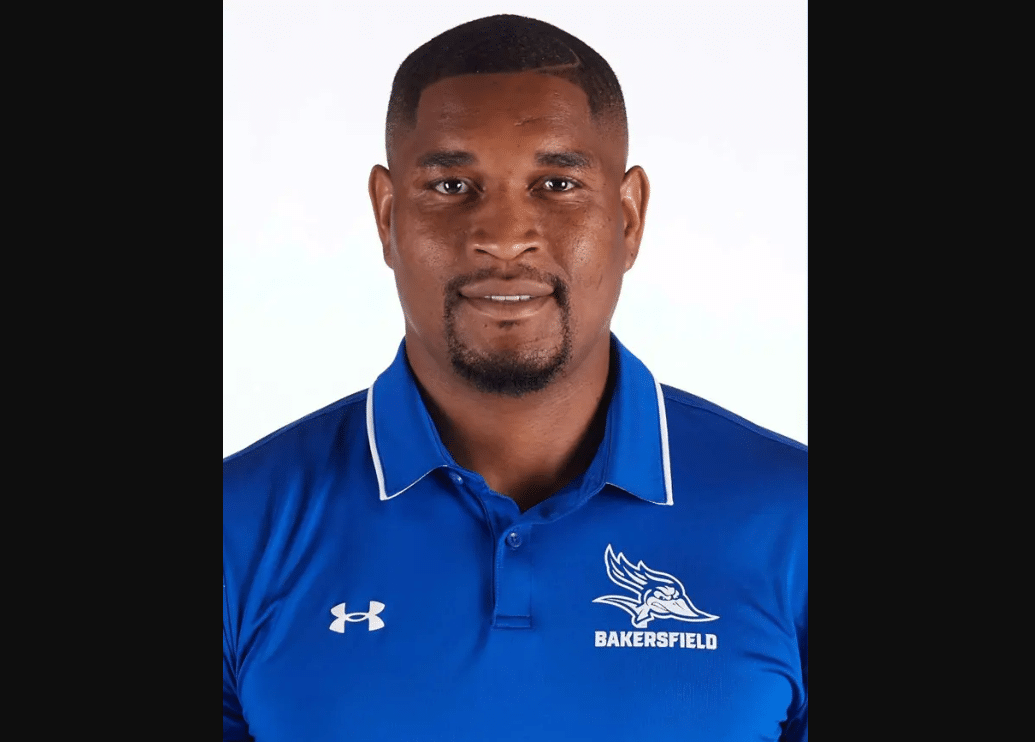
Former Cal State Bakersfield player and temporary assistant coach Kevin Mays remains jailed without bail as a March 13 preliminary hearing nears in a criminal case that has already shaken the university’s men’s basketball program and athletic leadership.
The case matters beyond one defendant because it set off a chain reaction across one of the school’s most visible programs. Since Mays’ arrest last fall, Cal State Bakersfield has lost its athletic director and longtime men’s basketball coach, elevated an acting head coach and launched a commission to review athletics. University officials have said the allegations were deeply troubling but that the woman at the center of the case had no ties to the campus community and that school police had no prior knowledge of the alleged conduct until an anonymous email arrived in late August.
The timeline that has emerged starts with that email on Aug. 29, 2025. Then head coach Rod Barnes received a message alleging that Mays, a former Roadrunners player who had returned to the program as a temporary assistant, was operating across several Western states while also working for the university. Barnes forwarded the message to human resources, which sent it to university police. That referral touched off an outside investigation that led to Mays’ arrest less than a week later. By early September, authorities had filed an initial group of criminal counts tied to pimping and pandering allegations, illegal firearms and drug sales accusations. The case moved quickly from a private warning to a campuswide crisis. What had begun as an internal alert to a coach soon became the central issue facing a program that had spent years trying to build continuity under Barnes and keep its Division I profile stable in the Big West Conference.
The public court record and later prosecutor summaries widened the case further. Mays was charged in the first round with 11 criminal and misdemeanor counts, then prosecutors later added two felony counts tied to child sexual abuse material, with enhancements alleging more than 600 images. Mays pleaded not guilty to the initial charges, and reporting on the case says he has remained in custody without bail. Officials have not publicly laid out the full evidence they plan to present at the March hearing, but the broad outline has stayed consistent across court-record reporting and university statements. School officials told faculty in October that campus police determined the woman described in the case was not a student and had no connection to university staff or the student body. They also said follow-up police work continued after the arrest, leaving open the possibility that investigators could still refine the case or add detail as prosecutors prepare for the next hearing.
The case also raised questions about hiring, oversight and what the university knew before the arrest. Mays was not an outsider to the program. He had played for Cal State Bakersfield from 2014 to 2016, later worked in player development and then took the temporary assistant coaching role in June 2025. University officials told the Academic Senate that a standard background check completed in March 2025 showed no items of concern. They also said that when separate rumors surfaced in the spring, interviews did not produce evidence strong enough to place Mays on leave or support criminal accusations at that time. That explanation has become one of the most important parts of the university’s public defense. It suggests administrators were not sitting on confirmed evidence, even as critics have questioned how a former player who rose through the department could have been accused of such conduct without earlier intervention. For the school, that distinction is now central to both its reputation and its legal exposure.
The fallout inside the athletic department was swift and visible. University records show that Sept. 4 was Mays’ last day as a paid employee. Athletic director Kyle Conder was out days later, and Barnes ended his 14-year tenure on Sept. 24. The school did not publicly tie Barnes’ exit to the criminal case in its formal announcement, but the timing left little doubt about the pressure engulfing the program. Assistant coach Mike Scott was named acting head coach the next day while the university began a national search for a permanent replacement. At the same time, President Vernon Harper said the school would take a broader look at athletics and later backed the launch of the President’s Commission on Intercollegiate Athletics. That commission was presented as a structural review, not a criminal inquiry, but its creation showed that the damage had spread well beyond one pending prosecution and into questions about culture, reporting lines and administrative judgment.
The tension between those two tracks, the courtroom case and the institutional cleanup, has shaped the public response ever since. Jennifer Self, the university’s senior director of strategic communications, said the charges against Mays were “deeply concerning.” She also said the school used the moment to consult a local human trafficking expert, offer awareness training on campus and look more broadly at how athletics fits the university’s mission and values. In a separate school statement issued when Barnes left, Harper praised the coach for years of leadership, academic emphasis and community engagement, an acknowledgment of how much of the program’s modern identity had been tied to Barnes’ tenure. That mix of condemnation and damage control has defined the school’s public tone. On one hand, officials have stressed that the alleged victim had no campus tie. On the other, they have acknowledged that the scandal exposed weaknesses serious enough to require a top-to-bottom review.
As of Thursday, Mays remained in jail awaiting the March 13 preliminary hearing, Mike Scott remained the acting head coach and Cal State Bakersfield was still trying to separate the future of its basketball program from a criminal case that has already reshaped the university’s athletics leadership.
Author note: Last updated 2026-03-05.