Four years into Russia’s invasion, Taras Bilous — a socialist serving in the Ukrainian army — reflects on exhaustion, negotiations, and why a bad ceasefire could be a boon for the far right.
Today marks four years since Russia launched its full-scale invasion of Ukraine. Across the last year, pundits on either side have often forecast a decisive breakthrough, whether due to Russian economic woes or faltering Western support for Ukraine. Yet while exhaustion on both sides mounts, including through recent massive Russian attacks on Ukraine’s power system, a peace deal still seems beyond reach.
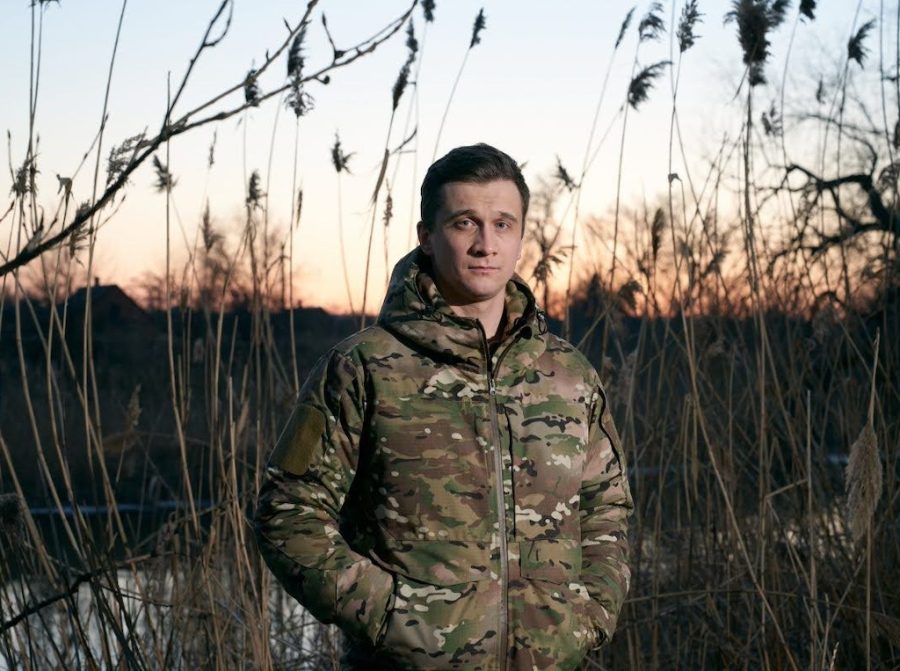
Taras Bilous, a socialist today serving in Ukrainian uniform, has long called for international solidarity with Ukraine’s resistance. He has criticized left-wing stances in favor of cutting Western aid to Kyiv, insisting that this would merely reward Russian aggression. In an interview with Sasha Talaver, he explains why Ukrainians are increasingly pushing for a ceasefire but can’t accept a peace deal that doesn’t guarantee the country’s future defenses.
You’ve been in the army for almost four years. What is your job now? How are you feeling?
I’m a drone operator who performs aerial reconnaissance. I’m currently on leave to recover from injury, so I have more free time now than I have these past three years. I am feeling well, thank you. I still have a piece of shrapnel in my liver, but overall, I have fully recovered. I am currently in Kyiv with my parents, and my leave is coming to an end.
What’s the situation in Kyiv, after the Russian shelling of energy facilities?
It has finally started to warm up, so things are getting better. The worst is over; at least there won’t be such severe frosts. In general, it all depended on the area — in some places, the heating hasn’t been working since January. It was hardest for the poor, people with disabilities, and so on.
This was definitely the hardest winter for civilians thus far: luckily, the previous winters were mild. Still, for many people not belonging to vulnerable groups, it was easier than in fall 2022, when Russia first started bombing Ukraine’s energy infrastructure. Back then, the lights went out, the water supply completely stopped working, and there was no internet or mobile communication, sometimes all day. Now, even when we don’t have electricity, the water supply often works, and communication is stable.
You wrote a well-known letter to the Western left in February 2022 in which you criticized it for insisting that its main enemy is in its own countries, and for its lack of solidarity with the armed resistance to the Russian invasion. How do you assess the situation now, after Donald Trump’s push for negotiations?
Circumstances have changed, and my position has changed somewhat accordingly. But what I wrote then was generally correct. I think that Trump’s failure in the peace negotiations confirms what I wrote then: “A call for diplomacy in itself means nothing if we don’t address negotiating positions, concrete concessions, and the willingness of the parties to adhere to any signed agreement.” For example, regarding the ceasefire, Ukraine has favored a complete and unconditional ceasefire since April 2025, but Russia still does not accept it. But who on the Left is saying that Russia must be forced to comply with the ceasefire?
How would you assess the progress of peace negotiations?
Only recently could we say that real negotiations are taking place. What happened over the past year was a show for Trump. He got involved without understanding the situation, with foolish illusions, and only made things worse.
When Trump won, I thought that things would most likely get worse for us, but to be honest, deep down I had a faint hope that a miracle might happen after all. Although Trump is the last person from whom I’d want to seek help, I, like other Ukrainians, above all want this damn war to be over. Unfortunately, it soon became clear that no good could be expected.
Importantly, Trump returned as president when both Ukraine and Russia were already exhausted by war, though certainly not as much as now. After the failure of the 2023 counteroffensive, the argument that “we cannot leave our people under occupation” became irrelevant. Throughout 2024, sentiment in favor of freezing the conflict gradually grew in Ukraine, including within the army. Regardless of who won the US presidential election, negotiations would have started anyway. And it seems that the Ukrainian government understood this — the 2024 peace summit in Switzerland and the Kursk operation were, among other things, attempts to strengthen their position ahead of negotiations.
I think many Western analysts don’t understand that the main reason for Volodymyr Zelensky changing his position on the ceasefire was not pressure from Trump but a change in Ukrainians’ mood and recognition of battlefield realities. Zelensky shifted already back in November 2024, agreeing to the possibility of freezing the conflict without Russia returning all occupied territories. Everything pushed in this sense. Even since spring 2024, if I heard any mention in the army of Ukraine’s “1991 borders,” it was always sarcastic.
Did opinions change in the army too?
Yeah, for sure. Maybe even earlier than in society as a whole. I first heard people talking about how it would be good to freeze the conflict back in fall 2022, from guys who were fighting around Bakhmut and then got transferred to a rear unit. But back then this was a rare view, given the prevalent optimism after the successful Kharkiv operation. This gradually changed during 2024.
How did people in your unit react to Trump’s initiatives?
At first, a mix: fears that Trump would cut off military aid and hopes that the war would finally end. But gradually, people stopped talking about it. When the twenty-eight points appeared last fall, some international journalists asked me what ordinary soldiers were saying, but I had no answer because it seemed that no one was paying attention anymore. In general, soldiers don’t often discuss such topics — usually, everyone is absorbed in their daily routine. For my team, the most pressing problem back then was mice in the blindage, not Trump.
But now, Ukraine was ready to freeze the conflict.
Yes, but to end the war, Trump had to increase pressure on Russia, and instead, we got a farce, with a red carpet for Vladimir Putin in Alaska. Obviously, Trump doesn’t care about Ukraine and thought he could quickly achieve peace by forcing Ukraine to agree to Russia’s terms. Well, he didn’t understand either country, and if he really wanted to end the war quickly, his actions were counterproductive. Trump could write a book on “the art of how not to make a deal.”
Trump surrendered one negotiating position after another, abandoned his demand for an unconditional ceasefire, and gave Putin what he wanted: recognition and a way out of international isolation. In essence, Putin played him for a fool for a whole year, and apparently only after his history lessons in Alaska did Trump begin to understand what he was dealing with. But now the Russians are rejecting all proposals, citing the “spirit of Anchorage.” Trump gave them that.
What real grounds are there to believe that Putin has abandoned his original plan to destroy the Ukrainian state? The Kremlin is still talking about the “root causes of the conflict.” The demand to surrender the unoccupied part of Donbas to Russia without a fight may be just a step toward this.
But you said that real negotiations are finally underway. Why?
First, we have direct negotiations between Ukraine and Russia, rather than a show where the “great powers” agree on something without Ukraine’s involvement.
Second, the delegations’ membership has changed, and with it the nature of the negotiations. Regardless of the political conditions, important technical issues need to be resolved, in particular how to monitor the ceasefire. It would be better if, by the time political agreements finally become possible, decisions on such technical issues are already made. But on political issues, Russia is still putting forward conditions that are unacceptable to Ukraine, so this is at a standstill.
Thirdly, in October, Trump finally began to put pressure on Russia and imposed new sanctions against Russian oil companies. This is surely not enough, but it is something.
Moreover, last year, Russia’s economy finally faced serious problems and headed into stagnation. This is far from a collapse, but its problems are growing. Most of its reserve funds have already been spent in previous years on overcoming the consequences of sanctions and developing the military-industrial complex.
What do you think about one of the most pressing issues in the negotiations: security guarantees?
Let’s look at things soberly. In the context of the collapse of the international order, no written security guarantees are reliable. For Ukraine, there are two main security guarantees: the army and the fact that Russia has suffered heavy losses in this war. Now they will think twice before attacking us again.
As for the negotiations, let’s compare them with the Istanbul talks in spring 2022, where the Russians demanded that the Ukrainian army be limited to 85,000 troops. Now they also want to limit our army, but no one is talking about such ridiculous numbers anymore. Back then, they wanted Russia to have the right to veto military aid to Ukraine in the event of aggression. This would have made the agreement no more valuable than the Budapest Memorandum from 1994. Ukraine could never have agreed. We don’t know for certain all the conditions Russia is currently pushing, but it seems that they are no longer demanding such a veto.
Some authors still say that Ukraine and Russia were close to signing a peace agreement in Istanbul, but Boris Johnson ruined such hopes.
I don’t understand how this can still be repeated after the publication of the draft security guarantee agreement and the article by Samuel Charap and Sergey Radchenko about these negotiations. They show that even in this agreement, the parties’ positions on some key issues differed greatly. In addition, territorial issues were not even discussed then — they were put off until a personal meeting between Zelensky and Putin. Now the territories are being discussed, and this is the most difficult issue. Ultimately, according to Russian left-wing political scientist Ilya Matveev, Charap and Radchenko overestimate Putin’s willingness to agree even to the terms discussed then.
As for Western countries, the main problem was that they refused to provide Ukraine with the security guarantees that Kyiv sought, for which reason it wanted to involve the US and others in negotiations. But even those countries that offered security guarantees were only promising to keep supplying weapons. Ukraine wanted more. As for those who write that Johnson disrupted the negotiations, if the West had actually agreed to provide the security guarantees that the Ukrainian government wanted, these same authors would have opposed it. Because that would have meant that in the event of new Russian aggression, the West would have to enter the war on Ukraine’s side.
So, if I understand correctly, you believe that freezing the conflict would be the best possible option right now. But doesn’t that create significant risks?
Of course, it’s a risk. And it’s not just about the threat of a new war but also about the political, economic, and migration consequences of a frozen conflict. The more that Ukrainians see the likelihood of a new war, the more people will leave the country once this war ends. Incidentally, if it were indeed possible to deploy European troops in Ukraine, this would be important not only to prevent further Russian aggression but also simply to reassure people. Ukraine’s ability to repel future aggression also depends on how society perceives the outcome of this war. But every day we pay a very high price for continuing our resistance, and this creates other risks.
Even if Ukraine is given formal security guarantees, a new Russian invasion may still begin some time after the ceasefire, and the conditions would be much worse for us than they are now. It would end with the occupation of most of Ukraine. But if we continue the current war, there is a risk that eventually the front line will collapse, with the same bad outcome. I don’t think it’s a good idea to continue a war of attrition until we find out who has greater reserves of strength.
The situation on the front line is not so bad as to force us to agree to Russia’s terms, many of which are unacceptable because they would increase the risk of a new invasion. This is especially true of Russia’s demand to surrender the unoccupied part of Donbas without a fight. Still, we cannot afford to set maximalist goals either. We don’t have the luxury of seeing this as some theoretical question. Our lives depend on it.
And what would you say to people who deny the risk of new Russian aggression?
If they’re so sure, they should publicly swear that they will personally come to fight against the Russian army in the event of a new invasion. Without this, their words are worthless.
You paint a very bleak picture. Is there any hope for the future?
Even in the best-case scenario, Ukraine’s future looks pretty bleak. Whatever postwar reconstruction projects there may be, Ukraine will never fully recover from the losses this war has inflicted on us.
Ultimately, this applies not only to Ukraine. Even if Russia wins the war decisively, it cannot regain its previous international influence. Regardless of how much territory it manages to occupy, the war will have severe consequences for the Russian economy and broader society. Russia has paid for Putin’s imperial ambitions with its future.
Hope still lies in the fall of Putin’s regime. Perhaps the ceasefire will help. As far as I understand, the prevailing view among the Russian elite and society is that the full-scale invasion was a mistake by Putin, but since the war has already begun, it cannot risk defeat. After the war, the question “Why did we pay such a high price?” will become sharper still.
Essentially, only the Putin regime’s downfall can bring lasting peace. Until then, regardless of the terms Ukraine is forced to accept, any peace agreement will only freeze the conflict. Even if someone boasts that “I’ve brought you peace,” Eastern Europe will still live in fear of new Russian aggression. And even if Ukraine is forced to capitulate, the result will not be peace but resistance to occupation by other means.
Ultimately, nothing lasts forever, and this regime will eventually fall anyhow. But apparently many Western authors and politicians who fear destabilization in Russia after Putin’s downfall do not understand that the later this happens, the worse the consequences will be. I think this fear was one of the reasons for the Biden administration’s excessive caution, which led to the prolongation of the war and, accordingly, thousands of deaths, destroyed cities, and, in general, much more severe socioeconomic consequences.
Do you think Ukraine had a better chance of winning earlier in the war?
Definitely. The chances were there until late fall 2023. The losses and defeats Russia did suffer back then prompted Yevgeny Prigozhin’s rebellion. If Russian losses had been even greater, it could have destabilized the regime further still. Unfortunately, this didn’t happen, partly due to mistakes by the Ukrainian Armed Forces command, but much more so due to the excessive caution of the Biden administration and the EU. They delayed the delivery of weapons too long, initially refusing to provide certain types of weapons, and when they finally did provide them, it was too late. Once it turned into a war of attrition, our chances diminished dramatically.
One of the Kremlin’s demands is for presidential elections in Ukraine. It seems that the Ukrainian authorities have recently changed their position on this. . .
It’s interesting, because Putin is demanding elections to get rid of Zelensky, whereas Zelensky instead wants elections in order to remain in power.
Does he have a chance of winning?
His chances in an election during the war are definitely greater than they will be afterward. Right now, he has only one real competitor, the general Valeriy Zaluzhny. The war is holding back political battles, and people are self-censoring. Even now, talking to foreign journalists, I get the impression that they understand that Ukrainians self-censor when communicating with them, but these journalists don’t understand how much criticism of the authorities there is in Ukrainian media and on social networks. But after the war, this will become much more prevalent, and questions such as “Why did we suffer such heavy losses?” will arise sharply not only in Russia but also in Ukraine.
I would like Zelensky to leave politics after the war. But if he can renew his mandate until the end of the war, he will surely refuse to do so. It is difficult to predict what form public discontent will take then.
Moreover, all this looks bad not only from a political perspective but also from a legal one. According to the constitution, elections under martial law are prohibited, and changing the constitution during martial law is also not allowed. The bill on elections during martial law, which is currently being prepared by parliament, may be declared unconstitutional. Furthermore, Zelensky wants to hold a referendum at the same time as the elections, which is prohibited by law. The Central Election Commission has stated that it will take six months after the lifting of martial law just to organize the electoral process, but the government seems to be planning to carry out this process much faster. I don’t yet understand how they intend to do this.
Why does he need a referendum?
To get approval for the peace deal and share the responsibility with society. A referendum would be necessary if Ukraine were forced to legally recognize Russia’s annexations. But neither Ukrainian society nor the government agrees to this. There’s no need for a referendum; it’s just another example of Zelensky’s unwillingness to make tough decisions. There have been many such examples during the war, and this has produced many problems. The government hoped that the war would end soon, so it postponed decisions on difficult issues until it was too late. Our military weakness is now primarily linked not to the cancellation of US military aid but to internal problems.
What impact did Trump’s policies have on the course of the war?
I am not a military analyst; as a soldier, I know about the situation on my section of the front, but I may not understand more general issues. But in general, I think Trump’s policies had the greatest impact not on the frontline situation but on Ukrainian rear cities. Our greatest military dependence on the US is in air defense. We cannot effectively defend rear cities from ballistic missiles without Patriot systems. Trump’s policies are one of the reasons for the sharp increase in civilian casualties last year. The current dire situation in our energy sector is also related to this.
As for the frontline situation, the effect was not as grave. Perhaps the greater impact was in 2024, when Republicans in Congress blocked new military aid for six months. Dependence on US military aid became significantly less, and Europe was able to partially compensate. HIMARS [M142 High Mobility Artillery Rocket System], for example, were very important in 2022, but now not so much. I don’t remember the last time I heard about Javelins. The battlefield has changed a lot because of drones.
Let’s move on to more civilian issues. What do you think Ukrainian politics will be like after the war?
Firstly, for Ukrainian politics to exist, Ukraine must remain intact. Secondly, I think the answer will depend heavily on the outcome of the war and the terms of the peace agreement. But surely politics will change significantly.
Traditional Ukrainian oligarchs have lost a lot because of the war. In addition to economic losses, many of them are under political pressure — five of the ten richest Ukrainian oligarchs are under Zelensky’s sanctions. Ihor Kolomoyskyi, who helped Zelensky win in 2019, has been in a detention center since 2023. The influence of oligarch-controlled TV has significantly decreased. At the same time, a new military-industrial complex has emerged, and new political entrepreneurs will certainly emerge from it after the war.
What about the Ukrainian far right?
Again, everything will depend on the war’s outcome. If it is seen as a defeat, the far right can insist, “We could have handled it better,” and many people will believe them. Over the years, they have gained sufficient symbolic capital to do so. If the outcome is perceived as a victory (albeit not a complete one), it will be more difficult for them to convert their military successes into political capital.
In general, far-right influence is likely to grow compared to prewar times; this is happening almost everywhere in the world. But I would not be 100 percent sure of this. After Maidan, it also seemed at first that we were in for a rise of the far right: Svoboda was one of the three main opposition parties and entered the new post-Maidan government, and the Right Sector was the most famous radical organization on Maidan. But instead, Svoboda began to decline after Maidan, the Right Sector was unable to build on its success, and the Azov movement took years to build its structures and attract young people. In 2019, it seemed for a while that they had been given a new chance, but instead, the far right faced a new crisis.
There is also the “Trump factor” — some of the Ukrainian far right supported Trump until 2025 and are now being criticized for it. This can be compared to Canada, where Trump’s pressure undermined the Conservatives’ poll scores and instead aided the Liberals. But it’s hard to say how significant this influence will be in Ukraine.
What about the Ukrainian left?
The fact is, we are quite weak. As in other post-socialist countries, the anti-Stalinist left in Ukraine had to start from the ground up. But while in Poland, Slovenia, Croatia, and other countries, the new left has had certain victories since 2014, in Ukraine, the annexation of Crimea and the war in Donbas have split and weakened the Left.
The 2022 invasion had a different effect — there was a reactivation, and in 2023, the student union Direct Action was even restored. But our activities are complicated by martial law and the fact that many experienced activists are serving in the army. Some have also died on the front lines, such as anarchist artist David Chichkan, anthropologist and author of the Commons journal Evheny Osievsky, and others. Russian anarchist Dmitry Petrov, who was our comrade and a Commons author, also died fighting on the Ukrainian side.
The Direct Action student union’s activities have now become more difficult also due to far-right pressure. While early in the war the far right did not pay attention to us, conflicts began to arise again in 2024. But the conditions of the confrontation have now changed. For example, in 2024, the far right tried to disrupt the presentation of a student zine in Odesa, but anarchist veterans came to the students’ defense. Last year, the leader of Russian neo-Nazis in Ukraine, Denis Kapustin, staged a provocation at David Chichkan’s funeral, but he was pinned down by anarchist soldiers.
As for the future, again, everything depends heavily on the war’s outcome. It may sound counterintuitive, but if Ukraine loses, the far right will increase its influence, and in that case, we will most likely disappear as a collective. The next generation of leftists will be forced to start from scratch. Again.
Some Western leftists still talk about the “old-left” heirs to the Soviet Communist Party in Ukraine, which were banned along with other pro-Russian parties in 2022. How do you answer questions about them?
I usually just show a video of a racist advertisement by Natalia Vitrenko, whose party was called the Progressive Socialist Party of Ukraine. Experience has shown that it is better to show something once than to try to explain everything in words.
There is currently a lot of discussion among the European left about increasing government spending on defense and militarization. What do you think about this?
I am not an expert on European defense issues, and I have not had much time to figure out exactly where defense spending is going in Europe right now. We cooperate with the Left in the Nordic countries, and it seems to me that they have many good ideas on this topic. For example, they proposed a Europe-wide embargo on arms sales anywhere except Ukraine — in my opinion, this was a great idea. In general, international security is a topic for a separate long conversation. But I would like to comment on one thing: on social media, some European leftists who oppose rearmament sometimes blame Ukraine for this. But this is a blame-the-victim argument. The reason for the new arms race is not Ukrainian resistance but Russian invasion. If Ukraine loses, militarization will only intensify.
Last question: What conclusion do you think the international left should draw from Trump’s first year in office?
There could be many conclusions. I’ll just say what concerns me most. Over the past year, the reactionary US president has done what the “antiwar” left has been calling for. What has this led to? Increased aggression, more civilian casualties, and more destruction. Things have only gotten worse. In this situation, I think the “antiwar” folks should have done some rethinking. But I still don’t see them doing that.
The logic of many “antiwar” leftists seems to be, “We provoked this war, so now let’s throw the victim of aggression under the bus.” In Trump’s version, it’s “Let’s throw the victims under the bus and rob them.” Despite the humanistic rhetoric, all proposals in practice boiled down to leaving Ukraine defenseless in the face of imperialist aggression. It should be obvious by now that this is the wrong approach. In the 1990s, the US forced Ukraine to give up its nuclear weapons to Russia, making us vulnerable. The US’s responsibility now is to help Ukraine, not to reward the aggressor.