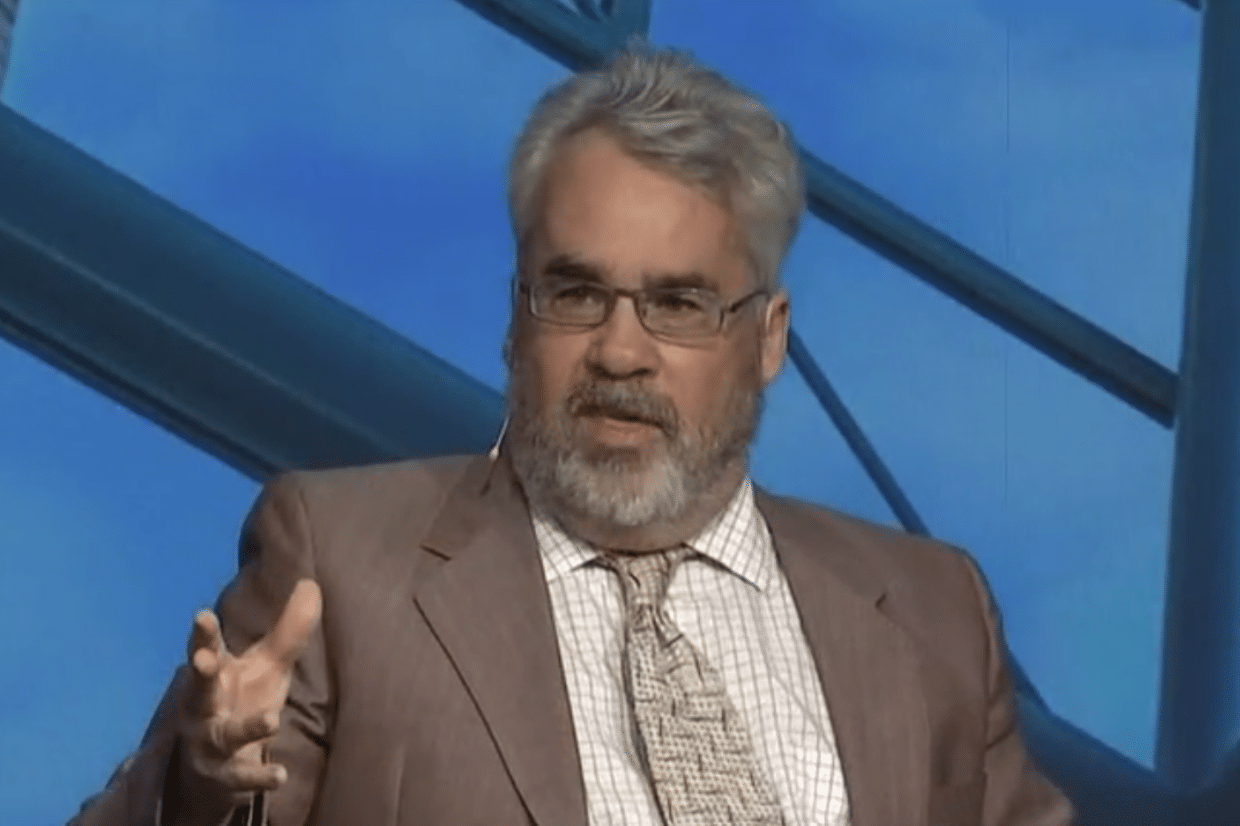
Brian Doherty, a longtime senior editor at Reason and a leading historian of the libertarian movement, was found dead March 13 at Battery Yates in the Golden Gate National Recreation Area after authorities reported a visitor fell from a cliffside into the water.
Doherty’s death quickly became a story that reached beyond ideological media because his work connected politics, books, underground comics, Burning Man history and Bay Area art circles. Yet the basic public record has remained narrow. Park officials have confirmed the location and the reported fall, while colleagues and local outlets have supplied much of the biographical detail. As of Friday, several central questions still had not been answered in public, including the exact hour of the fall, whether anyone saw it happen and when a fuller account might be released.
The clearest public timeline begins on Thursday, March 12, at Battery Yates, a former coastal defense site above the bay near Sausalito. Doherty had attended an art gathering there, according to accounts published by his employer and later echoed by Bay Area news outlets. By Friday morning, March 13, he had been found dead. Scott Carr, a spokesperson for the National Park Service, said park law enforcement responded Thursday to an incident at Battery Yates involving a male visitor who reportedly fell from the cliffside into the water. Carr said, “The individual was recovered and pronounced dead.” That official description established the broad outline of the event but left the final hours of Doherty’s life only partly visible in public. Authorities have not publicly said when the reported fall took place, how far he fell, whether the water recovery happened immediately or later, or whether other people at the gathering saw him leave the site. Reports about the death spread first through Reason’s obituary on Saturday and were then picked up by local and national outlets over the following days.
The thin official record has shaped nearly every part of the story. Carr also said the Park Service had no further information to release at the time, and reports published this week said the Marin County Sheriff’s Office had not added additional public detail. No public incident report, coroner finding or fuller narrative had been released by Friday. Officials have not publicly said whether the death has been formally ruled accidental, what route Doherty took across the battery, what the weather and light conditions were at the overlook, or whether footing on the old concrete structures played a role. That silence matters because it has left a gap between what colleagues believe happened and what authorities have formally established. Several tributes cited recent health setbacks that required Doherty to use a cane, but that remains part of the account from people who knew him, not a conclusion announced by investigators. In sudden deaths, remembrance and reporting often blend together in the first week. In this case, the distinction has remained especially important because the location was remote enough, and the public account brief enough, that even simple factual questions still do not have public answers.
For many readers, Doherty was best known as the writer who made a complicated political tradition legible to a broad audience. He joined Reason in 1994 and stayed for more than three decades, writing reported features, commentary and books about the personalities and ideas that shaped modern libertarian thought. His 2007 book “Radicals for Capitalism” became one of the works most often associated with his name, and colleagues repeatedly described him as the movement’s historian. He also wrote “This Is Burning Man,” a book that traced the rise of the desert arts festival out of Bay Area counterculture, and the 2022 comics history “Dirty Pictures.” His most recent book, “Modern Libertarianism,” was published in 2025. Doherty’s reach, though, was never limited to ideological history. He wrote about gun rights, police reform, underground culture, music and strange corners of American life with the same patient, reporting-heavy style. That range helps explain why news of his death resonated at once in political media, publishing circles and among Bay Area artists who knew him as more than a magazine editor. In those communities, Doherty had a reputation for moving easily between formal intellectual history and the kinds of scenes that rarely submit to neat explanation.
The place where he died added another layer of meaning to the story. Battery Yates is not simply a scenic overlook. It is part of the old Fort Baker military landscape in the Marin Headlands, where the Army built major seacoast defenses between the late 1890s and early 1900s. The National Park Service says Battery Yates once held 3-inch rapid-fire rifles meant to defend the bay entrance from fast-moving enemy boats, and that during World War II its guns helped protect an anti-submarine net across the entrance to San Francisco Bay. Today the concrete battery is better known for open views of the Golden Gate, the bay and the San Francisco skyline than for its military past. That mix of history, elevation and exposure helps explain both why an art gathering could be held there and why the site can be hazardous. Visitors are drawn to old emplacements, narrow paths, steep drops and broad water views that can feel dramatic even in daylight. Doherty’s final known public setting, then, was a place where Bay Area history, performance and risk are all close together. The starkness of that setting has become part of how the story is being understood.
What comes next remains procedural rather than dramatic, and even that timeline is still unclear. Authorities have not announced charges, a public hearing or any criminal allegation tied to the incident. The next formal milestone is more likely to be a coroner determination, an updated statement from park officials or the release of additional investigative details about the fall and recovery. Until then, the public account remains limited to the reported cliffside fall, the recovery from the water and the confirmation of Doherty’s identity by those who worked with him. That has left friends, readers and fellow writers in the position of mourning a well-known figure before the factual record is fully built out. Even without that fuller account, however, the outlines of Doherty’s public life are clear. He studied journalism at the University of Florida, moved to California in the 1990s and became involved with Bay Area counterculture circles, including the Cacophony Society, whose pranks and happenings helped shape the early culture around Burning Man. His writing often treated those worlds not as opposites, but as parts of the same American story about freedom, experimentation and belief.
That broad view of his life came through most clearly in the tributes that followed. David Nott, president of the Reason Foundation, said, “Brian was the historian of the libertarian movement.” Reason editor in chief Katherine Mangu-Ward put the same point more personally, saying, “Brian embodied both,” referring to freedom and responsibility. Chicken John Rinaldi, an artist and close friend quoted in memorial coverage, said Doherty’s contributions to art scenes in Los Angeles and San Francisco “were monumental.” Those comments sketched a figure whose reputation depended less on celebrity than on depth, memory and curiosity. Colleagues remembered an editor who could write about economic theory, underground comics and fringe cultural experiments without sounding like a tourist in any of those worlds. Friends in Bay Area creative circles, meanwhile, saw him as someone who understood the region’s long habit of turning unusual public spaces into meeting grounds for art, performance and provocation. Battery Yates, with its bare concrete, sea air and exposed edges, now sits at the center of those remembrances. The scene was not a newsroom, a lecture hall or a campaign event. It was a former military battery above the water, a place where the Bay Area’s sense of landscape and improvisation often meets its history.
As of Friday, March 20, authorities had not released a fuller public account of how Doherty fell at Battery Yates. Until park officials or the coroner provide more detail, the story stands as both a brief death report and a wider reckoning with the loss of a writer whose work crossed politics, history and counterculture.
Author note: Last updated March 20, 2026.