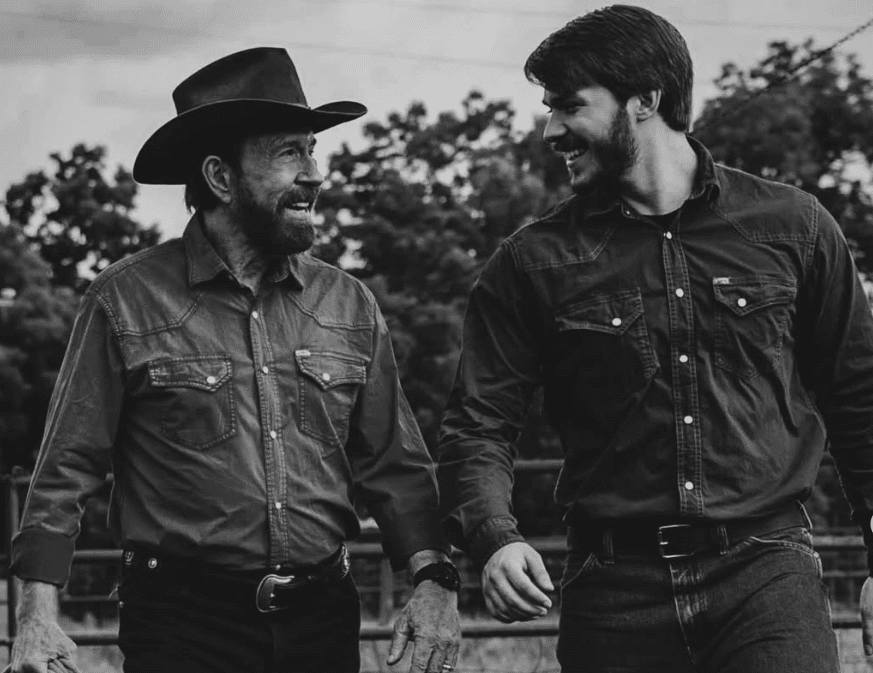
Chuck Norris, the martial arts champion and actor whose tough-guy roles in “Walker, Texas Ranger” and action movies made him a pop culture fixture, died Thursday in Hawaii at 86, his family said Friday in a statement posted to his official Instagram account.
The death quickly turned a thin health story into a major entertainment obituary because Norris had remained a rare cross-generational figure long after his peak years in film and television. Early reports on Thursday said he had been hospitalized on Kauai after a medical emergency, but by Friday morning his family said he had died and asked for privacy. The cause was not made public, no hospital was identified, and memorial plans were not immediately announced.
The public timeline moved fast. TMZ reported Thursday morning that Norris had been taken to a hospital on Kauai after an emergency within the previous 24 hours and said friends described him as being in good spirits. The report also said he had been training on the island the day before. Then, on Friday, a statement on Norris’ official Instagram account said the family was sharing “the sudden passing” of their loved one and added that he was “surrounded by his family and was at peace.” The statement did not say what caused his death or identify where in Hawaii he died. The turn was especially jarring because Norris had celebrated his 86th birthday on March 10 with a sparring video and the playful line, “I don’t age. I level up.” In less than two weeks, a post about strength and health had become the last public update before his death.
What became clear on Friday was still limited in important ways. The family confirmed the death and said little more beyond asking for privacy. Reuters, The Associated Press and several follow-up reports all said the circumstances remained private. No hospital named Norris as a patient in public statements that were widely reported, and no spokesperson released a fuller medical explanation. That left a narrow public record: Norris died Thursday in Hawaii after an earlier medical emergency on Kauai, and his family chose not to share the cause. He is survived by his wife, Gena O’Kelley, and five children. Later coverage also identified his children as Eric, Mike, Dina, Danilee and Dakota. By Friday afternoon, there was still no public word on funeral arrangements, a memorial service or whether the family planned another statement. For a star who spent decades in the public eye, the most important facts at the end remained private and close to home.
Long before Hollywood made him a symbol of calm force, Norris built his reputation in martial arts. He was born Carlos Ray Norris on March 10, 1940, in Ryan, Oklahoma, and later moved with his family to California after his parents divorced. He often described his early years as poor and quiet. After high school, he joined the U.S. Air Force in 1958. During service in South Korea, he began training in martial arts, including Tang Soo Do and judo, a turning point that shaped the rest of his life. Back in California, he taught martial arts, opened schools and rose through competition. AP and Reuters both described him as a six-time undefeated World Professional Middleweight Karate champion. He later founded his own style, commonly known as Chun Kuk Do, and helped build the United Fighting Arts Federation. Those accomplishments mattered far beyond his screen career because they made him one of the best-known figures in bringing modern martial arts culture into mainstream American life.
His acting career grew out of that martial arts world. Norris had an early uncredited film appearance in “The Wrecking Crew,” but his best-known breakthrough came opposite Bruce Lee in the 1972 film “Return of the Dragon,” also known as “Way of the Dragon.” Their fight in the Roman Colosseum became one of the most replayed scenes in martial arts cinema and helped turn Norris into a recognizable screen presence. From there he moved into a long run of action films that included “Code of Silence,” “Missing in Action,” “The Delta Force,” “Lone Wolf McQuade” and “Sidekicks.” His biggest television role came in 1993 with “Walker, Texas Ranger,” where he played Cordell Walker, a straight-arrow lawman with a moral code and a fast kick. The show ran until 2001 and gave him his broadest household fame. In 2010, then-Gov. Rick Perry named him an honorary Texas Ranger, and the Texas Senate later named him an honorary Texan, a sign of how tightly he had become linked with the state through the series.
Norris’ public image kept evolving after his prime years as a box-office star. Around the mid-2000s, internet jokes known as “Chuck Norris Facts” turned his screen toughness into a kind of comic folklore. The meme wave introduced him to a younger audience that may never have seen his old movies but still treated him as a larger-than-life figure. AP reported that Norris eventually leaned into the joke, publishing “The Official Chuck Norris Fact Book” and writing about the strange way he had become a mythical superhero to people who knew him mostly online. At the same time, he stayed active in philanthropy. Kickstart Kids, the Texas nonprofit he founded in 1990 with support from President George H. W. Bush, says it now serves about 8,000 students in 58 schools and has reached more than 120,000 students since its launch. That work helped keep Norris visible not just as an actor or martial artist, but as a public figure who tied discipline, self-control and youth programs to his personal brand.
Friday also became a day of reaction and remembrance. Reuters reported that tributes came from actors, public officials and other public figures who had known Norris personally or admired him from afar. Texas Gov. Greg Abbott wrote that “Texas has lost a legend,” linking Norris’ life to the state he came to represent on television and in public appearances. Entertainment outlets said Sylvester Stallone, Jean-Claude Van Damme and Dolph Lundgren were among the action stars who posted tributes. Other reactions pointed to the unusual breadth of Norris’ place in American culture. He was at once a karate champion, a film star, a television hero, a conservative public voice, a military supporter, a meme and a family man. Those identities did not always fit together neatly, but together they explain why news of his death traveled so quickly. It reached fans of old action movies, students in martial arts programs, longtime Texas viewers and younger social media users who knew him mostly as an internet legend.
The next formal steps were still unclear by Friday afternoon. The family statement asked for privacy and did not announce a public memorial, funeral date or charitable tribute in his name. No court filing, medical report or official state notice widely cited in early coverage added to the public account of how he died. That means the next milestone is likely to be a family update, memorial plans or additional statements from the organizations most closely tied to his life, including Kickstart Kids and the martial arts groups he helped build. Until then, the record stays simple and incomplete: Norris died Thursday in Hawaii after an earlier medical emergency on Kauai, and the people closest to him have chosen to keep the circumstances private. For a man whose image was built on certainty and control, the final public chapter arrived with very little explanation.
By late Friday, the broad facts were settled even as the private details remained closed. Norris was gone at 86, his family had confirmed it, and the story had shifted from a sudden hospitalization in Hawaii to the death of one of America’s most recognizable action stars. The next update is expected to be any memorial announcement or additional family statement.
Author note: Last updated March 20, 2026.