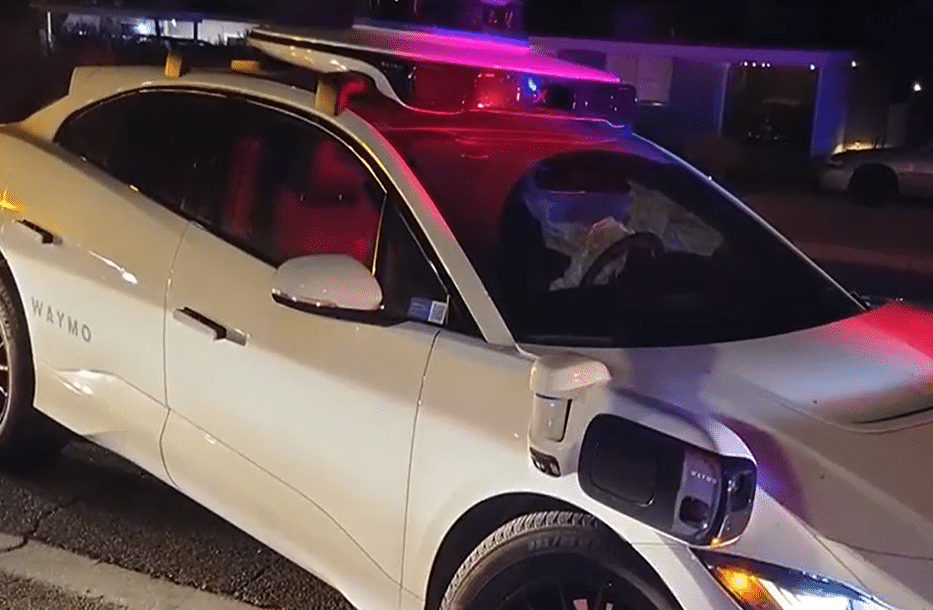
A driverless Waymo struck a child near an elementary school on Jan. 23 during morning drop-off, prompting a federal investigation into how the autonomous vehicle performed in a crowded school zone, officials said. The child suffered minor injuries and was able to stand and move to the sidewalk as witnesses called 911, according to statements released this week.
Federal regulators said Thursday they have opened a preliminary evaluation of the incident to examine the vehicle’s speed, detection and braking, and its behavior in a school environment with children, double-parked cars and a crossing guard present. Waymo, a unit of Alphabet, said the robotaxi was traveling about 17 mph and decelerated to under 6 mph when a child ran into the street from behind a double-parked SUV. The agency’s review will also look at the company’s post-crash actions and any recent software changes tied to school-zone scenarios.
The collision happened within two blocks of an elementary campus as families arrived shortly after 8 a.m. Fri., Jan. 23. Witness accounts and initial summaries describe a congested curb with multiple vehicles stopped or standing and children moving between cars and the sidewalk. Waymo said the child “suddenly entered the roadway” and that the vehicle detected the movement and braked hard before contact. The company said it immediately notified emergency services. There was no human driver or safety operator in the vehicle at the time, consistent with the company’s fully driverless operations in the area.
In a statement, Waymo said the autonomous system reduced speed quickly and that the child’s injuries were minor. The firm added that the system “mitigated” the severity of the crash and argued that a human driver might have struck the child at a higher speed under the same conditions. Regulators at the National Highway Traffic Safety Administration confirmed the preliminary evaluation, which will gather data logs from the vehicle, analyze camera and radar inputs, and compare the robotaxi’s actions against school-zone laws and traffic-control conventions. Santa Monica police were notified at the scene, and the child’s family information was not released.
The inquiry adds to heightened scrutiny of autonomous cars around schools and buses. In separate cases under review last year, regulators examined reports of driverless vehicles failing to stop for school buses during loading and unloading. In Thursday’s action, investigators said they would focus narrowly on school-zone perception and prediction: whether the vehicle appropriately slowed as it approached a crowded curb, how it handled occlusion from a tall SUV, and how it prioritized vulnerable road users when confronted with a child emerging into traffic.
The stretch of street near the campus is typically busy at drop-off, with parents double-parking along the block, a crossing guard stepping into the crosswalk to halt traffic, and children darting between gaps to reach the sidewalk. On Jan. 23, witnesses said the Waymo was proceeding at neighborhood speeds when the child appeared from behind the parked SUV. Investigators flagged the sightline created by the vehicle as a key factor. The company’s post-incident timeline says the robotaxi began braking as soon as the child appeared in its sensors’ field and continued braking to below 6 mph before impact, after which the child stood up and moved to the curb.
Data from the vehicle will be central to the probe. NHTSA typically requests high-resolution logs showing lidar, radar and camera detections, trajectory planning and commanded braking. Investigators also collect mapping data to confirm posted speeds and school-zone signage and may reconstruct sightlines using measurements at the scene. Officials said they will review whether the software applied an extra caution layer for school zones, how the car handled objects blocking its view, and whether any driverless-fleet advisories were issued after the crash. Waymo said it reported the incident promptly and is cooperating.
Waymo’s operations in Southern California include fully driverless trips in parts of Santa Monica, Venice and West Los Angeles. The company expanded service hours on busy corridors last year and has said it tailors behavior for complex areas like schools. The incident raises questions about how those behaviors perform when pedestrians emerge suddenly from behind large vehicles — a scenario that challenges both humans and robots. Researchers say occlusions, especially near schools, test the balance between progress and caution because a car cannot fully “see” until objects clear or the vehicle slows dramatically.
Parents along the block described a chaotic few minutes as sirens approached and responders checked the child. “Drop-off is always hectic here,” said a neighbor who watched from a driveway, noting clusters of children and idling SUVs. A crossing guard on duty told officers she had just stepped back from the crosswalk when the child broke away from a line of walkers. Residents said they have long asked for stricter curb management to reduce double-parking during the morning rush. City officials did not immediately announce changes, but staff said they would coordinate with police and the school on traffic flow.
Under federal procedure, a preliminary evaluation can lead to a more in-depth engineering analysis or close with no further action. If regulators find a defect related to safety, they can seek a recall, which for driverless fleets often takes the form of a software update pushed to vehicles. Waymo previously issued software fixes for edge cases such as stationary gates and chains, and the company said it continuously updates perception and planning models. California regulators, including the Department of Motor Vehicles and Public Utilities Commission, oversee permits for driverless testing and deployment and can impose temporary restrictions while federal probes are under way.
School-zone traffic rules in California require drivers to slow to posted limits when children are present and to obey crossing guards. Investigators will compare the robotaxi’s recorded speed to the limit in place at the time and to any flashing beacons in operation. They will also examine how the system classifies children moving unpredictably near the curb and whether it anticipates occluded pedestrians behind stopped vehicles. The logs can show when the child first appeared in sensor data, the distance to impact and the strength of braking, details that often drive conclusions about reasonable caution.
Waymo has said its vehicles are designed to over-index on vulnerable road users and to behave conservatively in school zones. The company’s public statements after the crash emphasized immediate braking and emergency notification. “Our vehicle detected the pedestrian as soon as they emerged and reduced speed quickly,” the firm said, adding that its support team contacted 911 as soon as the car stopped. The company did not disclose whether a remote assistance specialist was monitoring the route at the time, a feature Waymo uses to help vehicles negotiate unusual conditions without direct control.
In Santa Monica, city staff said they would review curb-management practices around the campus, where double-parking and U-turns are common on busy mornings. A spokesperson said any adjustments would be coordinated with the school district and police. Parents arriving Thursday found new attention to the curb, with cones and additional signage guiding cars into shorter stops. Residents said they expected investigators to return for measurements and scene photos as part of the reconstruction typically performed after a collision involving a pedestrian and an automated vehicle.
Experts said the investigation could influence how companies tune automated driving behavior in areas with many children. Potential changes might include lower default speeds during published drop-off windows, expanded “do-not-pass” envelopes around double-parked vehicles near schools and higher caution scores when a crossing guard is detected. While such adjustments can reduce throughput and irritate other drivers, advocates argue that conservative behavior is appropriate near schools given the risk of sudden pedestrian movements.
As the probe proceeds, regulators will also look at notification duties and fleet-wide responses. Companies often run immediate reviews after an incident to see if a software patch or policy change is warranted fleet-wide. If a safety update is issued, regulators can request validation data showing that the update mitigates the risk in similar scenarios. Waymo said it would share findings with authorities and remained in contact with the child’s family through police. No arrests or citations were announced Thursday, and officials said the case is not criminal in nature.
By late Thursday, the investigation remained at its initial stage. NHTSA’s evaluation will gather logs, video and statements over the coming days before determining whether a deeper engineering analysis is needed. City officials said any local traffic changes would be communicated through the school if adopted. The child’s condition was described as minor, and no other injuries were reported.
Author note: Last updated January 29, 2026.