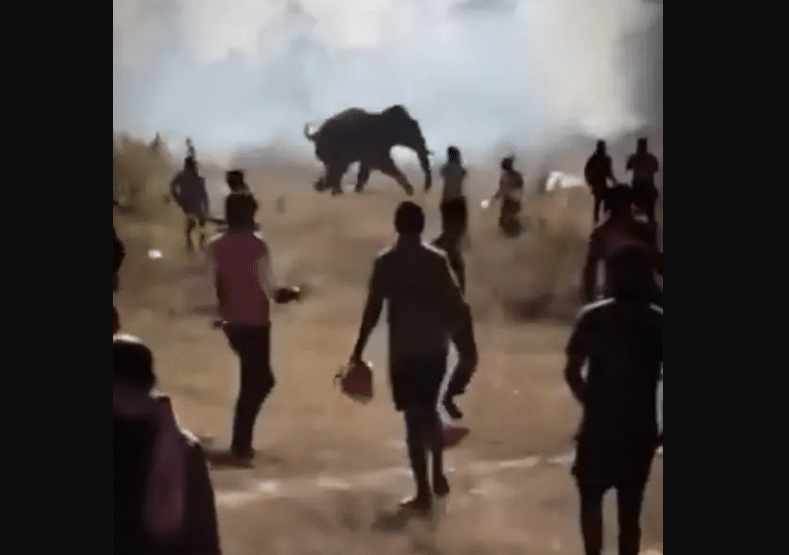
A rogue wild elephant has killed 22 people across eastern India’s Jharkhand state since Jan. 1, prompting an intensive manhunt and night patrols in forest-ringed villages, authorities said. The single-tusked male, believed to be in a hormonally charged phase that heightens aggression, remains at large.
Officials say the attacks began on New Year’s Day and stretched over roughly 10 days, with victims struck in hamlets near the Saranda and Kolhan forest ranges of West Singhbhum. Most deaths occurred after dark as residents returned from fields or slept in ground-floor rooms. The state forest department has deployed trackers, drone teams and tranquilizer squads from multiple districts, while local police assist with cordons and public alerts. The case has stirred national attention because of the unusually high toll, the animal’s elusiveness and the mounting strain of human–elephant conflict in India’s fast-developing mineral belt.
Investigators piecing together the elephant’s path say the first fatal encounter occurred near Bandijhari on Jan. 1. Within days, attacks were reported in Sowan, Babaria and other scattered villages connected by forest corridors and narrow roads. Survivors described a pattern: distant cracking of brush, then a sudden charge at huts or courtyards. In several cases, the elephant returned minutes later, overturning bikes and lifting tin roofs. One family lost four members, including two children, according to local officials. A forest worker responding to an earlier incident was also killed. “It moves quickly and mostly at night,” West Singhbhum Deputy Commissioner Garima Singh said, adding that trackers measured daily movements of 30 to 40 kilometers as the animal skirted villages and shifted deeper into sal forest when pursued.
Authorities have identified the elephant as a young bull with only one tusk, a trait that helped villagers recognize it across distant sites. Specialists believe the animal is in musth, a natural period marked by surging hormones and heightened aggression in male elephants. Teams from Jharkhand and neighboring states have attempted multiple tranquilizer shots but abandoned two opportunities over safety concerns when crowds gathered too close. Officials say at least 15 people have been injured, some while trying to warn neighbors or drive the animal away with drums and fire. The number of rounds fired from dart guns, exact tranquilizer dosages and the elephant’s age remain unclear. Officers have asked residents not to follow trackers or film operations from rooftops, citing risks if the elephant doubles back.
West Singhbhum sits along old elephant routes between the Saranda forests and adjoining ranges, an area where mining roads, fencing and new settlements have fragmented habitat. Government data show hundreds of people die in elephant encounters each year across India, with Jharkhand among the hardest-hit states. In recent seasons, villagers have guarded ripening paddy through the night to keep elephants from raiding granaries and kitchen gardens. Local administrators have used sirens, WhatsApp alerts and loudspeaker vans to warn of the bull’s approach, while gram sabha leaders helped arrange temporary shelter on higher floors or school buildings. Residents reported sleeping on rooftops or in mango trees to avoid ground-level attacks; shopkeepers in Chaibasa said night business fell sharply as people stayed inside after dusk.
State wildlife officials convened a task group this week to consolidate tracking logs, drone imagery and footprint casts. The group is drafting a capture plan that calls for pre-positioned teams at forest chokepoints, trained kumki elephants if needed, and veterinary oversight to minimize stress on the animal. If safely darted, the bull would be fitted with a GPS collar and moved to a secure habitat pending long-term assessment, officials said. District relief officers are tallying deaths for ex gratia compensation to families after post-mortem certification. Police have opened accidental death reports in each case and will attach statements and site sketches to the forest department’s incident file. No order has been issued to lethally remove the animal, and officials say the priority remains sedation and relocation.
By mid-January, additional forest guards and volunteers were posted at village entry points with torches and handheld sirens. Some hamlets set up night watches that rotate every two hours. A veterinary officer said the team is carrying higher-dose immobilizing drugs for a mature bull, but dense sal and bamboo stands complicate clean shots and recovery. “We need a clear, open plane for the elephant to lie down and for the crane to reach,” the officer said. In Chaibasa town, hardware stores reported brisk sales of battery lights and tin sheets as families reinforced doors and stairwells. A grain trader whose warehouse sits on the district road said trucks now try to arrive by late afternoon to avoid driving past forest margins after dark.
Human-wildlife groups say the current crisis mirrors a broader trend as shrinking corridors steer elephants into settled land. Jharkhand has piloted early-warning towers and SMS alerts in select blocks, but coverage remains patchy in remote pockets where mobile service drops out. Researchers noted that single-tusked bulls, whether through injury or genetics, are not inherently more aggressive; behavior is shaped by age, musth and recent disturbance. Residents who gathered near one pursuit said the bull appeared thin and agitated, occasionally flinging soil and breaking saplings. “It looked like it had been running for hours,” said shopkeeper Rajeev Sahu, who watched trackers fan into a ravine at dusk. A schoolteacher from a nearby village said families moved elderly relatives to houses with internal staircases after a wall collapse during an overnight raid.
As of Tuesday, forest officials said the elephant remained mobile within West Singhbhum, last traced by spoor near a stream crossing southwest of Chaibasa. The task group plans dawn and dusk operations through the week, with additional veterinarians arriving for collaring and holding logistics. Administrators said a public briefing on the search and interim compensation is expected later this week, subject to field conditions. If the bull exits the district, neighboring divisions will activate their response plans and share radio updates on direction and pace.
Author note: Last updated January 20, 2026.