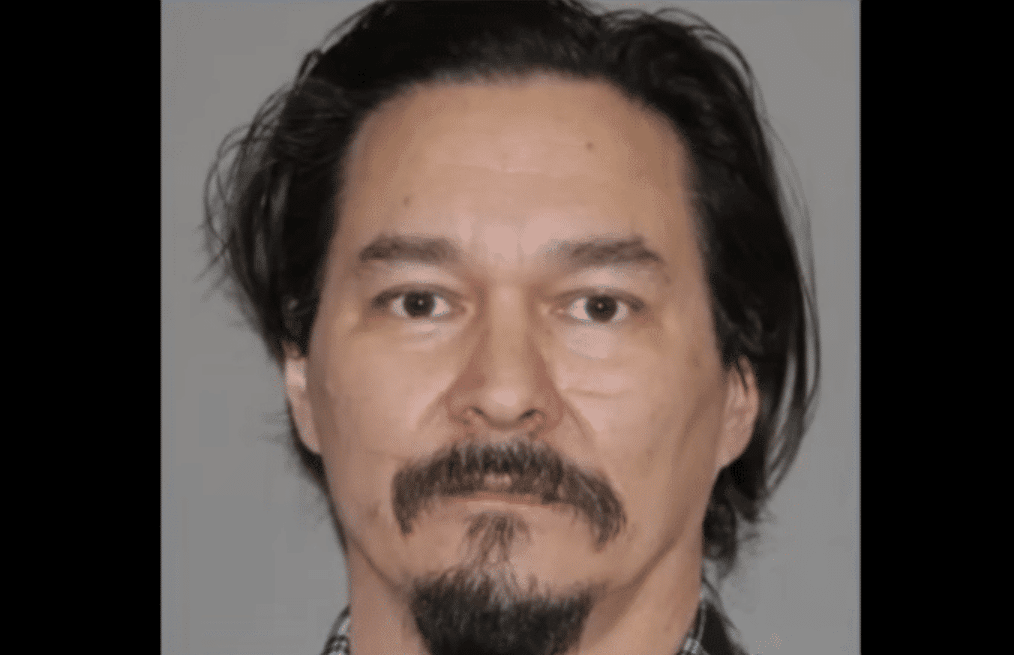
Police say Molly Richards, 31, vanished after a trip linked to South Dakota, and investigators are tracing evidence across Texas, Oklahoma and South Dakota while her remains have not been found.
DENTON, Texas — A 53-year-old North Texas man has been charged with murder in the disappearance of 31-year-old Molly Richards, a woman police say had been living with him before she vanished late last year during a trip tied to South Dakota.
The charge pushes a months-long missing-person case into a homicide prosecution even though Richards’ remains have not been recovered. Investigators say Christopher Charles Sanders is tied to the case through messages sent before Richards vanished, travel records stretching across three states, blood evidence found in Texas and items discovered at properties linked to him. Police have not publicly released a full theory of how Richards died, but they have said the investigation remains active and that finding her remains is still a central goal.
According to police records described by local news outlets, Richards moved into a home in Little Elm with Sanders in October 2025. Her father, Steven Richards, later told investigators that he last had direct contact with her in November, after she said she and Sanders were headed to South Dakota. Before communication stopped, Richards sent her father a message saying Sanders had become “abusive physically and controlling,” a statement investigators later included in an arrest affidavit. On Dec. 1, Steven Richards received what police believe was the last message from her phone, saying she was checking herself into a mental health facility because of bipolar disorder. After that, her father kept trying to get answers. In a text message quoted in later reporting, he wrote that he was worried and asked where Molly was and how she was doing. Police say Sanders did not give him a clear explanation, and the case widened in January after her father asked authorities to step in.
As detectives worked backward through Richards’ final known movements, they found a trail that crossed Texas, Oklahoma and South Dakota. Police learned Richards’ vehicle had been involved in a minor crash in Deadwood, South Dakota. A witness there told investigators he met the couple at a bar and agreed to watch the vehicle after Sanders said he was taking Richards to a doctor in Rapid City, about 40 miles away. Later, according to accounts from the affidavit, Sanders told the witness that Richards had met another man and wanted to stay in a motel. Detectives checked hospitals, hotels, motels and mental health facilities in the area and said they found no sign that she had checked in or continued traveling on her own. When officers later searched her vehicle, they reported a strong smell of cleaning products inside. Investigators also said her phone, which had gone quiet for weeks, later pinged near Sanders’ home in Denton. Soon after, a woman caring for Sanders’ dogs allegedly found items belonging to Richards, including identification, bank cards, a laptop and unopened mail.
The search inside Texas properties linked to Sanders added more weight to the case. Police said warrants executed at a Little Elm residence turned up blood residue on bedding and a human-remains detection dog alert in a bedroom. Detectives also found receipts that investigators considered important, including purchases for a bow saw, a reciprocating saw, multiple five-gallon buckets, gloves and a tamper. Authorities have said those tools were not recovered, and they have not publicly described in detail how they believe Richards’ remains were handled after her death. That restraint has left a wide gap between the evidence police say they have collected and the fuller account Richards’ family is still waiting to hear in court. The case has drawn unusual attention in part because prosecutors moved forward without recovering her remains, a step that can leave detectives relying heavily on digital records, forensic traces, witness statements and travel history. It has also kept alive a series of unanswered questions, including where Richards was killed, whether anyone else helped move evidence and why police believe the route through Oklahoma became so important.
Public concern first rose in South Dakota, where Deadwood police issued appeals in January asking residents and visitors to think back to late 2025 and report any sighting of Richards near Main Street. Deadwood Police Chief Cory Shafer later told a local television station that Richards’ last possible location was somewhere on Main Street before Dec. 8, but officers could not confirm an exact time, business or verified last sighting. That uncertainty helped shift the case from a simple welfare check to a broader interstate inquiry. In Texas, Little Elm investigators examined messages, housing records and physical evidence from homes tied to Sanders. In Oklahoma, law officers were alerted that a person of interest in the case would be passing through Love County. Local reports later said investigators reconstructed Sanders’ travel and focused on a stop near property he owned in Marietta, where they suspect Richards’ remains may have been left before her vehicle surfaced in South Dakota. Even now, that multi-state path remains one of the clearest signs of how much of the case depends on piecing together movement after Richards disappeared rather than on a single public crime scene.
The procedural case moved faster in March. On March 7, officers in Love County, Oklahoma, detained Sanders in Marietta after Little Elm police warned that a person of interest in the case would be traveling through the area. The arrest was carried out without incident by a fugitive apprehension team that included the Love County Sheriff’s Office, Marietta police and Thackerville police, according to Oklahoma reports. Jail records showed Sanders was first held on a fugitive charge. By March 12, court documents showed that he had waived extradition, and by March 16 he had been booked into the Denton County Jail on the Texas murder case. As of Tuesday, no trial date had been publicly announced in the reports reviewed, and authorities had not publicly outlined whether prosecutors might seek additional charges tied to evidence handling or the transport of remains. For now, the next steps are expected to include court hearings in Denton County, continued forensic review of seized items and more searches aimed at recovering Richards’ remains so investigators can present a fuller account of what happened.
The case has also landed with force in the neighborhoods tied to it, where the outward details seemed ordinary until police activity made them impossible to ignore. Jessica Martinez, who lives near Sanders’ Denton home, told FOX 4 that she knew little about him and mostly noticed that the yard was rarely mowed. “And to think that it was just right there is just wild,” Martinez said. Another neighbor, Jaedy Smith, said the arrest left her wondering what might be happening inside otherwise quiet houses. Her words captured the unease that often follows cases built in reverse, where ordinary homes, old text messages and a parked car in another state slowly turn into evidence. For Richards’ father, the wait has been even harsher. His early messages asking where his daughter was helped start the police review, but they did not produce answers in time to stop the case from growing into a search that now runs from North Texas to the Black Hills and back through southern Oklahoma. The public record has grown steadily. The most important part for her family, however, is still missing.
As of March 31, Sanders remained jailed in Denton County on the murder charge, and investigators had not recovered Richards’ remains. The next major milestone is expected to come in Denton County court while police continue tracing her final movements and searching for physical evidence in Texas, Oklahoma and South Dakota.
Author note: Last updated March 31, 2026.