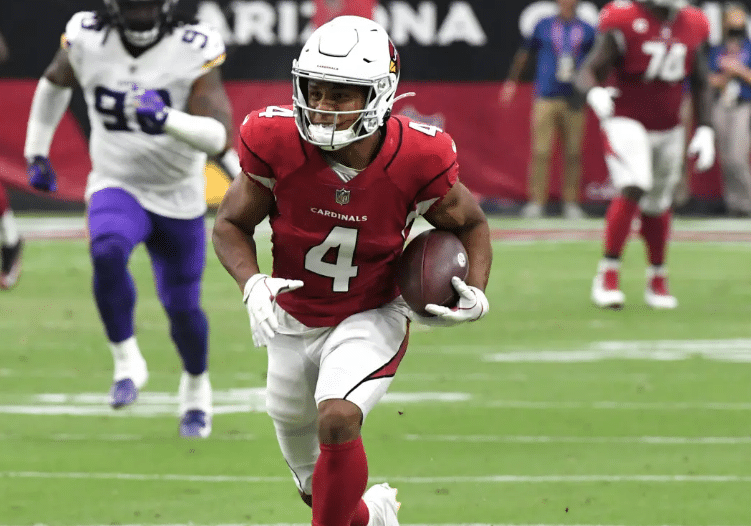
Minnesota Vikings wide receiver Rondale Moore was found dead in his hometown of New Albany, Indiana, and authorities said Saturday night that his death is under investigation. He was 25.
Police and the county coroner confirmed Moore’s death as the news spread across the NFL, where he was known as a quick, versatile playmaker whose career was repeatedly interrupted by major knee injuries. The Vikings said they were “devastated” by his passing, and former teams and college coaches remembered him as a humble, hard-working player with deep ties to southern Indiana.
New Albany Police Chief Todd Bailey said officers responded to a home in the city and found Moore in a garage. Bailey said investigators believe Moore suffered a self-inflicted injury, but he said the case remains a death investigation and additional details would not be released immediately. The Floyd County coroner’s office confirmed Moore’s death and said an autopsy was planned to determine the official cause.
Moore’s death prompted condolences from across football, including messages from coaches, former teammates and organizations tied to his rise from local high school standout to a second-round NFL draft pick. “I am devastated by the news of Rondale’s death,” Vikings coach Kevin O’Connell said in a statement released by the team. O’Connell described Moore as soft-spoken and respectful, and said the receiver remained disciplined and resilient even as injuries repeatedly sidelined him.
Moore grew up in New Albany, a city across the Ohio River from Louisville, Kentucky, and became one of the area’s most electric athletes. He starred at Trinity High School in Louisville before choosing Purdue, where he broke out nationally as a freshman in 2018. That season, he became one of the country’s most productive all-purpose players, showing the speed and strength that later made him a dangerous option on screens, jet sweeps and return plays.
At Purdue, Moore was praised for his ability to change direction and accelerate in tight spaces, traits that helped him pile up yards on short touches. Coaches also pointed to his toughness, noting how often he absorbed contact while still fighting for extra yardage. His freshman season vaulted him into the spotlight and turned him into a centerpiece of Purdue’s offense, with opposing defenses building plans around keeping the ball out of his hands.
Moore entered the NFL as a high-upside weapon with track-like burst, and the Arizona Cardinals drafted him in the second round in 2021. He quickly carved out a role as a multi-use receiver, catching quick passes near the line of scrimmage and creating yards after the catch. He was also used in motion packages and gadget looks designed to isolate him in space, reflecting how coaches viewed him as a mismatch against linebackers and safeties.
Over three seasons in Arizona, Moore appeared in 39 games, flashing the kind of speed that can tilt coverage and open opportunities for other players. At times, he became a chain-moving option in the short passing game, and he provided a jolt in the return game and on manufactured touches. But the same stretch also underscored a theme that would follow him: injuries that limited his availability and made it difficult for him to build momentum over a full season.
The next chapter came through a change of teams. Moore was traded to the Atlanta Falcons, a move that gave him a fresh start and a chance to reset his role in a new offense. That opportunity did not last long. He suffered a major knee injury during training camp and missed the season, a blow that added another year of rehab and uncertainty to a career still early in its timeline.
Moore later signed with the Vikings, hoping to reestablish himself in an offense that had leaned heavily on timing routes and quick separation. The team viewed him as a depth option with upside, the kind of player who could help in multiple packages and create after the catch. But he again suffered a serious knee injury during camp, leaving him sidelined and turning his season into another long recovery rather than a return to the field.
Those injuries shaped how Moore was discussed around the league: a player whose explosive skill set was evident in bursts, but whose availability was unpredictable. Teammates and coaches often noted that he stayed engaged through rehab work, showing up to meetings and remaining connected to the locker room even while he could not practice. After his death, those who spoke publicly focused less on numbers and more on the energy he brought to work and the way he treated people.
Jeff Brohm, who coached Moore at Purdue and later became the head coach at Louisville, released a statement praising Moore’s competitiveness and character. Brohm described him as a joy to coach and said his work ethic stood out. The words echoed a common theme from those who knew Moore best: that his talent was obvious, but his approach and attitude were equally memorable.
In the NFL, statements from the Vikings and other organizations emphasized grief and support for Moore’s family. The team did not detail any upcoming plans for memorials or tributes, and officials did not say when Moore’s family might speak publicly. Football teams often handle such moments with a mix of privacy and shared remembrance, and the Vikings said they were holding Moore’s loved ones in their thoughts as they learned details about what happened.
Authorities in New Albany said their investigation would continue as they work to document the scene and complete the autopsy process. Police did not describe a timeline for when they expect to release further findings. Investigators often withhold details early in a death investigation to protect privacy and avoid compromising the review, and officials said the formal cause and manner of death would come from the medical examiner’s work.
Moore’s death landed heavily in a football community that had watched him rise quickly and fight to return after setbacks. For Purdue supporters, he remained a symbol of one of the program’s most exciting seasons in recent memory. For NFL fans, he was a reminder of how quickly a career can shift, and how a player can be defined not only by flashes on Sundays but also by the long, quiet months of recovery in between.
In New Albany, Moore’s hometown connections were a central part of the public response. People who followed his career locally spoke of him as a familiar figure who carried the region onto national fields. That closeness also made Saturday’s news feel personal to many residents, who watched his achievements from high school stadiums to Big Ten Saturdays and then to the NFL.
As of Sunday, the coroner’s office had confirmed Moore’s death and an autopsy was expected to help finalize the official determination. Police said the investigation remains active and that any further information would be released through the appropriate channels once the review is complete.
Author note: Last updated February 21, 2026.