In recent years, the People’s Republic of China’s coercive diplomacy, particular through its enforcement of the One China Policy, has faced growing resistance in Central and Eastern Europe (CEE). Yet, despite Beijing’s heavy-handed approach, in recent years it has inadvertently fostered new strategic alignments between Taiwan and several countries in the region. This emerging dynamic presents Poland with a historic opportunity to lead a regional coalition that pushes back against authoritarian overreach while strengthening its ties with both Taiwan and the United States.
In 2021, Lithuania became the first European country to host a Taiwanese Representative Office explicitly labeled “Taiwanese” rather than “Taipei,” breaking with conventional diplomatic euphemisms. Beijing responded with economic coercion: sanctions, export blockades, and a downgrading of diplomatic relations. Ultimately, however, the confrontation between Lithuania and China worked to the former’s advantage: Lithuania has little trade with China and so Beijing’s retaliation had minimal effect, while the David and Goliath image of a small Baltic country taking on the CCP significantly elevated Lithuania’s international standing.
In the wake of Beijing’s economic sanctions against Lithuania, the Baltic nation secured a $200 million investment fund from Taiwan, a $600 million U.S. export credit agreement, and accelerated efforts to diversify its trade away from China. Simultaneously, the Czech Republic and Slovakia have continued to deepen ties with Taiwan. The Czech Senate President Milos Vystrcil led a high-level delegation to Taipei in 2020, stating “I am Taiwanese” in Mandarin in a nod to JFK’s famed “Ich bin ein Berliner” speech. Slovakia also sent a similarly high-profile delegation in 2021.
What these CEE nations have demonstrated is that democratic solidarity, when paired with economic diversification and allied support, can effectively blunt China’s coercive tactics. Beijing’s inability to project power globally to all of Europe exposes a key vulnerability: sanctions and diplomatic pressure tend to backfire when directed at smaller, diversified economies backed by Western allies. What was intended as punishment became a catalyst for strategic realignment in Central Europe.
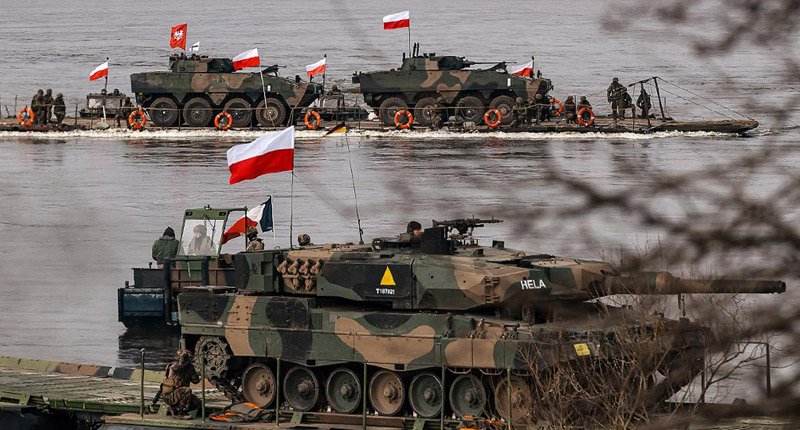
Poland, CEE’s largest economy and its most capable military power, is uniquely positioned to lead this emerging coalition. With over three decades of uninterrupted economic growth, Poland’s digital sector is thriving. The domestic IT market is projected to reach $31.6 billion by 2025, and Polish software outsourcing is expected to grow to $5.97 billion by 2030. These trends align well with Taiwan’s tech-centric economy, particularly in semiconductors and advanced manufacturing.
The proposed “Polish ICT Triangle”—linking Katowice, Wrocław, and Łódź—presents a compelling investment destination. In March 2025, a delegation from the Taiwan Electrical and Electronic Manufacturers’ Association (TEEMA), representing more than 3,000 firms, identified these cities as prime hubs for Taiwanese investment. Katowice offers an emerging tech ecosystem, Wrocław is a recognized innovation center, and Łódź boasts advanced manufacturing infrastructure. Since 2018, Taiwanese investment in Poland has increased by 270 percent, while Polish investment in Taiwan has grown by 103 percent—a trend worth building upon.
But this partnership must go beyond economics. Poland’s historical resistance to Soviet domination resonates with Taiwan’s democratic struggle against the CCP. Both nations share a commitment to liberty and rule of law, further solidified by their support for Ukraine in the face of Russian aggression. Taiwan’s humanitarian assistance to Kyiv mirrors Poland’s frontline role in NATO’s eastern flank, forming the foundation for a broader moral and strategic alliance against authoritarian regimes, including those in Beijing, Moscow, and Tehran.
Karol Nawrocki, Poland’s new president, and his cabinet are both pro-American and anti-communist. His administration has a unique opportunity to formalize a trilateral initiative—linking Poland, Taiwan, and the United States in a way that that blends economic collaboration with democratic resolve. Such an alliance could serve as a model for other mid-sized democracies seeking to reduce strategic dependence on authoritarian regimes.
While Western European nations like Germany, France, and Italy often prioritize economic ties with Beijing, Poland is acutely aware of the dangers posed by overreliance on totalitarian states. The Trump administration’s assertive posture toward China has laid the groundwork for a strategic pivot, and the Biden administration has continued efforts to strengthen alliances in the Indo-Pacific and Eastern Europe. With strong US support and a diversified economy, Poland is well-positioned to help construct a secure, democratic supply chain with Taiwan.
The stakes are high. The CCP’s revisionist ambitions threaten not only Taiwan but also the global democratic order. Weakening China’s coercive capacity also indirectly constrains Russia, given the close strategic coordination between Moscow and Beijing. A Polish-Taiwanese partnership is not only economically sound—it is a moral stand against authoritarian expansionism. Undermining the CCP-Russia-Iran axis can go hand-in-hand with securing prosperity, sovereignty, and peace.
Now is the time for Poland to lead in Europe with American support, leveraging its economic momentum, democratic tradition, and strategic position to build a future that resists coercion and affirms freedom.