The Left’s urban success is often credited to progressive, homogenous populations, but that’s superficial. When budgets allow, cities make redistribution and public investment far easier to deliver and their benefits further-reaching.
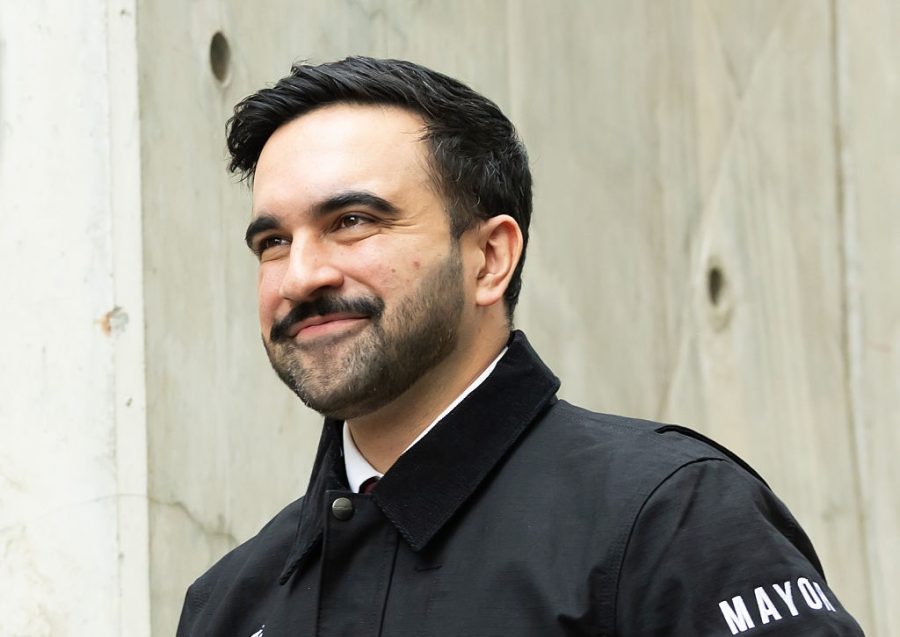
The last decade has seen a number of progressive municipal leaders gain victory in major cities across the West. Over the weekend, two new mayors swelled their ranks: the Socialist Party’s Emmanuel Grégoire won a clear victory in Paris, while Green Party member Dominik Krause defeated the social democratic incumbent in Munich. These victories follow New York City’s democratic socialist Zohran Mamdani taking office in January.
These new mayors have seemingly bucked the trend of declining left-wing vote shares and the rise of the populist right at the national level. One reason for this trend is a backlog of political ambition: national democratic politics have become increasingly dysfunctional, with established parties often unable or unwilling to formulate programs of social transformation with wide appeal. And cities have become more socially homogenous in a way that favors such progressive reforms: the new urban electorate is increasingly well-educated and socially liberal.
But the reasons are not just cultural: cities benefit from what political scientist Theo Serlin calls a “public agglomeration effect”: urban economies of scale make government provision more efficient, which shifts city residents toward preferring more of it. And both middle-class voters and the urban proletariat are particularly exposed to the social dislocations that are more pronounced in urban centers and that require active public policy interventions: higher housing and rental prices, labor market competition, and cost-of-living pressures.
These developments have favored progressive rhetoric and policy ambition. But there is a clear downside. The gap between campaign promises and municipal capacity is a great source of political disaffection. The problem is systemic: the more social issues worsen and national or state politics fail to deliver, the more those running for urban office have to promise.
Anne Hidalgo, who governed Paris between 2014 and 2026, was in many ways the archetype of left mayoral ambition. Her signature interventions included pedestrianizing the expressways along the banks of the river Seine, the Plan Vélo cycling revolution, removing thousands of parking spaces, and effectively banning SUVs. These measures were radical, and they were in fact delivered. And their popularity is viewed as the main reason why her colleague Grégoire won on Sunday.
But what is true for Paris may not be true for other cities. The French capital happens to be both municipality (commune) and subregional government (département), meaning the mayor exercises the powers of both a city mayor and a departmental council president. Other prominent radical mayors, such as Barcelona’s Ada Colau and Madrid’s Manuela Carmena, did not have this advantage. Their jurisdictions were simply more limited. Neither have remained in office, and their legacies are mixed.
One of the main reasons Colau’s yearslong effort to remunicipalize Barcelona’s water supply failed is that the relevant competencies sit not with the city but with the metropolitan water authority. Moreover, many urban decisions required negotiation with the autonomous regional government (the Generalitat de Catalunya), and Spain’s constitutional framework also subjects municipalities to strict budget stability rules (the Montoro laws) that cap expenditure growth and employment, constraints far tighter than those on French communes.
Both the regional and national political incumbents were either indifferent or openly hostile to Colau. As a result, she was not able to deliver on much of her campaign program. When she lost the popular vote in the 2019 election (staying on with coalition support), she did so primarily due to abstentions in the working-class “red belt” districts that had been her core base in 2015.
Not that her achievements weren’t real. Colau quadrupled the social housing budget, built over two thousand new public units, and bought up private residential blocks and converted them to social housing, pushing Barcelona’s social housing stock to over twelve thousand units by late 2023. But this reflects the extent of her competencies, which on housing were real.
While the rise of left mayors across the world has similar causes, the conditions in which municipal leaders find themselves are too different to speak of a new formula of political action. But the new crop can learn lessons from their predecessors. And not just on internalizing jurisdictional limitations. While New York’s Mamdani, for instance, does not have the necessary competencies to raise local taxes or change local public transportation regulations (these decisions are made at the state level in Albany), he can use his considerable platform and strong ground organization to exert political pressure.
Though it has fallen out of fashion, it used to be common for politicians to use their offices as pulpits to overcome institutional hostility or unfavorable parliamentary arithmetic. Colau’s attempts to restrict platforms such as Uber and Cabify were emboldened by the major strike of local taxi drivers in 2018. And while a European Union court ruling in 2023 eventually undermined her proposal, the political logic Colau championed has outlived her tenure: in September 2025, a broad coalition of Catalan parties tabled a new taxi law in the Catalan Parliament that, if enacted, would go even further than anything Colau ever envisaged.
Ambitious progressive mayors can make a lasting impact, but the risk of failure is high. In a poignant scene in the drama series The Wire, Baltimore’s improbable mayor-elect Tommy Carcetti is given a tour of the city’s homicide department. There he is chided for emptying the coffee jug without making a new one. But the jug was already mostly empty. This is emblematic of Carcetti’s tenure as mayor: he never succeeded with his ambitious plans for Baltimore because he inherited a mess and was constantly stymied by a hostile state government. The rest of the series charts his growing disillusionment and unpopularity.
Municipal leaders have incentives to use a rhetoric of social transformation that has little to do with the everyday tedium, institutional wrangling, and hard distributional trade-offs involved in public policymaking. And by overpromising on matters that are structurally hard to deliver on or simply beyond their jurisdiction, they risk contributing not just to political disaffection but a decline of trust in the state.