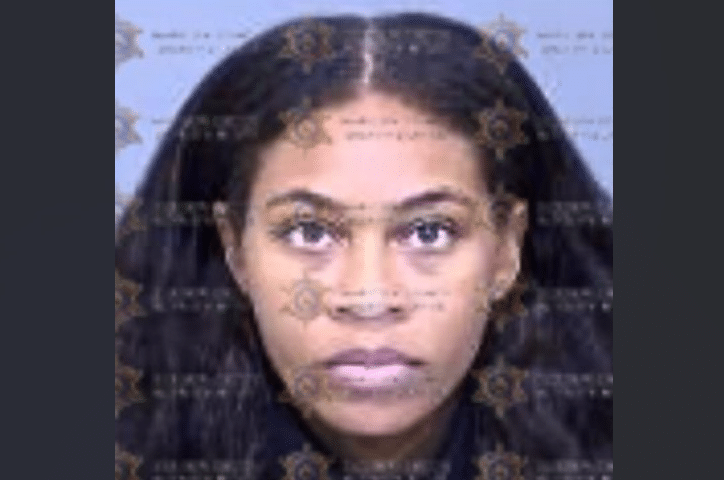
A 34-year-old woman is accused of stabbing a fellow Valley Metro light rail passenger more than a dozen times during a late-night fight in Tempe, leaving the victim with life-threatening injuries and prompting an investigation built around onboard video and witness accounts, police said.
Allante Wallace faces an aggravated assault charge involving a deadly weapon after the Feb. 12 stabbing on an eastbound train along the Apache Boulevard corridor. Police said the victim, a 42-year-old woman, survived after emergency treatment and was later reported in stable condition. The case is moving through early court steps as Wallace’s lawyer argues she acted in self-defense and investigators focus on the intensity of the attack, including the number of wounds described in records.
Tempe police said officers were called late that night after reports of a stabbing on the light rail near stops in the Apache Boulevard area, with public accounts placing the incident near Smith Road and in the vicinity of the Smith-Martin/Apache Boulevard stop west of Loop 101. When officers arrived, they found an injured woman suffering from multiple stab wounds and significant blood loss, police said. Paramedics rushed her to a hospital as detectives began trying to identify the attacker, who had left the scene before police got there.
Investigators said the confrontation began as an argument between two women inside a train car and escalated into a physical fight. Witnesses told police the victim confronted Wallace verbally before the struggle turned physical, according to accounts summarized in court filings and media coverage. Video from inside the rail car was used to reconstruct the early moments, including a sequence in which the victim is seen pointing at Wallace and moving closer while Wallace remained seated. The dispute then moved into the aisle as the two grappled, and police said the victim pulled Wallace’s hair during the struggle.
During that fight, investigators allege, Wallace produced a knife described as a steak knife and stabbed the victim repeatedly at close range. Police statements and court summaries describe at least 12 stab wounds, with some accounts placing the total higher. The injuries reported in records included wounds to the thighs, forearm, abdomen, an armpit area and the jaw. Investigators said the victim’s injuries were serious enough to be described as life-threatening, though officials have not released detailed medical updates beyond later reports that she survived the attack and was stabilized after treatment.
Detectives described a moment in the encounter that they say will matter as the case moves forward: they allege Wallace continued stabbing while standing over the victim after the victim fell onto her back in what appeared to be a defensive posture. Court summaries describe an overhead, downward motion during part of the attack. Police have not released the full video publicly, and details of the confrontation have not been tested through sworn testimony. Still, the number of wounds and the sequence described in investigative records have become central to how authorities are presenting the severity of the alleged assault.
After the stabbing, police said Wallace returned to her seat, gathered her belongings and exited the train. Investigators said she was seen leaving with the knife in hand and carrying personal items, including a pizza box and a backpack described in court summaries as a white bag with a cartoon design. The specificity of that description reflects the level of detail investigators say they have from the onboard video. Police said Wallace left before officers arrived, setting off a brief search as detectives worked to identify her and determine where she went after stepping off the light rail.
The identification effort leaned heavily on video and riders’ statements, investigators said. Police have described reviewing interior surveillance footage from the rail car and interviewing passengers who witnessed the argument and fight. Authorities have not laid out every step used to identify Wallace, but accounts of the investigation describe detectives matching video to known images and confirming an identity strong enough to support an arrest. Public reports also described Wallace as being employed at Phoenix Sky Harbor International Airport, though police have not made that detail a focus of their brief statements about the case.
Tempe police initially described the suspect as having left the area before officers arrived and said the stabbing appeared to be an isolated incident. Valley Metro also acknowledged the incident and said it was cooperating with the police investigation, while emphasizing that serious violence on the system is rare. The stabbing occurred in a corridor that serves commuters and students, and it unfolded in a confined space where riders have limited room to move away when an argument turns physical. Authorities have not said whether the train operator was aware of the fight before it ended or whether an emergency button was activated during the confrontation.
Within days, Wallace was in custody. Police said she was located after the incident and arrested. Court accounts also describe Wallace arranging to surrender through a defense attorney, though officials have not provided a detailed timeline for how contact was made or where she was taken into custody. She was booked on an aggravated assault charge, police said. A judge set a $350,000 bond, according to jail and court information reported publicly, and Wallace remained jailed as the case moved beyond the initial hearing stage.
The legal fight is expected to center on what happened in the first moments of the dispute and whether Wallace’s actions can be framed as self-defense. In a courtroom appearance covered by local media, Wallace’s lawyer argued she had “no other choice,” claiming she was attacked and that other riders watched without intervening. Police accounts also describe a struggle that included hair pulling and a physical fight, but investigators have not suggested the stabbing was justified. By filing the aggravated assault charge, authorities signaled they believe the use of the knife and the extent of the alleged stabbing crossed into criminal conduct.
Self-defense claims often turn on questions that are still unsettled publicly in this case, including who initiated physical contact, whether either person attempted to disengage, and whether the force used was proportional to the threat faced. Police have not said whether the victim had a weapon, and they have not said where the knife came from before it appeared during the fight. Investigators have described uncertainty on that point, including whether the knife belonged to Wallace, belonged to the victim, or came from a bag or item brought onto the train. Prosecutors are likely to press for a clear account of when the knife appeared and why it was used repeatedly.
The case also raises questions about how quickly violence can erupt in public transit settings. Light rail cars compress strangers into close quarters, and arguments can intensify fast when people feel trapped or disrespected. Witnesses can be reluctant to intervene because of fear they will be injured or become part of the conflict. Investigators have not publicly described whether any riders attempted to separate the women, whether anyone called 911 during the fight itself, or whether riders tried to move to another part of the car.
For the victim, the recovery is largely unknown in public records. Police have kept her name private and have not provided details about how long she was hospitalized or whether she faces long-term effects. In cases involving multiple stab wounds, medical testimony can become crucial, not only to describe the severity and risk posed by each wound, but also to help jurors understand how quickly an attack unfolded and whether the attacker stopped when the danger had passed. Prosecutors can use that evidence to argue intent and excess force, while defense lawyers can use it to argue panic, fear, or a fast-moving struggle.
Authorities have also not said whether Wallace and the victim knew each other before the train ride or whether the dispute began between strangers. That unanswered question matters because prior relationships can shape motive and context. Police have said only that an argument escalated and that evidence includes witness statements and video. Some public accounts referenced the possibility of other people being involved earlier in the encounter, but police have not confirmed a broader group fight. Clarifying who was involved and how the argument started is expected to be part of what prosecutors must lay out as the case moves toward pretrial hearings.
The incident has also renewed discussion locally about safety on the Valley Metro system. Transit agencies rely on cameras, operator communication and coordination with police, but they also depend on riders to report problems quickly. Valley Metro said it was cooperating with Tempe police, and officials noted that the system carries tens of thousands of riders daily. Police, meanwhile, stressed that the stabbing appeared to be isolated and that there was no ongoing threat after the suspect was identified.
In the weeks ahead, the case is expected to move through routine felony steps, including a review of evidence and scheduling for motions that can determine what video and statements jurors will see. Prosecutors will likely seek to present the onboard surveillance footage in court and to call riders who witnessed the argument and fight. Defense attorneys are expected to focus on the victim’s actions during the confrontation, the physical struggle described in records, and any gaps in what witnesses could see inside the train car.
For now, Wallace remains jailed as the aggravated assault case proceeds, and investigators have continued to withhold details that could become evidence at trial, including the full content of surveillance video and the precise sequence of the confrontation. The next major milestone is expected at upcoming court hearings, where prosecutors are likely to outline the evidence supporting the charge and the defense is likely to press its claim that Wallace acted to protect herself during a rapidly escalating fight on the train.
Author note: Last updated February 21, 2026.