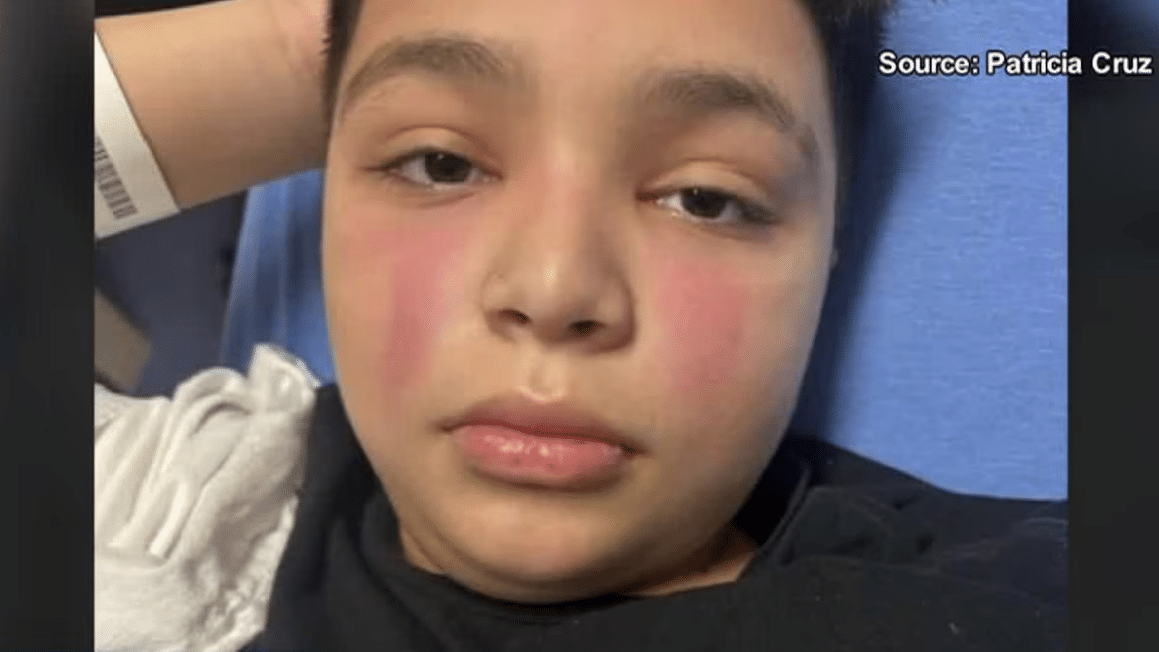
The 11-year-old is receiving IL-6-directed therapy, high-dose steroids and dialysis after his health deteriorated rapidly over the summer.
TUCSON, Ariz. — An 11-year-old Tucson boy remains hospitalized after doctors diagnosed him with idiopathic multicentric Castleman disease, a rare disorder that can cause widespread inflammation and serious problems throughout the body.
Gio is being treated at Banner Diamond Children’s Medical Center after weeks of tests and worsening symptoms, according to his mother, Patricia Cruz. His treatment includes therapy directed at interleukin-6, or IL-6, along with high-dose intravenous steroids and dialysis. Cruz said doctors have not told the family how long he will remain hospitalized or how quickly he may respond to treatment.
The illness marked a sudden change for a child his mother said had been active only weeks earlier. Cruz told 13 News that Gio was dancing, smiling and playing baseball in May. By June, she said, he had begun complaining of chest pain while she was picking him up from his sister’s home. The pain quickly became severe and was accompanied by back pain and heavy sweating, prompting Cruz to take him to Tucson Medical Center.
Gio spent about a week undergoing tests and scans at Tucson Medical Center but was discharged without a diagnosis, Cruz said. After returning home, his condition continued to deteriorate. He became increasingly tired, began vomiting frequently and developed episodes in which his cheeks became unusually red. His family returned him to the hospital, and he was later transferred to Banner Diamond Children’s Medical Center for additional care.
Specialists eventually diagnosed Gio with idiopathic multicentric Castleman disease, commonly shortened to iMCD. Castleman disease affects lymph node tissue. The National Cancer Institute distinguishes between unicentric disease, which affects one group of lymph nodes, and multicentric disease, which involves many groups of lymph nodes and lymphoid tissue across the body. Multicentric disease can be associated with systemic symptoms and immune-system problems.
The word “idiopathic” reflects that the underlying cause of this form of the disease is unknown. Research has linked excessive immune activity and inflammatory signaling, including IL-6, to many cases. Because the multicentric form affects multiple areas rather than a single lymph node, treatment is different from the approach often used for unicentric Castleman disease, in which removal of the affected lymph node can sometimes be the main treatment.
The Castleman Disease Collaborative Network says anti-IL-6 therapy is recommended as first-line treatment for idiopathic multicentric Castleman disease. Siltuximab is the primary treatment recommended in current guidance, with tocilizumab used when siltuximab is unavailable. Corticosteroids may also be used, particularly in severe cases. The specific IL-6-directed medication Gio is receiving was not identified in the family’s published account.
Cases in children are particularly uncommon and pediatric research remains limited. A 2025 study indexed by the National Library of Medicine reviewed nine children with idiopathic multicentric Castleman disease who were treated at Beijing Children’s Hospital between 2017 and 2023. Researchers reported that children with the disorder can develop enlarged lymph nodes and systemic symptoms including fever and fatigue, with some cases involving kidney or liver dysfunction and fluid buildup.
Gio’s current medical needs underscore how serious the disease can become. According to the family’s account, he is receiving dialysis in addition to medication while doctors monitor his response. Published medical guidance describes severe iMCD as capable of causing organ dysfunction and says patients with rapidly progressing disease can require aggressive treatment and close monitoring.
For Cruz, one of the most difficult parts of the hospitalization has been the uncertainty surrounding what comes next. She has remained with her son during the extended hospital stay while also facing missed work and mounting medical expenses. “They want answers from me when I don’t even know what to say or what’s going on,” she said.
A fundraiser has been established to assist the family with medical costs while Gio remains hospitalized. Cruz said she does not yet know when her son will be able to leave the hospital or how much additional work she will miss. Doctors continue treating and monitoring him, with his response to therapy and the length of his hospitalization still uncertain.
Author note: Last updated August 29, 2026.