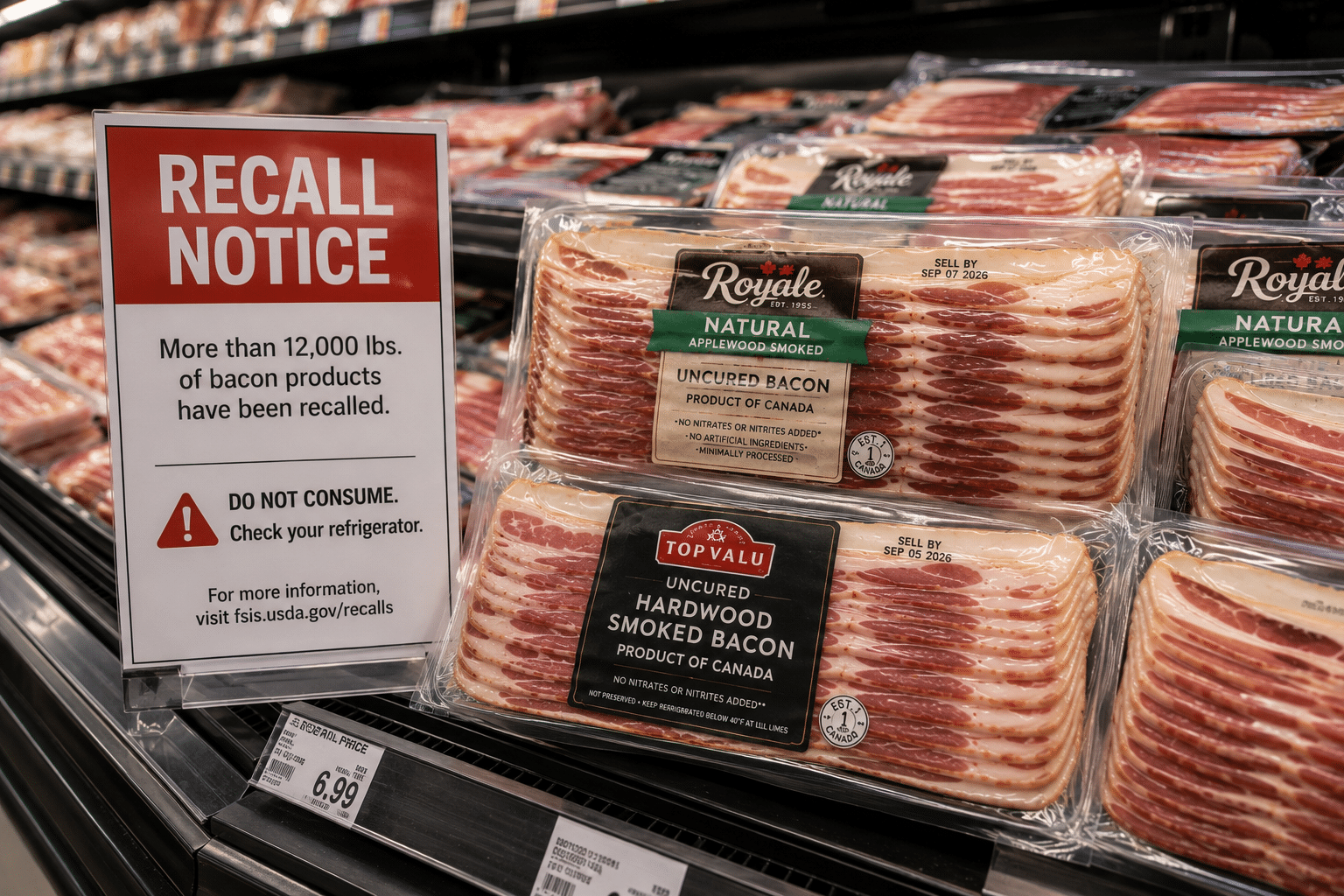
The Canadian products were sold in three Northwestern states after entering the country without required federal reinspection.
WASHINGTON — Maple Leaf Foods Inc. is recalling about 12,036 pounds of smoked bacon imported from Canada after federal officials determined the products entered the United States without required import reinspection.
The U.S. Department of Agriculture’s Food Safety and Inspection Service announced the recall July 24. The affected bacon was distributed to retailers in Idaho, Oregon and Washington. No confirmed illnesses or injuries had been reported in connection with the products when the recall notice was issued.
The recall covers two varieties of not-ready-to-eat bacon sold in 12-ounce vacuum-sealed packages. One is labeled “Royale Natural Applewood Smoked All Natural Uncured Bacon Product of Canada.” Packages carry sell-by dates of Sept. 1 or Sept. 7, 2026.
The second product is labeled “Top Valu Uncured Hardwood Smoked Bacon Product of Canada.” Affected packages have sell-by dates of Sept. 1, Sept. 2, Sept. 4, Sept. 5 or Sept. 7, 2026. Both products bear the Canadian establishment number “EST. 1” on the side of the package.
Master shipping cases connected to the recall carry health certificate number 2026-S732971612. The products were made on June 9, June 10, June 12, June 13 and June 15, according to the federal recall notice. Officials posted package-label images to help buyers and retailers identify the affected bacon.
The problem was found during routine inspection activities, federal officials said. FSIS determined that the bacon had been imported without receiving the reinspection required when meat and poultry products enter the United States. Import reinspection can include checks of shipping records, labels, packaging and the physical condition of products.
The recall notice did not identify a specific contaminant or report laboratory evidence that the bacon contained harmful bacteria. The action was based on the products entering commercial distribution without completing the required federal process. Officials warned that some packages could remain in consumers’ refrigerators or freezers because the listed sell-by dates extend into September.
FSIS classified the action as a Class I recall, the agency’s highest risk category. That classification means officials believe there is a reasonable probability that consuming a recalled product could cause serious health consequences or death. The classification does not mean illnesses have been confirmed, and none had been reported when the notice was released.
Consumers who have the recalled products should not eat them, federal officials said. The packages should be discarded or returned to the store where they were purchased. Retailers were also urged to remove the products from sale and ensure they are no longer offered to customers.
The recall remained active as federal officials monitored distribution records and checked whether affected products were still available. Any later reports of illness, additional distribution locations or changes to the recall are expected to be added to the federal notice.
Author note: Last updated July 31, 2026.