Dana believes change will come through two mechanisms: internal Iranian opposition and potential Israeli military action.
By Anna Epshtein, TPS
From his apartment on Cyrus Street in the center of Jerusalem — a location he calls “destiny” — Daniel Dana, an Iranian-born priest and lawyer, whose life story reads like an extraordinary novel, speaks with unwavering optimism about the future of Iran-Israel relations despite the turmoil in his homeland.
Dana, a Christian priest with Jewish roots, who has lived in Israel for over three decades and works extensively with the Iranian diaspora community, told The Press Service of Israel he believes the Islamic Republic’s days are numbered.
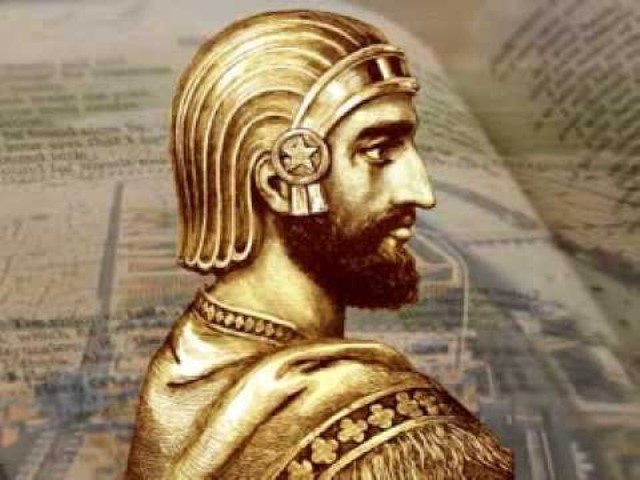
Moreover, he envisions a transformed Middle East built on what he calls the “King Cyrus Project” — a Persian complement to the Abraham Accords.
“The system in Iran has already lost much of its power,” Dana told TPS-IL, drawing on what he described as daily communications with contacts across Iran through intermediaries in Europe. “The majority of Iranians are against the system.”
Dana, who was born in Tehran in 1945 and became one of the first Iranians to publicly oppose Ayatollah Ruhollah Khomeini, maintains an extensive network of contacts despite the dangers.
“Everything is indirect,” he explained, noting that direct communication became even more restricted after Hamas’ October 7 attack.
Dana confirmed reports of Jewish arrests in Iran in the aftermath of Israel’s airstrikes on the country’s nuclear and military facilities.
He is cautious about providing details that could endanger his sources. “This is 100% true,” he said, adding that persecution extends beyond Jews to “all minorities” including Baha’is and Christians.

Iranian-born priest Daniel Dana in his Jerusalem home on July 1, 2025. (Photo: Anna Epshtein/TPS-IL)
Israel and Iran: ‘Hand in Hand’
Dana maintains what he calls “100% optimism” for the restoration of Iran-Israel ties.
He points to the historical relationship between the countries, noting that Iran under the Shah was “the first Muslim leader” among 54 Muslim countries in the UN to recognize Israel’s independence in 1950.
“This wonderful relationship in general, commercial, intelligent, army, medical, agriculture, whatsoever, gives a very positive result for people, for nations, twin sister nations of Iran and Israel,” Dana recalled of that pre-revolution time.
His proposed “King Cyrus Project” would complement the Abraham Accords, creating what he sees as a natural alliance.
“The Abraham Accords between Israel and Persian Gulf countries will be perfected with a new project between Iran and Israel, we call it the King Cyrus project,” he said.
“King Cyrus and Abraham, hand in hand together to change the atmosphere of Israel, of the Middle East.”
Dana believes change will come through two mechanisms: internal Iranian opposition and potential Israeli military action.
He suggests that Israel’s previous strikes on Iran were insufficient, using the metaphor of an injured snake that becomes more dangerous: “Therefore, I believe Israel will be wise enough to have the snake beheaded, to be finished.”
However, he acknowledges that Iranian opposition alone could achieve regime change, though it would be “more complicated” and take “more time, more casualty.”
Building Bridges
Born as Jamshed Hassani, a Shiite Muslim in Iran’s Sarhad district, Dana was raised with strict Islamic teachings.
After becoming an early vocal opponent of Ayatollah Khomeini’s regime, he fled Iran and spent years as a political activist and international fugitive, even participating in paramilitary operations against the Iranian government.
Following years of exile in France and Australia, where he was ordained as an Anglican priest, Dana came to Israel in 1994 for academic research and was forced to remain when Australia revoked his asylum status. He has remained in Israel ever since.
His story took an additional twist in 2007, when he discovered through a family revelation and a genetic test that his ancestors were actually crypto-Jews from the northeastern Iranian city of Mashhad who hid their Jewish identity for generations.
In Israel, he leads the International Peace and Love Movement and works closely with the Society of Protectors of Persian Culture in Israel.
He sees potential for broader transformation in the Muslim world, comparing the need for Islamic reform to Christianity’s Renaissance and Reformation.
“Iran will be the first Muslim country who will introduce renaissance in Islamic theology for the first time as a nation,” Dana insisted.
Despite living on a street named after the Persian king who freed the Jews from Babylonian exile — a pure coincidence, he said — Dana sees symbolic significance in his location.
From his Jerusalem apartment filled with photos chronicling his life journey from Tehran to Paris to Jerusalem, he continues his decades-long mission of opposing what he calls “Islamic barbarism.”
His message to both Iranians and Israelis is clear: Tehran’s clerical regime is temporary, the historical bonds between the peoples are strong, and a peaceful future built on mutual respect and cooperation is not just possible—it’s inevitable.
For Dana, it means he will be able Tehran again. Asked if he misses it, Dana replied, “Always.”
The post Iranian exile in Israel envisions ‘King Cyrus Project’ for Middle East peace appeared first on World Israel News.