Reverend James Lawson Jr did not attend the 1963 March on Washington for Jobs and Freedom. Most of the movement’s boldfaced names — the “Big Six” civil rights leaders, labor leaders and religious figures, celebrities and entertainers — were there, in front of a quarter million people up on the Lincoln Memorial’s marble steps. But Lawson was not. He was hundreds of miles away from the nation’s capital, organizing and training people at a regional gathering of Methodist student leaders in Upstate New York.
Lawson and his colleagues paused the proceedings so that anyone who wanted to board a bus to Washington early that morning could do so. “I had planned to go,” recalls Lawson in his landmark memoir, Nonviolent, “but we didn’t have enough room for every student who wanted to attend. I decided to give up my seat on the bus so that a student could go instead.”
Lawson deserves to be remembered as one of the black freedom movement’s greatest leaders. Those who knew and worked with him, as well as anyone who has delved beneath the surface of the movement’s history, understand just how important a figure he was. No less of an authority than Martin Luther King Jr himself considered Lawson “the leading theorist and strategist of nonviolence in the world.”
A Methodist minister whose Christian faith was thoroughly suffused with Gandhian principles, he trained a veritable army of activists in the philosophy, strategy, and tactics of nonviolent direct action. He had a hand in every major Southern civil rights campaign from 1958, when he moved to Nashville to begin his movement work, through the 1968 Memphis sanitation workers’ strike that claimed King’s life. He moved to Los Angeles in the early 1970s and was a central figure in the city’s labor and progressive movements until his death in 2024, at the age of ninety-five.
If Lawson is not as well-known as many of the people he trained — a group that includes the late John Lewis, among many others — the story of his absence from the March on Washington goes a long way toward explaining why.
“My role,” Lawson writes of the 1963 Birmingham campaign, “was to be the one who stayed on the outside to do the work of recruiting people, persuading more people to participate.”
This was his role not just in Birmingham but across the movement. He took raw recruits, fired by their determination to destroy systems of oppression, and forged them into disciplined militants ready to face down their oppressors, whatever the cost — up to and including death.
For Lawson, the problem with violence was not that it was too revolutionary, but that it was not revolutionary enough to change a society whose fundamental organizing principle is violence. James Lawson was the drill sergeant of nonviolence.
It is impossible to come away from Nonviolent without respect and admiration for a man who did more to advance the cause of human freedom than most. It should, one hopes, help Lawson receive the wider recognition he so richly deserves. Reading it is a morally and politically rewarding exercise, one that is enhanced by the compelling plainness of Lawson’s words.
It is also a challenge. In his foreword to the book, the scholar Eddie S. Glaude Jr admits that the call to nonviolence “remains a hard question for this country boy shaped by the raging ghosts of Mississippi.” Nonviolent underscores the immense difficulty, even the ultimate impossibility, of inspiring a universal commitment to nonviolence. Nevertheless, even if violence is, in some form or fashion, an inevitable aspect of the project of changing the world, Lawson’s memoir testifies to the enduring power of nonviolence as a regulative idea.
“There Must Be a Better Way”
Nonviolent, which is skillfully assembled out of Lawson’s previous written and spoken work and interviews with his collaborator, Emily Yellin, chronicles his life in movements for social transformation. Because that work was indelibly grounded in his Christian faith, in many ways this is, as Glaude describes it, a spiritual autobiography.
Conversion stories have defined Christian devotional literature since St Paul was blinded by the light on the road to Damascus. Lawson didn’t have to convert to Christianity, like Paul, nor give up the pleasures of the flesh, like St Augustine. His father and grandfather were both Methodist ministers, and he appears to have been a constitutionally virtuous person from childhood. There is no evidence of a sex, drugs, and rock and roll period in James Lawson’s life. But there is a conversion story here, and it revolves around his precocious renunciation of violence as a means of confronting injustice.
The book begins with a stark declaration: “I smacked a white boy in his face when I was four years old.” Lawson was playing with this boy, who had been his friend, in the empty lots of Depression-era Massillon, Ohio. Then the boy started hurling racist taunts at him, suddenly and without provocation. “So I balled up my fist, reached back as far as I could, swung around with determination, and hit him in his jaw. Hard. Or as hard as a four-year-old could.” This was the first bout of a fighting career that lasted until he was nine years old.
Lawson’s Canadian-born father carried a pistol while ministering in the South and thought violent self-defense against racism was justified. His mother, an immigrant from Jamaica, did not.
One day, after proudly telling his mother how he slapped a boy who called him the n-word, she made a fateful intervention. “Jimmy,” she told him as she washed the dishes, “There must be a better way.” At this moment, according to Lawson, he had a “numinous experience,” a transcendental encounter with the divine that set him on his life course.
That’s when I began to hear another voice. I heard my mother’s voice at the same time. But the other voice rose up. I didn’t know where it was coming from. It resounded from a vast depth beyond her and beyond me, and yet was in my body. It seemed to go all through me. I realized later that it was my voice, but it was also a voice beyond myself. It said, “You will never fight in this way again. You will never do that again.” It didn’t say, “You might do it again.” It said, emphatically, “You will never do it again.” That experience stayed with me for every day of my life.
Secular readers may find it difficult to take this at face value. But considering the thoroughly spiritual character of Lawson’s upbringing, there’s little reason to doubt he really experienced it.
By high school, Lawson had concluded that biblical injunctions against violence “contained the seeds of a resistance movement. They were not acquiescent or passive.” His spiritual and intellectual development led him to Baldwin–Wallace College, a Methodist campus outside Cleveland, where he encountered the ideas of Christian pacifist radicals like A. J. Muste and Bayard Rustin and, most important, Mohandas K. Gandhi.
Together with black and white comrades, Lawson challenged racial discrimination on campus and in town, and in 1949, he decided to send his draft card back to the Selective Service System in a bold act of civil disobedience. After two years of bureaucratic inaction, FBI agents came to his family home in Massillon and arrested him for failing to report for military service.
Lawson was sentenced to three years in federal prison but served thirteen months. The time behind bars solidified his commitment to Gandhi’s teachings and stoked a “driving fire of Christian adventure and daring” in him. The Methodist Church negotiated his early release, and to Lawson’s “great delight,” the terms of his parole compelled him to leave the country for missionary work abroad. Though he suffered in the penitentiary, Lawson came out more defiant and more committed to nonviolent revolution than he was before he went in.
“It wasn’t until after my time in prison,” Lawson writes, “that I truly believed in the deepest parts of my heart that all humans were created equal and endowed with inalienable rights, and that loving my neighbor was the way to live.”
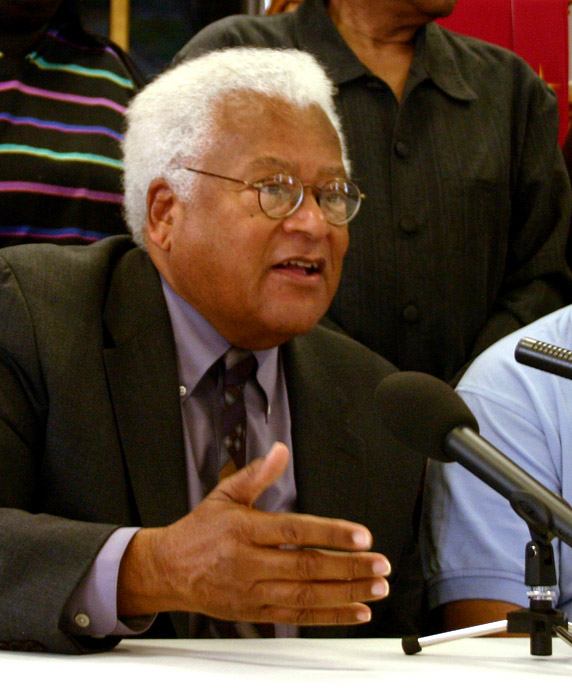
Lawson missed the March on Washington, and he missed the Montgomery bus boycott too. When the Montgomery movement kicked off, Lawson was teaching English and coaching sports at a school in Nagpur, India, while deepening his immersion in Gandhian philosophy, strategy, and tactics. One morning in December 1955, he picked up the morning paper to see news of the boycott splashed across the page. “I was so elated to read the news,” Lawson writes, “that I started clapping my hands, and jumping and shouting.”
When a neighbor checked to see what the commotion was about, Lawson “showed him the paper and told him how important this was, because I had been hoping and dreaming that such a movement could be possible in America and would start one day soon.” It had, and Lawson quickly came to regard its leader, a young Baptist minister named Martin Luther King Jr, as his Moses.
After a whirlwind trip through an African continent stirring to revolt against colonialism, Lawson returned to the United States in September 1956. He wanted to pursue a PhD in divinity before joining the Southern movement, so he began graduate studies at Oberlin College in Ohio. But when he met King at Oberlin, Martin implored him: “Come now. Don’t wait. Come as quickly as you can. We need you now.” Lawson’s best-laid plans couldn’t withstand the power of this appeal. “I looked him in the eye and quietly said, ‘I will come as fast as I can.’”
The Making of Nonviolent Revolutionaries
Lawson had two big things going for him. He was an ordained minister, which meant he would complement a movement rooted in the church and led by clergy. Just as important, he was already recognized as an authority on Gandhian nonviolence and could impart his knowledge to a movement that was still finding its way forward. A. J. Muste offered to hire him as the Fellowship of Reconciliation’s Southern secretary, and he moved to Nashville to begin his work in early 1958.
In Waging a Good War, the journalist and military historian Thomas E. Ricks contends, justifiably, that “Gandhi’s impact on King and the Movement, both directly through his writings and indirectly through American followers . . . probably has been underestimated, even now.” Perhaps this is because of a lingering misunderstanding of what Gandhian nonviolence really entails.
As Lawson explains, the Gandhian term for nonviolence, ahimsa, was originally translated into English as “passive resistance,” a formulation that Gandhi himself rejected as misleading. Ahimsa finds practical expression through satyagraha, which means “love force” or “soul force,” and takes the active form of civil resistance to unjust laws — boycotts, strikes, marches, demonstrations that disrupt the course of everyday life. The historian David L. Chappell describes Martin Luther King Jr as a “strategist of force” who aimed “to coerce [powerful white people] to give up privileges against their will,” not to appeal to the better angels of their nature. Nonviolence entails protracted mass struggle, and as Lawson emphasized in his book Revolutionary Nonviolence, “protracted struggle is a moral struggle that is like warfare, moral warfare.”
Like soldiers going to war, nonviolent militants aren’t simply flung into the fray. They receive training and preparation; they go to boot camp. “Nonviolent soul force preparation” in the Southern civil rights movement, Lawson contends, “was even more rigorous than training for violent military action. In fact, Gandhi’s soul force would not have succeeded without extensive practice, deep commitment, and strategic planning.”
This may sound like an exaggeration, but the comparison is an apt one. Very little about the movement was spontaneous or unprepared. When it was, this was typically a sign that something was going wrong.
The fight to desegregate Downtown Nashville was Lawson’s first major campaign, and it’s the textbook example of a Gandhian campaign à la Lawson. It begins with fact-finding, and in Nashville this entailed “investigat[ing] and mak[ing] a sort of laundry list of the plights and tortures Black people faced” in the city. For nearly half a year beginning in January 1959, Lawson writes, “we simply sought out descriptions of all the separate manifestations of racism and segregation that were hurting Black people and the community.” They identified many problems during this process, but one theme began to stand out: the indignities black residents faced while working and shopping in the city’s downtown business district.
Only the most menial jobs were available to black workers; “Whites Only” signs designated zones of exclusion at every turn; black shoppers — most of whom were women — had nowhere to rest their feet or have a cup of coffee while on their rounds. Lawson recounts the blunt testimony of one woman: “You preachers and our husbands do not know the pain of having to shop downtown for our family. We do your shopping for you, so we’re the ones who bear the brunt of the racism, of the segregation in Nashville.”
Armed with the facts, the movement could move on to battle planning and training. Instead of making segregation in general their target, they chose a specific expression of it: racial discrimination in department store restaurants and lunch counters. They recruited young people to their ranks “because they can be shaped and formed,” Lawson writes, “And I felt . . . that we were building a nonviolent army. Young people would be the ones most available to go through constructive training in nonviolent direct action.”
Local clergy had already been recruiting high school and college students to the movement, and they would soon assemble a remarkable cadre of young militants including Marion Barry, James Bevel, Bernard Lafayette, John Lewis, and Diane Nash, each of whom became brilliant leaders and strategists.
“Out of its initial small group of about forty or fifty students,” Ricks writes in Waging a Good War, “grew a cadre of people who would become a major force in the civil rights effort — first the sit-ins, then the Freedom Rides, then in forming the Student Nonviolent Coordinating Committee (SNCC), then in the Birmingham marches, and finally in Selma.” James Lawson trained them all.
Lawson’s training combined intensive education in the philosophy and history of nonviolence with role-playing and other methods intended to prepare recruits for what amounted to combat situations. Role-playing exercises were often intense.
He would have trainees pair up in twos, for example, and have them act out the kinds of scenarios they could expect to encounter in the field. One partner would play the part of a black person minding their own business, while the other played a racist white assailant. The latter would hit and slap and hurl racist insults, while the former had to respond in a strictly nonviolent fashion — no physical retaliation, no insults returned in kind.
“The point of the role playing,” Lawson writes, “was to think about how to respond to the violence. . . . People would talk about it and evaluate their experiences. They were to figure out, ‘If this happens to me on Church Street in Nashville, how will I react? If that happens to me when I’m at a sit-in what does it mean? How do I respond?’” The exercises gave them space to think through an incident in the abstract before it became a reality, where they might be blindsided and not know what to do.
The training didn’t always take, and depending on the audience, Lawson’s deep religiosity could backfire on him. Lawson notoriously failed to connect with many white Freedom Summer recruits in 1964, for example.
“I think I did a poor job in conveying to those students,” he recalls, “the importance of the commitment to nonviolence in our movement. And because I was a minister, it stirred the students’ skepticism of religion, and even their ridicule.”
Some recruits dropped out. Others were weeded out if leaders thought they couldn’t handle what was in store for them. But the recruits who made it through months of rigorous training in Lawson’s workshops were ready to face the prospect of great suffering, even death, together.
After nearly a year of preparation, the Nashville movement launched a sit-in movement to desegregate Downtown Nashville in February 1960. It was not an easy campaign. Militants suffered shocking violence at the hands of white police and civilians; white politicians and media outlets vilified the movement as the work of communists and “outside agitators”; Lawson was kicked out of Vanderbilt University, where he had been pursuing a graduate degree in divinity. They faced criticism from the black establishment, particularly the National Association for the Advancement of Colored People, which opposed the Southern sit-in movement for its supposedly reckless tactics.
For Lawson, the campaign wasn’t only an attack on the white power structure but a criticism of traditional black leadership as well. “The sit-in movement and the whole nonviolent movement for social change,” Lawson contends, “was a statement to the Black community that we did not have to settle for this evil.”
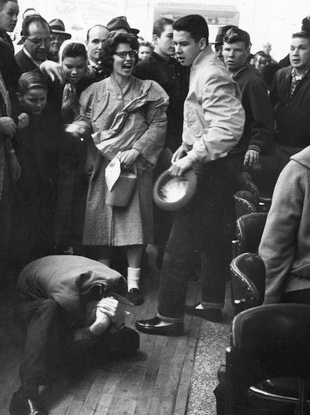
Despite beatings, bombings, and brickbats, the Nashville movement won. After three months of sit-ins, boycotts, and demonstrations, the city’s downtown merchants agreed to start serving black customers equally. No more “Whites Only” signs, no more having to buy shoes and take them home just to try them on. Poverty, employment discrimination, and a host of evils remained. But the Nashville movement and parallel efforts across the South showed that nonviolent direct action could overcome the imposing but vulnerable structures of Jim Crow.
For Lawson, Nashville was “the pivotal movement for the rest of the sixties, because many of us became the staff people, the volunteers, and the foot soldiers” in the Freedom Rides, the battles of Birmingham and Selma, and other key campaigns. Lawson’s assessment is no idle boast. John Lewis became SNCC’s chairman, led the first march over the Edmund Pettus Bridge in Selma in 1965, and went on to serve in Congress for decades. James Bevel and Diane Nash, who became a couple during the Nashville sit-ins, became two of the movement’s most effective and audacious strategists, especially during the Birmingham and Selma campaigns (their marriage, unfortunately, did not survive the strain of protracted movement work).
Lawson kept training waves of new recruits to the movement’s ranks, and he chaired the 1968 Memphis sanitation workers’ strike strategy committee. He wasn’t always successful, and his mistakes in Memphis pulled King deeper into the strike — and deeper into harm’s way — than anyone intended. Nevertheless, Lawson’s work in forging disciplined groups of nonviolent revolutionaries was indispensable to the fight against racial segregation.
“Cohesion was the ineffable but essential ingredient the Nashville contingent possessed,” Ricks concludes. “Developing it was perhaps the greatest contribution James Lawson made to the civil rights movement.”
Holding the Tension
Nonviolence, particularly in the philosophically totalizing form Lawson embodied, was never universally embraced in the movement. Some accepted it conditionally and pragmatically, so long as it seemed to work when nothing else would. Others rejected it entirely and justified the use of violence as a means of self-defense or collective liberation.
King, for his part, did not come into the movement as a fully formed apostle of nonviolence. When Bayard Rustin realized King had a small arsenal in his house during the Montgomery bus boycott, he talked him into getting rid of his guns. According to Chappell, Rustin convinced King that leaders must be committed to nonviolence in principle, “since ‘if, in the flow and the heat of battle, a leader’s house is bombed, and he shoots back, that is an encouragement to his followers to pick up guns.’” King’s house was, in fact, bombed during the Montgomery campaign. He was not home at the time, but his wife, Coretta Scott King, and one of his children were; they were very fortunate to survive the blast. Some of King’s supporters wanted to retaliate or post armed guards at his house, but he refused on the grounds that this would distract from the question at hand, which was not his personal safety but the freedom of black people in Montgomery.
While King committed himself to principled nonviolence under Rustin’s tutelage, he admitted that not everyone could be expected to adopt the same rigorous standards. In “The Social Organization of Nonviolence,” a 1959 polemic with the outspoken advocate of armed self-defense, Robert F. Williams, King conceded that “the principle of self-defense, even involving weapons and bloodshed, has never been condemned, even by Gandhi, who sanctioned it for those unable to master pure nonviolence.” In “Nonviolence: The Only Road to Freedom,” written in 1966 amid a rising tide of urban unrest, King wrote that “it goes without saying that people will protect their homes. This is a right guaranteed by the Constitution and respected even in the worst areas of the South.”
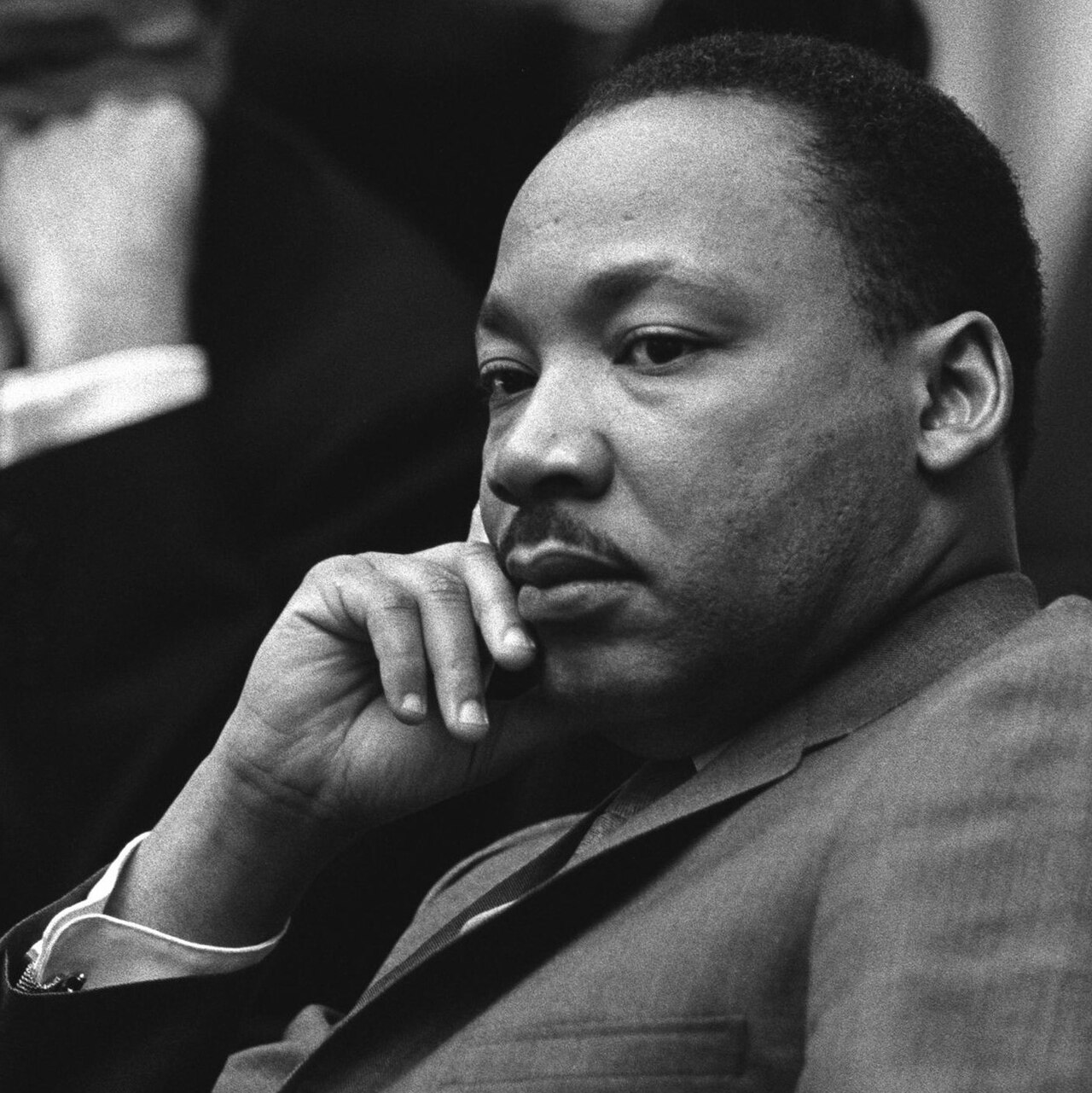
In Nonviolent, Lawson recounts an illuminating episode from the 1966 March Against Fear, the Mississippi demonstration where Kwame Ture (then known as Stokely Carmichael) launched the “Black Power” slogan before a national audience. According to Lawson, some young Student Nonviolent Coordinating Committee (SNCC) marchers wanted to tussle with white racists who were harassing them on the march route. “Their guiding principle,” Lawson recalls, “was that you couldn’t let yourself be pushed around”:
Again, we had to say, “Look. We have children and women here. And there are some very old people. Now, if you want to make an appointment with these guys afterward, well and good. But you are in a demonstration now, and you don’t have a gun and that policeman has a bayonet and these children don’t have any such protection. So, you’ll put everyone in jeopardy.” These guys were confusing self-defense with the responsibility you have when you are part of a public demonstration.
King and Lawson, despite their principled commitments to nonviolence, could make pragmatic distinctions between the collective discipline they thought mass demonstrations required and what individuals could do on their own time, as it were. What is permissible in private life may not be good for a public movement; what may be forgiven of a rank-and-filer may not be allowed for a leader. Context matters, for both moral judgment and strategic calculation.
Some of the most vivid scenes in Lawson’s memoir concern internal frictions over nonviolence, especially when he and Ture were at loggerheads. Ture often appears as Lawson’s symbolic foil in the book; an embodiment of trends that Lawson feared would render the movement marginal and ineffective.
Nevertheless, despite his deep disagreements with figures like Ture, Lawson writes that he “would not denounce Black Power, and neither would Martin — because we understood what it was about.” In Where Do We Go From Here, King writes that the Black Power slogan “was born from the wounds of pain and disappointment,” a predictable and understandable “reaction to the failure of white power” to recognize the humanity and equality of African Americans despite the passage of landmark civil rights and voting rights legislation.
In “The Social Organization of Nonviolence,” King conceded “it is unfortunately true that however the Negro acts, his struggle will not be free of violence initiated by his enemies.” Lawson reached a similar conclusion: “Nonviolence and violence have a similarity. Those who practice either must be prepared to do some suffering.” A realistic appraisal of the human condition compels us to admit that some degree of violence, often instigated by those who seek to preserve their power and privileges, will attend any movement for social transformation.
Viewed from this perspective, the simple dichotomy of violence versus nonviolence begins to break down, and the issue takes on new dimensions. In his 2022 book, The Revolutionary City, Mark Beissinger writes that the question is not “whether revolutions are violent, but rather how much violence they involve and what explains that variation.” We also need to ask what exactly we mean by violence in the first place.
The coauthors of On Revolutions, a 2022 state-of-the-research summary of the field, concede that “categorizing revolutionary struggles as either violent or nonviolent can be problematic since movements often have fluid and flexible strategic approaches, shifting between armed and unarmed phases.” Distinguishing between armed and unarmed movements doesn’t, on its own, solve the dilemma either. Unarmed movements can and do employ tactical repertoires that blur the lines between violence and nonviolence.
“Some unarmed uprisings,” they write, “have moments when civil resisters destroy property such as military vehicles or police stations. Is this violent or nonviolent? While some consider such acts to be violent, others argue that a tactic is violent only if it harms or endangers life.” This is why some scholars of revolution employ the concept of “unarmed violence” to distinguish rock throwing or rioting from armed combat, and to try to isolate the impact of these tactics on largely nonviolent movements.
The focus here is often on “violent flanks” and how they affect the mechanisms of movement success or failure. The political scientist Erica Chenoweth defines this as violence that “remains exceptional within the broader repertoire of contention” and therefore does not entail a full shift from unarmed to armed struggle. Chenoweth’s review of the literature finds that “organized armed resistance alongside primarily unarmed resistance campaigns appears to yield few long-term strategic benefits for mass movements.” The same cannot be said, however, for unarmed violence, whose effects on movement outcomes appear to be much more ambiguous and case-dependent.
It is possible that the key strategic choice movements face is not whether to adopt the kind of strict nonviolent discipline Lawson embodied, but whether to remain unarmed. “Some portion of the positive effect of nonviolent tactics on democratization campaigns,” Mohammad Ali Kadivar and Neil Ketchley conclude, “may in fact be attributable to episodes of unarmed collective violence.”
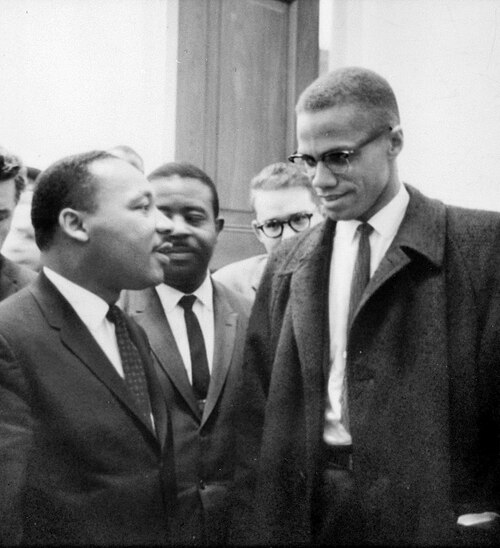
The mechanisms by which property destruction and other acts (or threats) of violence can boost nonviolent movements are not entirely clear, but inferences can be drawn from the history of the black freedom struggle. The historian Peniel Joseph, for example, has described Malcolm X and King as the movement’s sword and shield, respectively. In this framework, the Black Power and self-defense flank complements and strengthens the main nonviolent thrust. Negotiate with Martin, or you’ll have to deal with Malcolm; give us the ballot, or you’ll get the bullet.
There is some evidence to support the logic of this theory, like a 2022 study that found “the presence of a radical flank can increase identification with and support for a moderate faction in the same social movement.” These findings, however, were based on survey experiments, not an analysis of real movements; as Chenoweth notes, it “may be difficult to extend these findings to political environments” where actors and observers “do not actively try to differentiate between radical and moderate tactics.”
This is especially true when movements, regardless of their strategies and tactics, are based primarily on racial minorities or other out-groups subject to unfavorable media treatment and systematic social bias. King, who spoke consistently of the need for love and reconciliation, was nevertheless one of the most widely hated people in America at the time of his assassination.
It is extremely difficult to disentangle these threads in the context of very messy, actually existing social movements. The effects of unarmed violence on primarily nonviolent struggles appear to be, as Chenoweth suggests in their review of scores of studies, essentially simultaneous and contradictory.
Nineteen sixty-seven’s wave of urban riots, for example, spurred President Lyndon B. Johnson to form the Kerner Commission, whose recommendations for action might as well have been written by King or Rustin. If implemented in full, it would have amounted to the establishment of a racially egalitarian social democracy in the United States. Of course, that never happened.
The uprising of the black poor made the problems and the solutions as clear as day. For a brief moment, it focused attention on the stark fact that “our nation is moving toward two societies, one black, one white — separate and unequal,” as the commission warned in its best-selling report. At the same time, it exacerbated already existing divisions within the movement, which could not prevail upon an administration that ran away from its own commission’s findings as soon as they were published. It also fed into the tide of law-and-order reaction that helped to put Richard Nixon in the White House in 1968.
Nonviolence ultimately seeks to reconcile means and ends in the struggle for social transformation. “Means and ends must cohere,” King insisted in his last Christmas sermon, “because the end is preexistent in the means, and ultimately destructive means cannot bring about constructive ends.”
One may object that massive quantities of violence were needed to destroy Southern chattel slavery or defeat the Nazi menace. True enough. But the tendency of armed revolutionary movements to result in authoritarian governments when they win power is a point in favor of the nonviolent wager. Armed movements, by virtue of the violence and secrecy they entail, impede mass participation and rely on undemocratic organizations that do not prepare people for the exercise of collective self-rule. Political violence has an interactive quality that often takes on a life of its own. It’s not something that can easily be turned on and off, and it can easily outstrip its original justification.
Lawson was convinced that nonviolence “gives the right a far better chance of emerging” from political struggle than violence of any kind. Not a guarantee, but a chance. Given the sheer inertia weighing against the “beloved community” King envisioned, Lawson’s faith in the revolutionary power of nonviolence may well be naive. But as Chappell so incisively puts it, “to believe that anybody’s plan will ever be fulfilled after the shooting starts — that anyone will be able to avoid tragic disappointment in the course of violent revolution and war — is a more obvious and straightforward naïveté.”
“Nonviolence understands clearly that the system is violent,” Lawson writes, “especially when the structures of the system force people to live with torturous oppression.” If the experience of oppression cannot find an effective outlet through nonviolent action, it will eventually explode. “That is why potential violence against a violent system is not something you denounce. It’s also not something you embrace.” Holding that tension is perhaps the most practical thing one can take away from Nonviolent. It is also the hardest one to master.