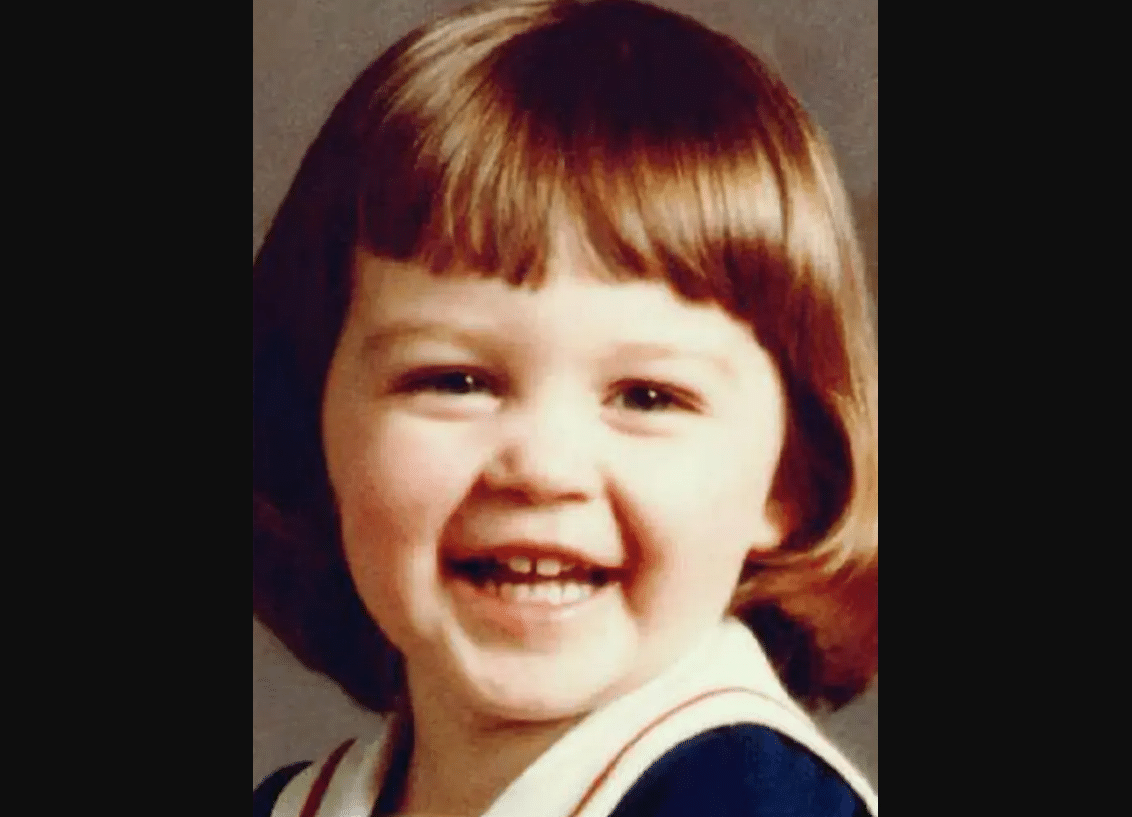
A Kentucky cold case that stretched more than four decades ended with a phone call and a knock on a door: investigators this month told a 46-year-old woman she was the toddler reported missing in 1983. Authorities said the woman, identified as Michelle Marie Newton, had lived her entire life under a different name, unaware she was listed as missing while her father searched for her.
The discovery closes a chapter that began when Michelle’s mother left Louisville with the child, telling relatives she was moving for a job in Georgia and cutting off contact. Investigators later classified the case as a suspected parental abduction. For years it yielded little: tips faded, court files went dormant and, at one point, the record was mistakenly dropped from national databases. The case warmed in late November when a Crime Stoppers tip led deputies to Florida, where they arrested Michelle’s mother on a custodial-interference charge. Detectives then met with the adult daughter, explained her history and helped arrange an emotional reunion with her father, Joe Newton, in Louisville.
Deputies with the Jefferson County Sheriff’s Office said a tipster pointed them to The Villages, Fla., where the mother had been living under the name Sharon Nealy. Records show she was taken into custody on Nov. 24 and later released on bond pending court proceedings in Kentucky. Investigators said the break followed years of periodic reviews, including age-progressed images circulated by the National Center for Missing & Exploited Children. “This one came together because someone finally spoke up, and because a father never stopped hoping,” a sheriff’s investigator said in an interview. The office declined to release the adult daughter’s current legal name, citing privacy concerns and the risk of harassment as the family adjusts.
According to case files summarized by deputies, Joe Newton reported his daughter missing in 1983 after his then-wife left the state with three-year-old Michelle and did not return. Early searches focused on Georgia and the Carolinas, where relatives believed the pair might have gone. Over time, the file shifted between agencies. A court clerk’s notation in 2000 shows the matter dismissed for lack of contact with a reporting party; another entry in 2005 indicates Michelle’s name was removed from certain national listings, a setback relatives say hampered leads until recent years when the sheriff’s office reopened the file. Detectives credited age-progression artwork and renewed publicity with keeping the case visible long enough for the Florida tip to arrive in 2025.
Officials said the woman at the center of the investigation had no indication of her past. When deputies visited her home this fall, they asked to speak with her privately before explaining the 1983 report and showing documents from Jefferson County. She agreed to provide fingerprints and basic identifiers for confirmation, authorities said. “I didn’t know I had another name,” she told investigators, according to a report describing the first meeting. She later traveled to Kentucky for a private meeting with her father, now in his 70s, who described the moment as “like meeting her for the first time again.”
In court, prosecutors charged the mother with custodial interference, a felony that can be filed when a parent unlawfully takes or keeps a child from lawful custody. The case documents reference the use of an alias and out-of-state travel in the 1980s, though many specifics remain unclear and are likely to be laid out in future filings. A judge allowed release on bond with a requirement to appear for hearings in Louisville. The defense did not immediately comment in court; relatives said the mother had been living quietly in central Florida for years.
The sheriff’s office said there was no indication the daughter was harmed while growing up and stressed that she is not accused of any wrongdoing. Investigators said part of their work now is ensuring that old records accurately reflect her identity, updating entries that remain in legacy databases and coordinating with the National Center for Missing & Exploited Children to close out automated alerts. The agency said it is common in decades-old cases to reconcile conflicting notations from different eras of recordkeeping once a missing person is located alive.
Neighbors in Louisville described Joe Newton as a constant presence at community meetings and family events who would bring up his daughter’s name whenever conversation turned to lost children. Over the years he collected clippings, contacted television programs that highlighted missing-person cases and worked with nonprofits on poster campaigns. Friends said he carried a wallet photo of a toddler in pigtails alongside the latest age-progressed rendering, a ritual that kept hope visible during long gaps with no news. “He never gave up,” a longtime neighbor said. “He always thought she was still out there.”
Investigators provided a concise timeline of the latest developments. In early November, the Crime Stoppers tip landed with enough detail to merit immediate follow-up. Deputies verified addresses and records in Florida, coordinated with local authorities and, on Nov. 24, knocked on a door in The Villages. After confirming the mother’s identity, they made the arrest on the Kentucky warrant. Within days, deputies met the adult daughter at a separate location, explained the case history and the path forward, and connected her with victim services and with her biological father’s family. The sheriff’s office said the woman, now living in another state, is free to continue using her current legal name while the court case proceeds against her mother.
Records and interviews sketch a case that reflected—and at times suffered from—the paper-and-fax era in which it began. In the 1980s and 1990s, missing-child entries depended on timely updates by clerks and patrol officers, and jurisdictional handoffs could stall. The file shows attempts to track employment and mailing records that went nowhere, and an early referral to federal authorities that did not produce charges. Later, as digital systems matured, the case received sporadic attention through social media posts and nonprofit campaigns. The recent tip appears to have come from someone who recognized the mother’s alias and recalled seeing the case highlighted online, according to a person briefed on the investigation.
What comes next unfolds on two tracks. Criminally, prosecutors will present the custodial-interference case to a grand jury or proceed by information, with hearings scheduled in Jefferson County Circuit Court. Investigators said they are still reviewing old warrants, interstate paperwork and any evidence that may still exist from 1983, such as letters or employment records, to document intent. Separately, victim advocates are working with the family on practical steps: updating vital records, deciding how to handle publicity, and arranging counseling if requested. Authorities said they will not release the daughter’s current name publicly unless she chooses to speak on the record.
In statements shared through law enforcement, the family struck a careful tone. Joe Newton thanked deputies and volunteers who kept the file alive. The daughter asked for privacy as she processes the news and gets to know relatives she last saw as a toddler. Friends have begun planning a quiet gathering after the holidays. “We’re grateful,” a cousin said, “and we’re giving them space to figure out what life looks like now.”
By Thursday, the arrest in Florida had been logged, the Kentucky case was assigned to a judge, and father and daughter had met in person for the first time in more than 40 years. The next milestone is a court hearing where prosecutors are expected to outline additional details about the alleged 1983 abduction and the legal path ahead.
Author note: Last updated December 18, 2025.