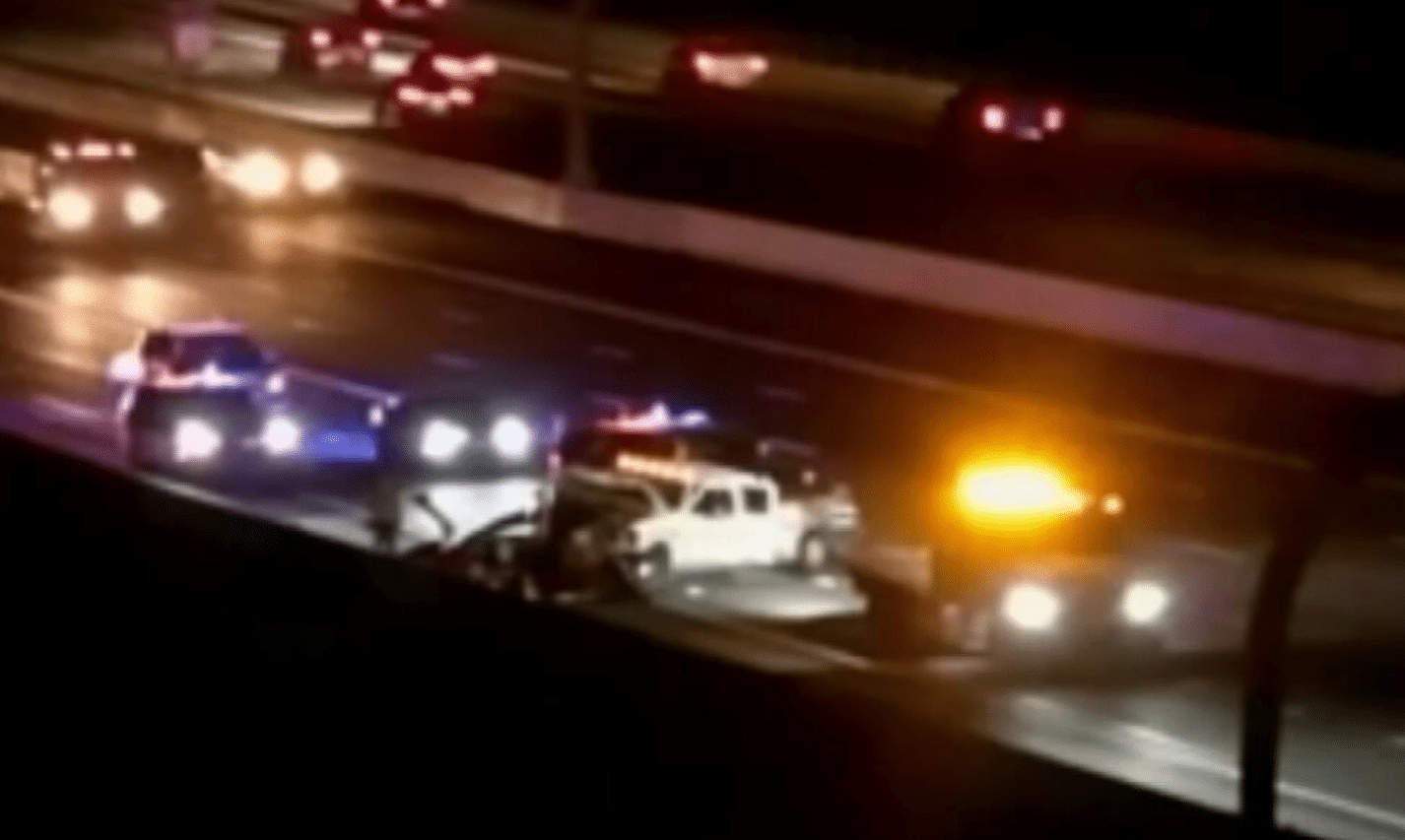
A federal crash filing shows the 2020 Model 3 was stopped at 0 mph before a pickup struck it from behind.
MESA, Ariz. — A Tesla driver-assistance system was verified as engaged before a Model 3 came to a stop on Loop 202 and was struck from behind in a crash that killed 47-year-old Jason Key, according to a federal crash filing matched to the October 2025 collision.
The newly highlighted filing adds information that was not publicly known when the crash happened early Oct. 31, 2025, near Dobson Road. Records reviewed by news organizations show the 2020 Tesla Model 3 was listed as stopped at 0 mph before a Ford F-350 pickup hit it from behind. The filing does not establish why the Tesla stopped, and key information that could help explain the vehicle’s behavior remains redacted. The available record also does not establish that Tesla’s driver-assistance technology caused the crash.
The collision occurred shortly after 3 a.m. on the eastbound Loop 202 Red Mountain Freeway. Initial reporting based on information from the Arizona Department of Public Safety said two vehicles were involved and that the freeway was closed for several hours. Later reporting identified Key as the Tesla’s driver and said he died in the collision. At the time, authorities did not publicly connect the crash to a Tesla driver-assistance system.
Electrek later matched the Mesa crash to a report submitted by Tesla to the National Highway Traffic Safety Administration. The report identified the vehicle as a 2020 Model 3 and listed its automation engagement status as verified engaged. It also described the Tesla as stopped before impact. The filing does not publicly identify which specific driver-assistance software was operating because the software-version field is redacted, meaning the available record does not clearly distinguish between Autopilot and Tesla’s Full Self-Driving system.
Other information was also withheld from the public version of the filing. Tesla redacted the crash narrative and information addressing whether the roadway was within the system’s intended operating area. Arizona’s Family reported that Tesla cited confidential and proprietary business information in explaining its redactions to federal regulators. The publicly available material therefore shows that a driver-assistance feature was engaged before the collision but does not explain why the car was stationary in an active freeway lane.
The Mesa crash has drawn attention in part because of a separate federal investigation into reports of unexpected braking in Tesla vehicles, commonly called “phantom braking.” NHTSA opened Preliminary Evaluation PE22-002 in February 2022 after receiving hundreds of complaints involving 2021 and 2022 Model 3 and Model Y vehicles. Drivers reported unexpected deceleration while using systems including Autopilot, Full Self-Driving or Traffic-Aware Cruise Control. The agency’s opening document initially listed 354 complaints and said the reported braking could occur at highway speeds without warning.
NHTSA closed that preliminary evaluation June 29, 2026, after reviewing Tesla data, consumer complaints and software changes. The agency said Tesla released firmware updates in early 2022 aimed at reducing unexpected deceleration and that reported incidents fell substantially over time, including 45 in 2024, 19 in 2025 and three during the first part of 2026. NHTSA said the incidents examined in that probe generally involved brief speed reductions, did not cause the vehicles to leave their lanes and were not linked to collisions in the investigation. The agency also said closing the inquiry did not amount to a finding that a safety defect could not exist and left open the possibility of future action.
Those findings make an important distinction in the Mesa case. The federal phantom-braking investigation documented unexpected deceleration, but the publicly available evidence does not show that phantom braking caused Key’s Tesla to stop. The Mesa filing shows the vehicle was stopped and that a driver-assistance system had been engaged, while the fields that might explain the sequence leading to the stop remain unavailable. No public finding reviewed for this report determines whether the vehicle stopped because of its software, driver action, a mechanical issue, a medical emergency or another cause.
John Nohinek, an attorney who handles autonomous-vehicle cases and was interviewed by Arizona’s Family, said the redactions make independent evaluation of crashes more difficult because information about what the software detected, what warnings may have appeared and why the vehicle stopped is not publicly available. His comments represent an attorney’s assessment of the disclosure issue, not a finding by NHTSA or crash investigators about the cause of Key’s death.
Key was a longtime member of the Phoenix-area hospitality industry and was working as a restaurant manager at Mountain Shadows Resort Scottsdale when he died, according to the Phoenix New Times. Friends and former co-workers remembered him for his humor and warmth. He was also the father of two children. The tributes appeared in the days after his death, before the later federal filing brought additional attention to the circumstances surrounding the crash.
As of Sept. 18, no publicly released investigation reviewed for this report provides a final explanation for why the Tesla stopped on Loop 202. The federal filing confirms the involvement of a driver-assistance system but leaves the software version and crash narrative redacted, limiting what can be concluded about the system’s role in the fatal collision.
Author note: Last updated September 18, 2026.