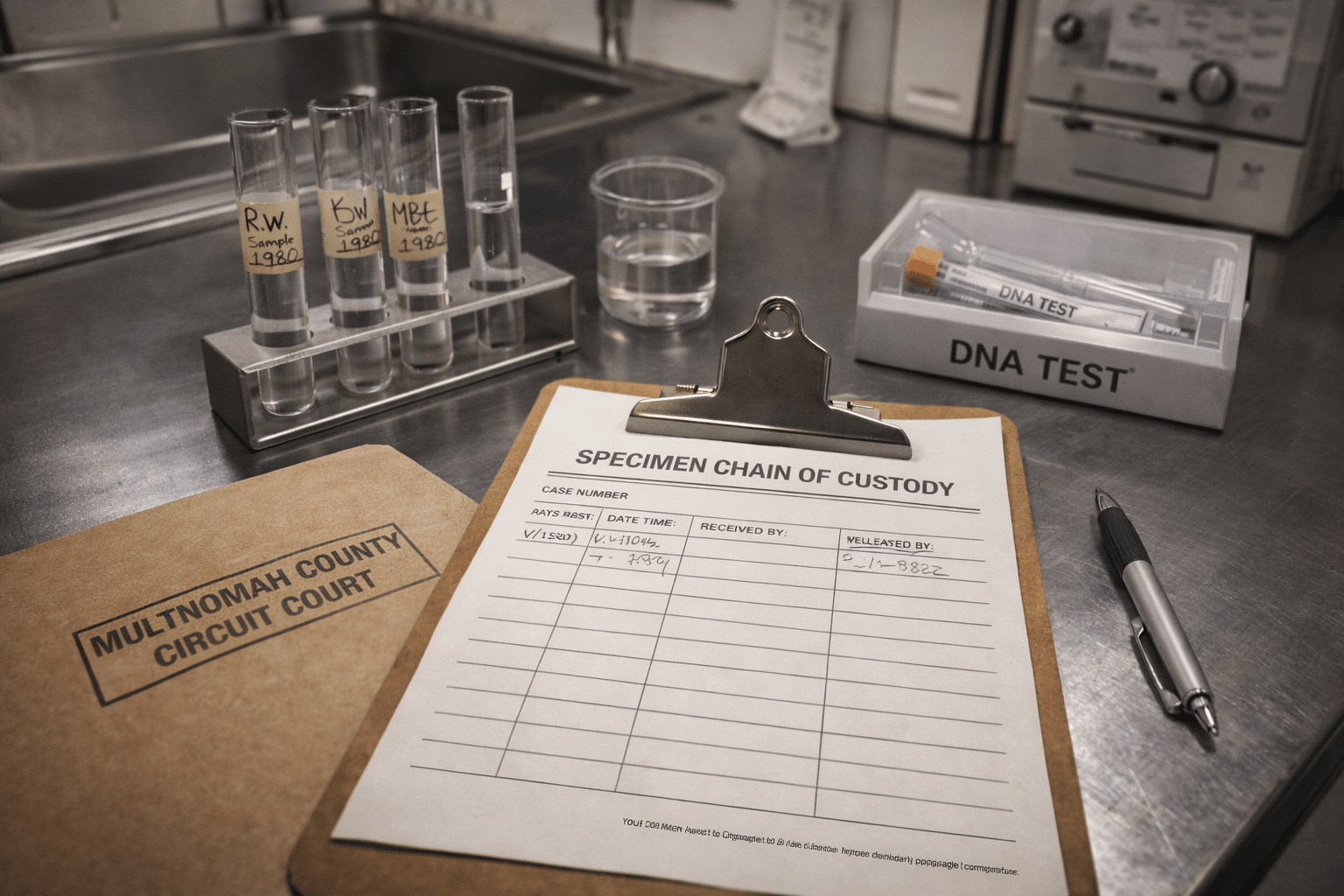
An Oregon couple has filed a malpractice lawsuit alleging hospital workers used another man’s sperm during a fertility procedure more than four decades ago, resulting in a child who is not the husband’s biological daughter and who has medical issues tied to the stranger’s genetics, according to the complaint filed Dec. 26 in Multnomah County Circuit Court.
The case accuses Oregon Health & Science University and Providence Health of negligence and concealment tied to an insemination performed in the early 1980s. The parents, identified by initials in court papers, say they learned of the mix-up only within the past two years through genetic testing, decades after raising their firstborn as their biological child. The complaint seeks $17 million in damages and says both institutions failed to maintain a reliable chain of custody for semen samples and to notify patients when problems surfaced, placing fresh scrutiny on historic fertility practices and today’s safeguards.
According to the filing, the couple—listed as C.W. and K.W.—sought help at OHSU after struggling to conceive. Records say a separate patient, identified as R.W., provided a semen specimen the previous year. The complaint alleges R.W.’s sample was “wrongfully” used during C.W.’s intrauterine insemination, instead of K.W.’s. The procedure led to a pregnancy and the birth of a daughter, referred to as A.P., in 1981. The parents say they suspected nothing until recent DNA results showed K.W. is not A.P.’s biological father. “K.W. was stripped entirely of his biological fatherhood,” the suit states, and says C.W. endured the “humiliation” and physical toll of a pregnancy conceived with the wrong specimen.
The lawsuit contends OHSU staff took possession of K.W.’s semen but failed to ensure proper labeling, tracking and verification, proposing that his sample may have been used on someone else. It also claims OHSU had “professional affiliations” with Providence St. Vincent in Portland and faults Providence for inadequate oversight tied to fertility services. The filing says it is unknown what screening, if any, was done on the “foreign donor,” and alleges the daughter has medical issues tied to traits inherited from the biological father. The complaint adds that when approached, the institutions did not provide a full accounting and declined to comment publicly, citing privacy and ongoing litigation.
In sworn statements, the parents describe the emotional fallout: a family bond recast by late-in-life test results, embarrassment and grief over a lost biological connection, and fear about health risks that were never disclosed because the true paternal line was unknown. They allege a failure to investigate and to notify potentially affected patients once the error was raised. The defendants have not yet filed detailed responses in court, and no hearings on the merits have taken place. The daughter, now in her forties, is listed as a plaintiff and says the error left her with hereditary conditions and uncertainty about her medical history.
Fertility medicine in the late 1970s and early 1980s operated with fewer standardized checks than are common today, and a series of recent cases around the country has renewed attention on old recordkeeping and consent practices. Separate lawsuits in other states have alleged embryo switches or the use of incorrect sperm, sometimes discovered decades later through consumer DNA tests. Patient advocates say those cases illustrate how early-era procedures relied heavily on manual labeling and individual clinician protocols, which increased the risk of mismatches and made audits difficult when documentation was incomplete or dispersed across affiliated facilities.
Legally, the Oregon complaint seeks damages for negligence, negligent infliction of emotional distress and related claims. The parents and daughter each request non-economic damages and compensation for past and future medical expenses. The filing asks a judge to order a jury trial and to compel the hospitals to disclose records that could identify how the wrong sample was accessed and whether other patients were affected. Attorneys say the next steps include formal service of the lawsuit, initial case management in the weeks ahead, and a discovery schedule that would cover archival records, laboratory logs, chain-of-custody forms and witness interviews, including retired personnel.
What remains unclear is precisely where and how the mix-up occurred. The complaint cites OHSU’s family planning unit as the site of the insemination and notes OHSU’s relationships with Providence facilities at the time, but does not pinpoint the moment of error or identify a staff member responsible. Plaintiffs say the event recorder of their lives—medical charts, lab slips, consent forms—either failed them or was never complete, and they argue that only a court-ordered search can reconstruct the path of the sample. The defendants have not addressed the specific allegations in public statements. Under Oregon rules, they typically have several weeks after service to respond.
Outside the legal filings, the family’s story moves on a parallel track. The couple raised A.P. for decades believing she shared both parents’ DNA. The discovery, they say, forced difficult conversations about identity, medical histories and trust in institutions that once felt unshakable. The complaint quotes them as saying they were “stripped of the unifying bond of creating shared life.” Friends and extended relatives, they add, were jolted by the news and have rallied around the daughter as she manages ongoing health needs now believed to be inherited from the biological father.
As of Wednesday, Dec. 31, the case is newly filed in Multnomah County and awaiting an initial scheduling order. No hearing dates have been set, and the hospitals had not filed answers in the docket. The next milestone is expected in early January when service and response deadlines come due, followed by a discovery plan that could reveal the first detailed timeline of how the sample was handled in 1980–81.
Author note: Last updated December 31, 2025.