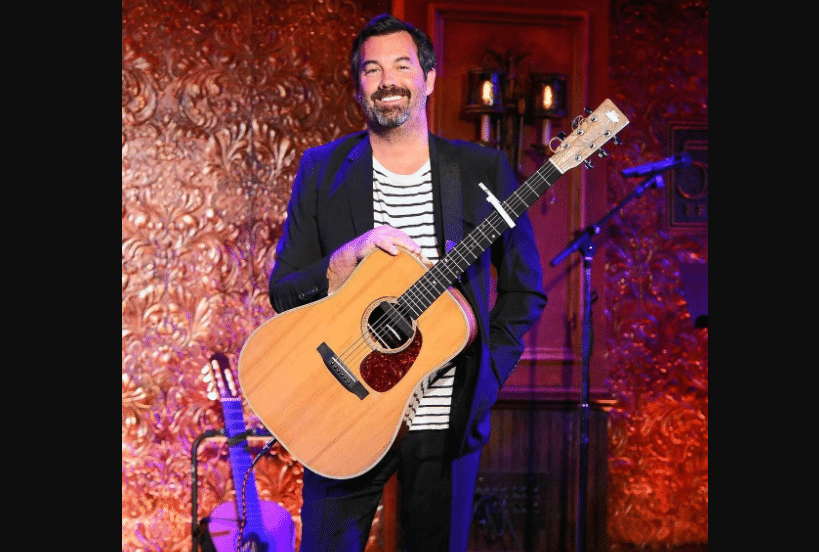
His mother reported organ failure, while a representative said heart failure led to cardiac arrest before his death in Manhattan.
NEW YORK — Duncan Sheik, the singer-songwriter behind the 1990s hit “Barely Breathing” who later became a Tony- and Grammy-winning Broadway composer, died Sept. 17 at a Manhattan hospital. He was 56.
Sheik’s family announced his death the following morning after saying earlier in the week that he was receiving medical care and was in critical but stable condition. Accounts of his exact cause of death differed Friday. His mother, Suzanne Sheik, told The New York Times that he died of organ failure. A representative separately confirmed to People that Sheik died of heart failure leading to cardiac arrest. No more detailed medical explanation had been publicly released.
The announcement came one day after Sheik’s family disclosed that he was seriously ill. A statement posted to his social media account Sept. 16 said he remained under medical care but did not identify his condition. The family asked for privacy and said further information would be provided when appropriate. After his death, his representatives said he had been surrounded by loved ones and remembered him as a father, husband, son, brother and friend as well as a major figure in music and theater.
Sheik first reached a national audience with his self-titled debut album in 1996. Its best-known single, “Barely Breathing,” became a long-running radio hit, reaching No. 16 on the Billboard Hot 100 and remaining on the chart for 55 weeks. The song earned Sheik a Grammy nomination for male pop vocal performance. He continued releasing albums after that breakthrough, including “Humming,” “Phantom Moon” and “Daylight,” but his career would eventually move in a different direction.
By the early 2000s, Sheik had begun focusing heavily on musical theater. His most successful stage collaboration came with playwright and lyricist Steven Sater on “Spring Awakening,” a rock musical based on Frank Wedekind’s 19th-century play. The production opened on Broadway in 2006 and became one of the defining musicals of its era. It won eight Tony Awards in 2007, including best musical. Sheik won for best orchestrations and shared the award for best original score with Sater.
The Broadway cast recording of “Spring Awakening” also won the Grammy Award for best musical show album at the 2008 ceremony. The production helped launch the careers of performers including Jonathan Groff, Lea Michele and John Gallagher Jr. A Deaf West Theatre revival returned the musical to Broadway in 2015, and another Off-Broadway production was being prepared for later in 2026 at the time of Sheik’s death.
Sheik continued building a career that moved between theater and recorded music. His stage projects included “American Psycho,” adapted from the Bret Easton Ellis novel, and “Alice by Heart,” written with Sater. He also continued releasing his own music, including the 2022 album “Claptrap.” His work often mixed pop and alternative-rock influences with theatrical storytelling, a combination that helped establish his second career after the commercial success of “Barely Breathing.”
Sheik remained professionally active in the months before his death. He was involved with “Memoirs of Amorous Gentlemen,” a new musical adapted from Moyoco Anno’s manga, which was scheduled to begin Off-Broadway performances in September. Reports about his hospitalization raised questions about his ability to participate in the production, though his family did not publicly disclose the illness that led to his treatment.
Born in New Jersey in 1969 and raised partly in South Carolina, Sheik studied at Brown University before beginning his professional music career. He played guitar and worked on recordings before breaking through as a solo artist. His career eventually earned him one Grammy win and two Grammy nominations, according to the Recording Academy, along with the two Tony Awards he received for “Spring Awakening.”
Sheik is survived by family members including his wife, Nora Ariffin, and their daughter, Ines, according to People. Tributes from the music and theater communities followed news of his death Friday. His family said his work had left a lasting mark on both fields and thanked fans, friends and collaborators for their support.
The differing descriptions of Sheik’s cause of death had not been further reconciled publicly as of Friday. His mother’s account identified organ failure, while his representative’s statement to People described heart failure leading to cardiac arrest. Both accounts agree that Sheik died Thursday night in Manhattan following a period of medical treatment.
Author note: Last updated September 18, 2026.