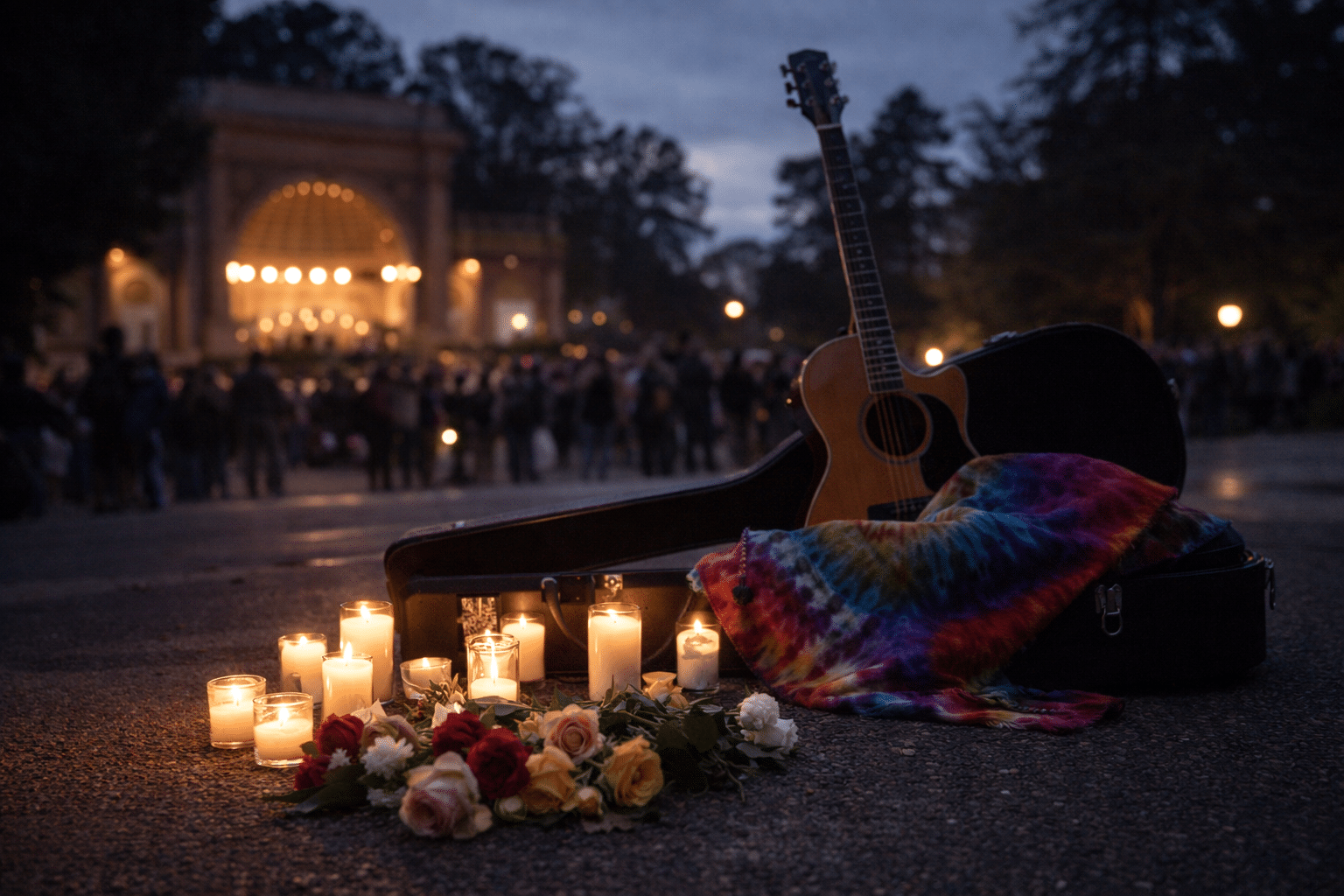
Bob Weir, the guitarist, vocalist and co-founder of the Grateful Dead, died Saturday at age 78 after months of cancer treatment and complications tied to underlying lung issues, his family said in a public statement. He died surrounded by loved ones, according to that announcement.
Weir was a pillar of West Coast rock and a constant presence in the Grateful Dead’s half-century of music and myth. News of his death arrived over the weekend through family and band channels and was followed by tributes from across music and culture. The statement did not list a specific location of death or memorial plans. Weir’s passing comes less than a year after a summer homecoming at Golden Gate Park that marked 60 years since his first shows around San Francisco, underscoring the breadth of a career that stretched from the Warlocks in 1964 to recent tours with Dead & Company and his Wolf Bros projects.
Family members called the news “profoundly sad” and said Weir “transitioned peacefully” with relatives nearby. The announcement noted he was diagnosed with cancer in July and continued working as he could. In the final months, he returned to the stage for a three-night celebration in Golden Gate Park, then scaled back as treatment progressed. Weir’s catalog as a singer and songwriter includes staples such as “Sugar Magnolia,” “Jack Straw” and “Playing in the Band,” while his sly lead vocals on “Truckin’” and other live favorites helped define the Dead’s road culture. “Thank you, Bobby. We are forever grateful,” a message from bandmates said after the family statement.
Born Robert Hall Weir in 1947 and raised on the San Francisco Peninsula, he first met Jerry Garcia as a teenager and joined him in the Warlocks, the group that became the Grateful Dead. Weir’s distinctive rhythm style, steeped in country, R&B and jazz voicings, anchored the band’s open-ended jams and complemented Garcia’s improvisation. Offstage, Weir fronted side projects including Kingfish, Bobby and the Midnites and RatDog; in the 2010s and 2020s he toured with Furthur, Dead & Company and later Wolf Bros, keeping the Dead songbook in front of new audiences alongside surviving bandmates and younger collaborators. He also supported philanthropic efforts through the Rex Foundation and served as a United Nations Development Programme goodwill ambassador late in life.
Through the years, Weir helped steer the Dead’s sprawling live culture into new venues and formats. After Garcia’s death in 1995, he and other members staged multiple reunions, culminating in stadium-scale celebrations and a Sphere residency concept that drew multigenerational crowds. Weir’s approach to guitar—tight, percussive chord voicings that left space for melody—was widely cited by peers and critics as a model for jam-band rhythm playing. He released solo records, experimented with orchestral settings for Dead material, and collaborated with symphonies from Washington to London, broadening the palette while preserving the songs’ roots.
Weir’s final public performances came last summer in San Francisco, where friends and family emphasized the shows’ significance as a homecoming and as a marker of endurance. In recent months, he curtailed travel while undergoing treatment. The family statement referenced an “underlying lung issue” that complicated his recovery but said he remained engaged with music and close collaborators until near the end. Officials did not release medical records, and relatives asked for privacy as they make arrangements. As of Tuesday, no funeral or public celebration had been scheduled. Band accounts signaled that more details about a remembrance would be shared later.
Across social media, musicians and fans posted memories that traced Weir’s path from Haight-Ashbury clubs to global stages. Messages from fellow Dead members, Dead & Company partners and protégés highlighted his humor, discipline and curiosity. Some noted the contrast between his youthful role as the band’s youngest member and his later status as a steady keeper of the catalog. Others recalled his support for civic causes, including voter-registration drives and environmental campaigns, saying those efforts paralleled the community ethic that formed around the band’s tapers, traders and concert tribes. Outside venues he favored, admirers posted photos of roses and set lists, the latest chapter in a long tradition of fan rituals.
Weir’s survivors include his wife, Natascha Muenter, and their daughters. The family asked that condolences be shared with patience and said they were grateful for the “outpouring of love” from around the world. Additional information on services and a musical tribute is expected in the days ahead. For now, the band’s pages list no new dates or formal memorial events as the community absorbs the loss.
Author note: Last updated January 13, 2026.